
By the GlobeBids Culture Desk | 17 August 2026
George Orwell’s Animal Farm was published in Britain by Secker and Warburg on 17 August 1945. Its arrival, two days after Britain marked victory over Japan and near the formal end of the Second World War, gave readers a deceptively simple story about animals, revolution and the return of authoritarian rule.
The novella remains important because its fable works on two levels. It follows a rebellion against a negligent farmer, but it also examines how promises of equality can be manipulated by leaders who control force, language and collective memory. Characters such as Napoleon, Snowball, Boxer and Squealer consequently became political reference points far beyond literary discussion.
Animal Farm appeared at a sensitive political moment
Orwell, whose real name was Eric Arthur Blair, wrote Animal Farm during the Second World War and completed the manuscript in 1944. Britain and the Soviet Union were then wartime allies against Nazi Germany, making an unmistakably anti-Stalinist satire politically awkward for some publishers.
Several publishers declined the manuscript before Secker and Warburg accepted it. Their reasons were not identical, but the wartime alliance and the book’s treatment of Soviet power formed part of the difficult publishing climate around it.
By the time the British edition appeared, the war in Europe had ended and Japan had announced its surrender. The book therefore reached the public at a moment when one political order was closing and a new struggle over postwar influence was beginning.
HISTORY identifies 17 August 1945 as the publication date. The timing matters, but the novella was not originally written as a retrospective Cold War text. Its immediate foundations lay in Orwell’s earlier opposition to Stalinism, his experiences of ideological conflict and his concern about the corruption of revolutionary language.
Key dates in the book’s early history
- 1943–1944: Orwell wrote and completed the manuscript during the Second World War.
- 17 August 1945: Secker and Warburg published the book in the United Kingdom.
- 2 September 1945: Japan’s formal surrender brought the Second World War to an official close.
- 1946: The first United States edition expanded the book’s international readership.
A farm rebellion becomes another hierarchy
The plot begins with animals overthrowing Mr Jones and taking control of Manor Farm. Their rebellion promises shared work, dignity and freedom from human exploitation. That programme gradually changes as the pigs claim special authority and rewrite the principles on which the new society was founded.
Napoleon concentrates power, uses trained dogs to remove opponents and builds a cult around his leadership. Snowball, once a fellow revolutionary, becomes an absent enemy blamed for failures. Squealer repeatedly changes the official account of events, while the hardworking horse Boxer continues to serve the system even as it betrays him.

This makes Animal Farm more than a story about a revolution that goes wrong. It shows authoritarianism developing through recognizable mechanisms: privileged access to resources, control of information, political scapegoating, coerced confessions, fear and the gradual erosion of rules.
The hierarchy is not restored in precisely its original form. Instead, the revolutionary leadership adopts the conduct of the rulers it displaced. That circular structure gives the book its central warning: changing who governs does not guarantee that the nature of power will change.
How the Russian Revolution shaped Orwell’s allegory
Encyclopaedia Britannica describes Animal Farm as an anti-utopian satire with a broad allegorical relationship to the Russian Revolution and its aftermath. Many of its characters and episodes have recognizable historical counterparts, although the book is not a strict one-to-one code.
Old Major draws on ideas associated with Karl Marx and Vladimir Lenin. Mr Jones represents the displaced ruling order and is often linked with Tsar Nicholas II. Napoleon most clearly evokes Joseph Stalin, while Snowball’s exile parallels Leon Trotsky’s defeat and removal from Soviet political life.
Other elements represent institutions or social groups rather than single individuals. Napoleon’s dogs suggest the machinery of political terror. Squealer embodies state propaganda, the sheep repeat simplified slogans, and Boxer represents loyal workers whose labour and trust are exploited by the regime.
The windmill can be read in relation to Soviet industrial programmes, particularly the emphasis on modernization under Stalin. Its shifting political meaning also demonstrates how leaders can appropriate an opponent’s policy while denying that the opponent ever deserved credit for it.
Orwell was a democratic socialist as well as an opponent of totalitarianism. Treating the novella as a rejection of every socialist idea therefore flattens its political argument. Its sharper target is the destruction of equality by an elite that claims to act in the revolution’s name.
The circumstances of 1945 differ from later readings
The historical setting of publication should be kept distinct from the meanings later attached to the book. In 1945, British readers encountered a satire written while public criticism of a vital wartime ally could be uncomfortable. The full political structure of the Cold War had not yet solidified.
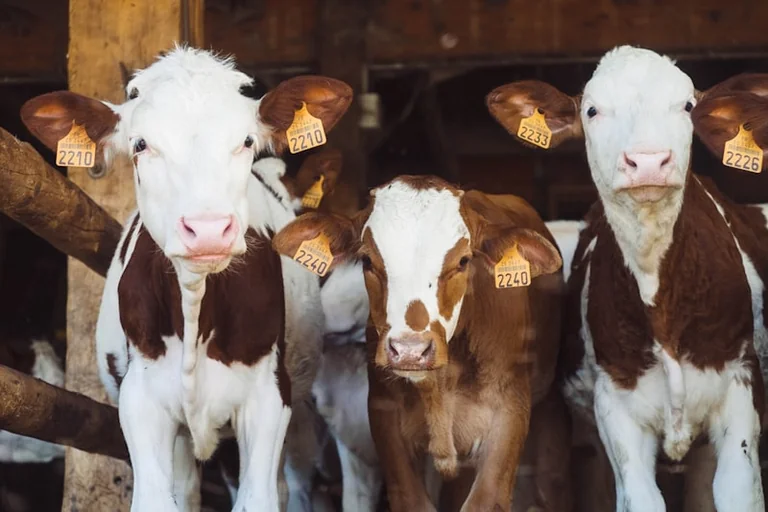
Later audiences read Animal Farm through new circumstances. It became influential in Western anti-communist culture, entered school and university courses, and was adapted for stage, radio, film and television. Those uses broadened its audience but sometimes detached the book from Orwell’s own democratic-socialist position.
The allegory has also been applied to dictatorships, political parties, companies and institutions unrelated to the Soviet Union. Such comparisons are later interpretations, not part of the original publication event. They can illuminate recurring patterns of power, but they may also oversimplify situations that have different histories.
A careful reading consequently holds two ideas together: the book is specifically rooted in the Russian Revolution and Stalinism, yet its account of propaganda and concentrated authority can support wider comparisons.
Why its characters and phrases remain political shorthand
Animal Farm survives culturally because it translates complicated political processes into memorable figures and actions. Calling a spokesperson “Squealer” immediately suggests persuasive distortion. Comparing a leader with Napoleon implies that revolutionary authority has become personal rule. Boxer evokes loyalty that is valued only while it remains useful.
Short expressions from the novella have taken on lives of their own. “Four legs good, two legs bad” is invoked when argument gives way to a repeatable slogan. The altered claim that some are “more equal” than others has become shorthand for systems that proclaim universal rules while quietly protecting a privileged group.
The adjective “Orwellian” comes from Orwell’s wider body of work rather than Animal Farm alone. Even so, the novella contributed strongly to the vocabulary surrounding propaganda, manipulated records and political language designed to make contradictions appear normal.
Its continuing relevance does not depend on every modern dispute being equivalent to Stalinism. The more durable lesson is narrower and more useful: readers should notice who controls the rules, who is permitted to revise the past and whether promised equality survives the creation of a governing elite.
Source: HISTORY
Context & actions About this article
Source check Historical context
The publication date and literary context are based on historical and reference accounts from HISTORY and Encyclopaedia Britannica.
- HISTORY identifies 17 August 1945 as the British publication date.
- Encyclopaedia Britannica characterizes the work as an anti-utopian political satire.
- The article distinguishes the book’s 1945 setting from interpretations developed after pub...
- Source
- HISTORY
- Scope
- United Kingdom
- Updated
- 2026-08-17 09:56
Source check
Report a trust issue
Send a clear signal to community moderation if the source, facts or context need review.

Comments