By the GlobeBids Culture Desk | Updated September 1, 2026
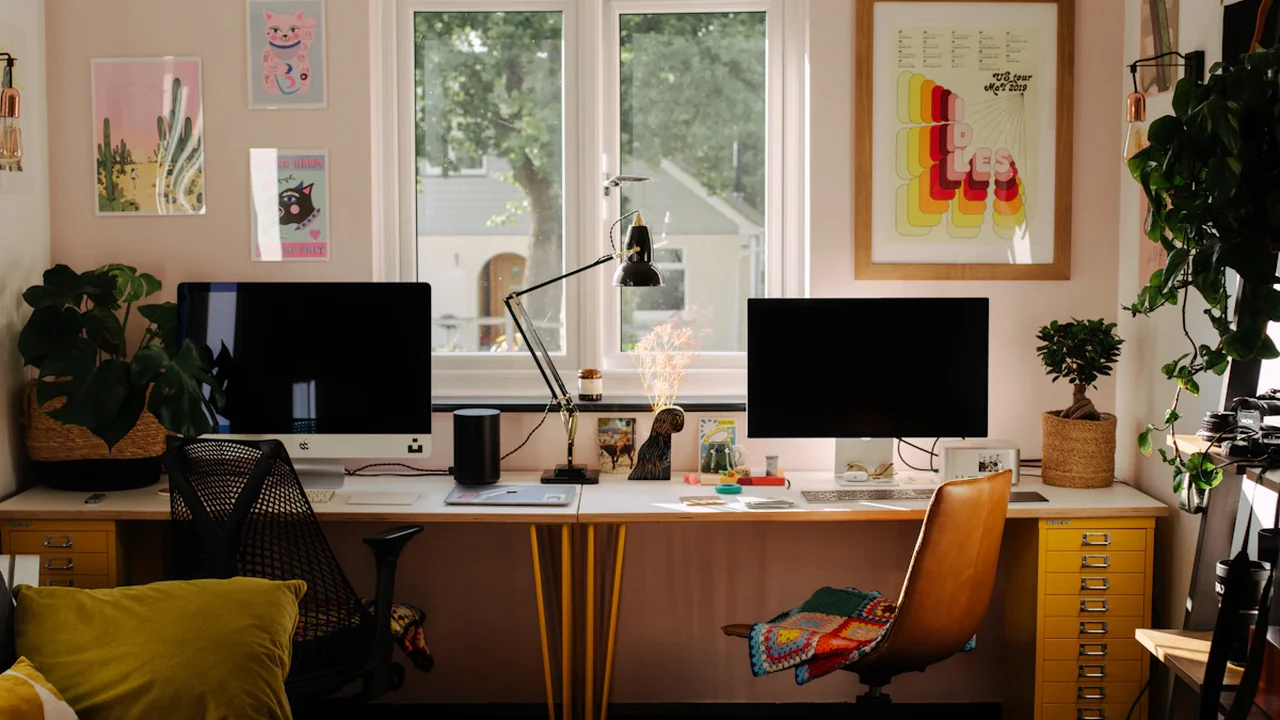
Virginia Woolf’s A Room of One’s Own is often reduced to an attractive writing room and a closed door. Its harder argument is economic: creative work depends on control over time, privacy and money. Readers can apply that argument by identifying which of those resources is most restricted and making one realistic improvement.
Woolf was not offering an interior-design formula. A beautiful desk cannot compensate for constant interruption, unaffordable housing, unpaid caring duties or work that leaves no energy for thought. The “room” represents a usable degree of independence, not necessarily a spare bedroom.
Woolf’s room began with women’s exclusion from education
A Room of One’s Own grew from lectures Woolf delivered to women students at Newnham College and Girton College, Cambridge, in October 1928. Published as an essay in 1929, it asks why literary history contained so few celebrated women writers and examines the conditions under which writing becomes possible.
The setting matters. Women had gained greater access to university study, but educational opportunity, property, income and professional recognition remained deeply unequal. Woolf connects those inequalities to the apparent absence of women from the literary canon. She does not treat creative achievement as a simple measure of talent or determination.
Her famous formulation links fiction to money and a room of one’s own. The financial figure she discusses belongs to her historical circumstances, but its function remains clear: regular income can reduce dependence, provide choices and protect the attention required for sustained work.
The private room serves a similar purpose. It offers the possibility of closing a door, leaving materials in place and following an idea without immediately answering another person’s demand. That physical boundary also represents authority over one’s own schedule and mind.
The essay’s central argument is about material freedom
Creative work is sometimes described as if it appears whenever inspiration meets discipline. Woolf directs attention to what must already be available: food, shelter, education, time, safety and enough independence to think beyond immediate necessity.
That argument does not mean wealth automatically produces art. It means deprivation and dependency impose costs. A person repeatedly interrupted may need to reconstruct the same line of thought several times. Someone without discretionary money may be unable to buy materials, travel to a library, reduce paid hours or refuse work that consumes every usable evening.
Privacy is also more than solitude. A person can be alone yet unable to concentrate because the room is unsuitable, temporary or controlled by somebody else. Conversely, useful privacy can sometimes be created in a public library, a shared studio or a household where agreed hours are respected.
Woolf’s test therefore has three connected parts:
- Protected time: a period that is not routinely claimed by employment, care or household administration.
- A usable place: somewhere safe enough for concentration, with the necessary light, seating, tools or connectivity.
- Discretionary money: funds that can support materials, access, travel, childcare or a small reduction in other demands.
A shortage in any one category can weaken the other two. Free time has limited value when there is nowhere workable to go. A desk is not truly available if its user is interrupted every few minutes. Money may buy access, but it cannot create protected hours unless responsibilities are also redistributed.
Caring duties and housing pressure keep the question current
Unequal caring work remains one of the clearest modern applications of Woolf’s argument. The person responsible for anticipating meals, appointments, school messages or an older relative’s needs may rarely experience genuinely uninterrupted time, even when other household members describe the workload as shared.
The constraint is not only the number of hours spent on care. It is also the unpredictability and mental readiness to respond. Creative attention becomes fragile when every quiet period might end without warning.
Housing conditions create another divide. A spare room is unrealistic for many people living with family, partners or housemates, particularly where rents are high. Bedrooms may double as offices, dining tables may be cleared several times a day, and quiet space may be available only at inconvenient hours.

Workplace access matters too. Some occupations provide studios, offices, equipment, research time or professional networks. Others offer none of these resources outside tightly defined paid tasks. Remote work can remove commuting time for one person while increasing domestic interruption for another.
These differences complicate advice built around personal willpower. Concentration techniques can help, but they cannot redistribute care, enlarge a home or create disposable income. The practical question is not whether somebody wants the work badly enough. It is which material condition is currently restricting it.
A three-resource audit reveals the tightest constraint
Choose one kind of focused or creative work: writing, study, music, design, coding, research or another project. Review an ordinary week rather than an ideal one.
1. Measure protected time
Count only periods that are both predictable and reasonably interruption-free. Do not include vague hopes of working after every other task is finished.
Ask:
- When can I reliably complete 30 to 90 minutes of focused work?
- Who assumes I am available during that period?
- Which duty repeatedly displaces it?
- Would a written household agreement make the boundary clearer?
A realistic first step might be reserving one weekly library session, exchanging care periods with another adult or protecting two early mornings each month.
2. Test whether the place is genuinely usable
A room does not have to be privately owned, but it must support the task. Consider noise, comfort, opening hours, transport, storage, internet access and whether you can use the space without needing permission each time.
Possible improvements include keeping materials in one portable box, booking a library desk, negotiating quiet hours in a shared house or identifying a low-cost community workspace. The useful measure is not appearance but whether the place reduces friction and interruption.
3. Calculate discretionary creative money
Record what the project requires over a month. Include small costs that are easy to overlook: fares, printing, software, instrument supplies, refreshments during a library visit or paid care.
Then identify an amount that can recur without threatening essentials. A modest creative budget is more useful than an ambitious purchase that cannot be repeated. It might fund one monthly train journey to a specialist library, basic materials or two hours of childcare.
Improve the narrowest resource by one repeatable step
Score time, place and money from one to five. The lowest score is the constraint to address first. If two scores are equal, choose the one that can be improved with the smallest sustainable change.
Avoid designing a complete new life. Make one agreement, reservation or budget decision that can survive a difficult week. Put the library visit on the calendar, establish a shared-house quiet period, or automate a small monthly transfer into a creative fund.
Review the change after four weeks. The relevant question is whether it produced usable attention, not whether the arrangement looked ideal. Woolf’s enduring challenge is to see creative freedom materially: who has time, who controls space, who can absorb costs and what practical adjustment would make the work more possible.
Source: Editorial research
Context & actions About this article
Source check Literary context
This practical reading distinguishes Woolf’s material argument about independence from the decorative use of her famous room.
- The essay developed from lectures delivered at Newnham College and Girton College in Octob...
- A Room of One’s Own was first published in 1929.
- The interpretation addresses money, privacy and uninterrupted time together.
- Modern examples are presented as applications of the argument, not claims about Woolf’s pr...
- Scope
- United Kingdom
- Updated
- 2026-09-01 15:35
Source check
Report a trust issue
Send a clear signal to community moderation if the source, facts or context need review.




Comments