
By the GlobeBids Editorial Team
Dreaming of missing a train can leave you with a feeling of urgency long after you wake. It does not mean you have missed a real opportunity or that something bad is about to happen. If the dream stays with you, its most useful feature may be the emotion: it gives you a chance to notice where deadlines, changing plans or other people’s expectations feel pressing in your daily life.
The moment the train pulls away
Perhaps you reach the platform just as the doors close. Perhaps you cannot find your ticket, or the station clock seems to move faster than you can. The details vary, but the scene has a familiar shape: you are trying to get somewhere, and the chance to leave appears to slip beyond your control.
Start with what you felt rather than trying to decode each object. Were you panicked, embarrassed, angry or unexpectedly relieved? A dream in which you fear disappointing someone may invite a different reflection from one in which you feel glad to miss the journey. Neither feeling establishes a fixed meaning, but each can give you a more useful question to ask while awake.
Dreams can also draw on ordinary experience. A recent commute, a trip you are planning, a film or a conversation about travel may have supplied the setting. You do not need to find a hidden message for the dream to be worth remembering.
When lateness resembles your waking routine
A missed-train dream may feel especially vivid when your days are organised around clocks. You might be juggling a work deadline, arriving on time for someone who depends on you, or trying to make a decision before an option closes. In that setting, the dream’s rush can resemble a feeling you already know.
Compare the dream with a specific day, rather than with your life as a whole. Do you regularly leave too little time between commitments? Is there one task you keep postponing because its deadline feels uncomfortable? Are you carrying an expectation that no one has clearly asked you to meet? These are possibilities to explore, not conclusions the dream can supply.
The emotion may also point somewhere other than your calendar. If you were ashamed as the train left, consider whether you are worried about letting someone down. If you were frustrated with the station or its confusing signs, you might ask where unclear instructions have made a current task harder. The comparison is useful only if it fits your experience; it is fine if none of it does.
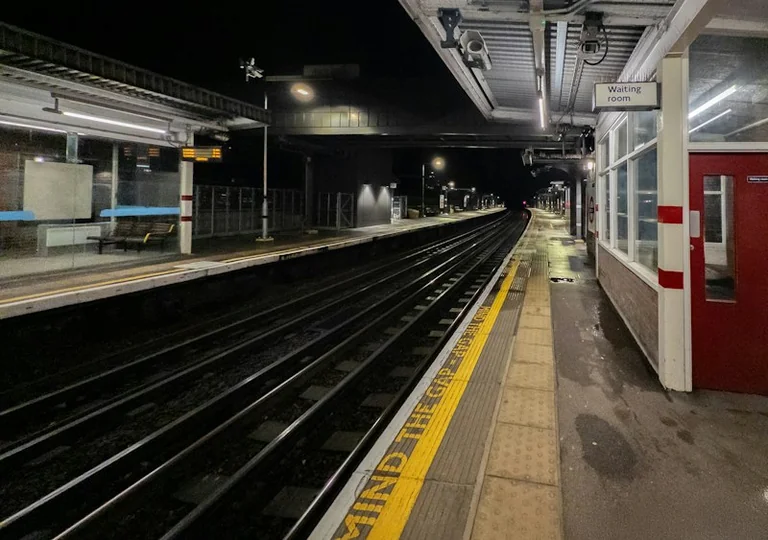
A journey can bring a transition to mind
A train has a route, a timetable and a destination. Those familiar features make it an easy image to connect with transitions, such as starting a job, moving home, ending a course or deciding what comes next. Missing one in a dream can prompt a question about readiness: is there a change you want, but feel rushed to make?
That question does not mean the dream predicts a lost chance. Real transitions rarely operate like a single train that leaves forever. A decision may have several routes, a deadline may be negotiable, or the pressure may come from comparing your pace with somebody else’s. Looking at the actual choices in front of you is more helpful than treating the dream as an instruction to hurry.
Relief matters here, too. If you woke remembering a sense of freedom after the train departed, you might be curious about whether a plan has become more of an obligation than a wish. You can notice that feeling without making a major decision because of one night’s dream.
Why a train makes such a memorable image
For many people, trains are a familiar part of modern travel, even when they do not ride one often. Platforms, departures and displayed times offer a clear setting for a story about being on schedule. Literature and other storytelling also use train journeys to bring characters toward a meeting, a departure or a new place.
That shared familiarity can make the scene easy to picture and remember. It does not give trains a universal dream meaning. A person who loves rail travel, someone who missed an important connection last week and someone who has never taken a train may each bring different associations to the same image. Your own history with the setting is a better starting point than a symbol dictionary.
A short journal prompt for the morning
If the dream still feels vivid, write down the scene before the smaller details fade. Keep the exercise brief; you are looking for a connection worth considering, not trying to solve a puzzle.
- What happened just before you missed the train, and what did you feel when it left?
- What in your current routine brings up a similar feeling?
- Is there one deadline, expectation or upcoming change you could make clearer today?
You might find a practical next step, such as checking an actual deadline, asking someone what they expect, or allowing more time for a journey. You might find no clear connection at all. Both are reasonable outcomes. If a dream is repeatedly disturbing your sleep or your worries feel difficult to manage, consider talking with a qualified health professional; a dream interpretation cannot assess your health.
Source: Editorial research
Context & actions About this article
Source check About dream meanings
Dream imagery has no fixed meaning; this article offers questions for self-reflection, not a diagnosis or prediction.
- Compare the dream's emotion with a specific part of your current routine.
- Consider recent travel experiences or stories that may have shaped the setting.
- Scope
- International
- Updated
- 2026-09-28 09:22
Source check
Report a trust issue
Send a clear signal to community moderation if the source, facts or context need review.




Comments