
By GlobeBids Weather Desk | 29 August 2026
The September observation window opens on 1 September 2026, putting travellers, households and transport operators on watch for any amber or red Met Office warning affecting UK land. The official warning service publishes each warning’s colour, affected locations and validity period. Those details will determine the outcome by the end of 30 September, while also identifying where disruptive weather could affect journeys and essential services.
September warning test at a glance
- Question: Will at least one qualifying amber or red warning affect UK land during September 2026?
- Deadline: The relevant validity window ends on 30 September 2026.
- YES: The Met Office publishes an amber or red warning covering UK land and valid for any time during the month.
- NO: No such warning has appeared by the end of 30 September.
- Official check: The Met Office UK warning map provides the decisive colour, area and dates.
This is a public-service forecast tied to an observable threshold. It does not assume that disruptive weather will occur, and it does not use yellow warnings to settle the question.
Amber identifies elevated risk, not a guaranteed severe event
The Met Office operates the National Severe Weather Warning Service. Its warning colours reflect a combination of the likelihood of an event and its expected impacts. Colour should therefore be read as a risk assessment, not as a promise that every place inside a warning area will experience the worst conditions described.
An amber warning would meet the forecast threshold, but it would not guarantee severe damage or widespread disruption. Conditions can vary considerably across a warning area, and the practical outcome may depend on the track, timing and intensity of the weather.
A red warning would also qualify. Yellow warnings do not count, regardless of how many are issued or how extensive their combined coverage becomes. However, travellers should not ignore yellow warnings: they can still signal conditions capable of affecting individual routes, events or communities even though they do not resolve this forecast.
The distinction matters because a month containing several yellow warnings could still finish as NO. Conversely, one amber warning covering a limited land area for a short part of one day would be enough for YES.
Rail, road, ferry and flight disruption could develop quickly
The warning threshold is nationally defined, but its consequences would be experienced locally. A warning affecting one part of the United Kingdom would not automatically mean disruption across the whole country.
Strong wind risks for transport
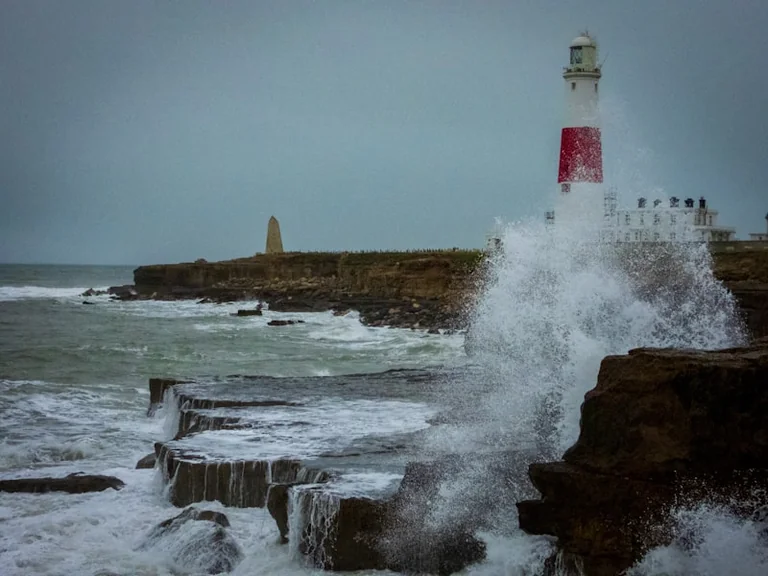
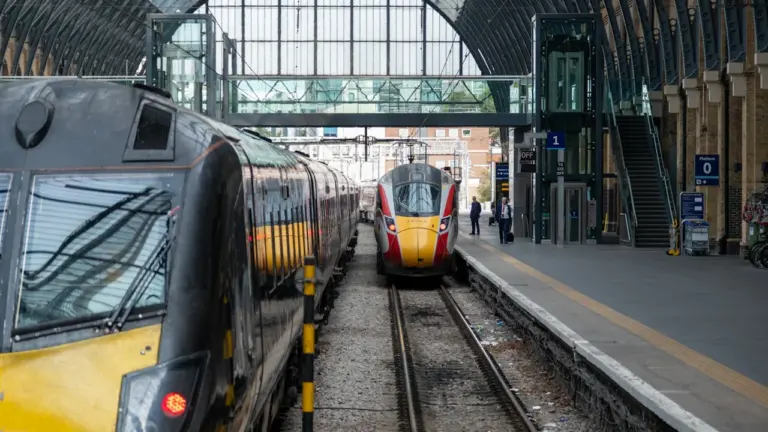
If strong winds prompted an amber or red warning, rail operators could impose speed restrictions or suspend services on exposed sections. Fallen trees, branches and debris could block lines or roads, while bridges and high-sided vehicle routes may face additional restrictions.
Ferry timetables could be changed or cancelled when ports or sea crossings are exposed to difficult conditions. Flights may also be delayed when wind affects airport operations, aircraft positioning or connecting services. An airport outside the warning area could still experience knock-on delays if an inbound aircraft or crew is disrupted elsewhere.
Passengers should treat the warning map as the start of a travel check, not the entire answer. The relevant rail company, road authority, ferry operator or airline will provide the most specific operational information.
Extreme rainfall and flooding risks
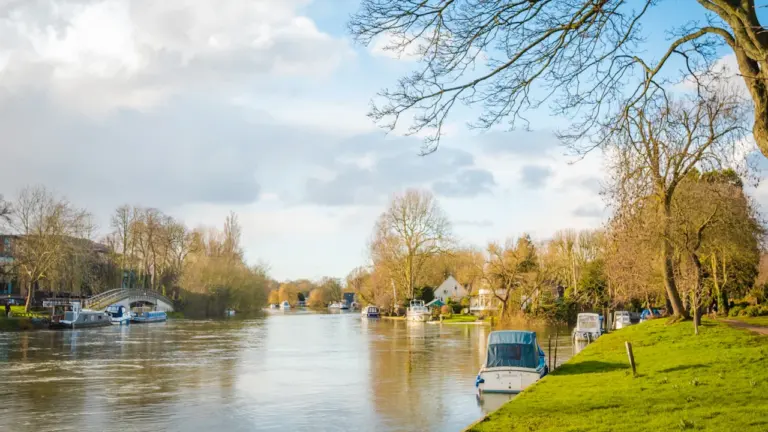
An amber or red rain warning could point to a risk of significant travel problems, particularly where intense or prolonged rainfall affects drainage, rivers, low-lying roads or vulnerable rail infrastructure.
Floodwater can make a route unsafe before a formal closure is displayed in every journey-planning service. Drivers should never attempt to pass through water when its depth or the road surface cannot be judged. Rail services may be slowed or stopped while tracks, embankments and signalling equipment are inspected.
Local flood information remains important because weather-warning areas and flood-warning areas serve different purposes. A Met Office amber or red warning settles this forecast, while flood alerts from other public agencies may provide more detailed information about particular rivers, coasts or communities.
Homes and essential services may face local interruptions
Strong wind or extreme rainfall can affect power lines, communications equipment and access routes used by repair teams. Any interruption could be brief and local, but vulnerable residents may need additional preparation if the official warning describes a risk of prolonged disruption.
Households in a warned area can take proportionate precautions without assuming the worst outcome. Useful steps include charging essential devices, securing loose outdoor items, keeping torches accessible and checking on relatives or neighbours who may need assistance.
People who rely on electrically powered medical equipment should follow the contingency advice supplied by their healthcare provider and electricity network operator. Emergency situations should always be handled through the appropriate public emergency service rather than through forecast updates.
Local authorities may issue advice about schools, public spaces, waste collections, events or temporary closures. Such notices do not determine YES or NO, but they can be more useful than a national summary when deciding what to do in a specific community.
The outcome remains uncertain until an official warning qualifies
There is no source-backed basis here for claiming that an amber or red warning is certain during September. The evidence available for resolution is the official warning service itself, which records warning colour, geographic coverage and validity.
The path to YES is straightforward: the Met Office must publish at least one amber or red warning whose mapped area includes some UK land and whose validity overlaps any part of 1–30 September. A warning published before the month begins can qualify if its validity extends into September.
The path to NO is equally clear: the entire month passes without a qualifying warning appearing. Yellow warnings, weather discussions, media forecasts, transport cancellations and reports of severe conditions do not independently change that result.
This separation prevents disruption reports from being mistaken for the formal trigger. Serious local problems could occur without an amber or red warning, but the forecast would still be judged only against the specified Met Office publication.
A published qualifying warning settles YES immediately
YES is recorded as soon as the official service publishes a qualifying warning. The result remains YES if that warning is later amended, shortened, downgraded, moved or withdrawn. The original publication is sufficient because the forecast asks whether a qualifying warning was issued, not whether it stayed unchanged.
For a warning to count, all three conditions must be met:
- Its colour is amber or red.
- Its mapped coverage includes at least some United Kingdom land area.
- Its validity overlaps any period from 1 through 30 September 2026.
A warning confined outside UK land does not qualify. Neither does an amber or red warning valid only before 1 September or after 30 September. If no qualifying publication has appeared by the end of the final day, the result is NO.
Travellers should make three checks before departure
Anyone planning a September journey should check conditions again close to departure because warnings and operator decisions can change.
- Open the live Met Office warning map and confirm the colour, area and valid times.
- Check the relevant rail, road, ferry or airline operator for cancellations, restrictions and revised connections.
- Read local authority and emergency-service advice for closures, flooding or community-specific safety measures.
Allow additional time where disruption is possible, and avoid relying on a single notification received earlier in the day. A warning may cover only part of a route, while a transport operator may alter services beyond the warned area because vehicles, aircraft or staff are out of position.
The decisive next check is the Met Office warning page. Its first qualifying amber or red publication would settle YES immediately; otherwise the question remains open until the end of 30 September 2026.
Source: Met Office
Context & actions About this article
Source check How this forecast resolves
The result depends exclusively on the colour, UK land coverage and validity dates published by the Met Office.
- Confirm that the warning colour is amber or red.
- Confirm that the warning area includes UK land.
- Confirm that its validity overlaps 1–30 September 2026.
- Record YES at first publication, even if the warning is later changed or withdrawn.
- Source
- Met Office UK weather warnings
- Scope
- United Kingdom
- Updated
- 2026-08-29 13:33
Source check
Report a trust issue
Send a clear signal to community moderation if the source, facts or context need review.


Comments