By GlobeBids History Desk | Published 16 August 2026
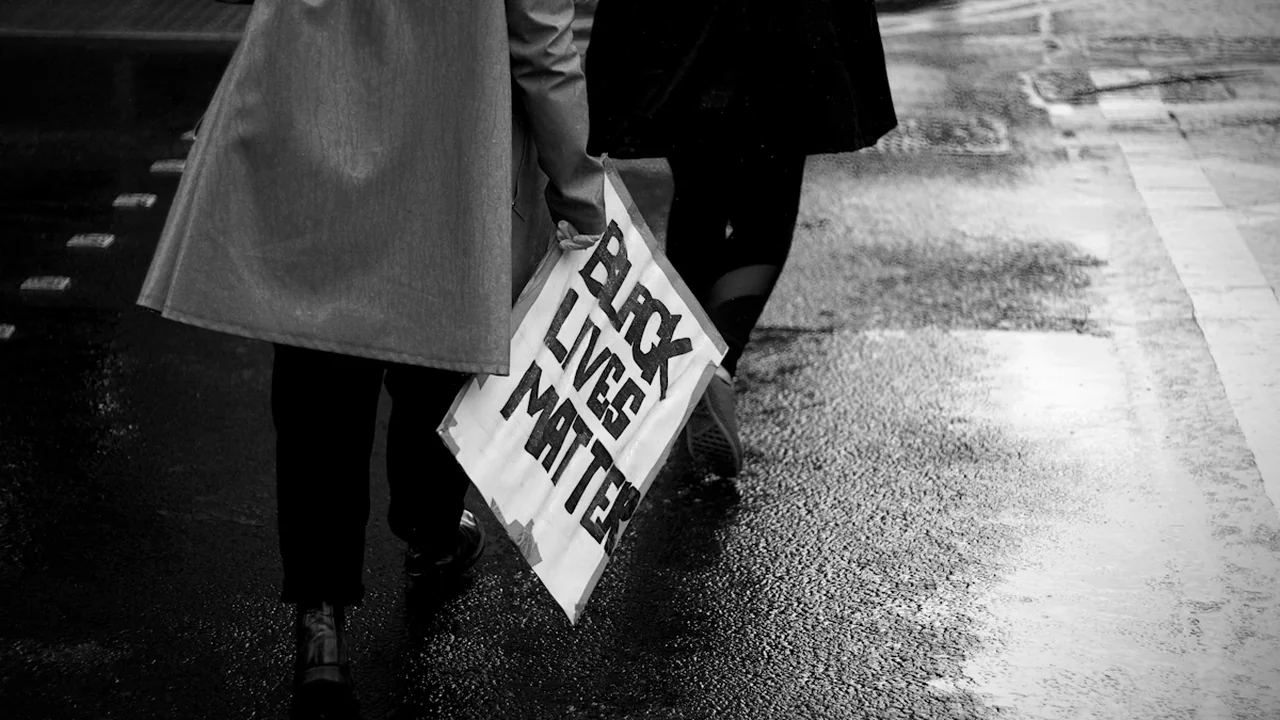
On 16 August 1819, a large parliamentary-reform meeting assembled at St Peter’s Field in Manchester. Mounted forces dispersed the crowd, leaving people dead and many others injured. The anniversary remains important because Peterloo became a lasting reference point in debates about peaceful assembly, press freedom and who should have the right to vote.
Peterloo did not deliver democracy at once. The immediate response was repression, while meaningful electoral change developed unevenly across more than a century. Its influence lies in how the event exposed the political exclusion of industrial towns and forced questions about state power into public view.
Manchester had grown without gaining equal political representation
Early-19th-century Manchester was expanding rapidly through manufacturing and trade, but its political representation had not kept pace. The town did not elect an MP of its own, while some much smaller parliamentary constituencies retained seats despite having very few voters.
Voting in parliamentary elections was also governed by property qualifications and local rules. Most working men could not vote, and women were excluded from the parliamentary franchise. The House of Commons therefore represented only a limited part of the population.
Reform campaigners wanted representation to reflect the new industrial towns, wider voting rights for men and more regular elections. Not every reformer supported the same programme, but they shared a belief that the existing system gave too much influence to landowners and privileged boroughs.
Manchester’s reform movement was connected to the everyday pressures faced by working families. High food prices, uncertain employment and post-war economic hardship intensified dissatisfaction, although Peterloo’s central public demand concerned parliamentary representation.
Why thousands gathered peacefully at St Peter’s Field
The meeting at St Peter’s Field was intended as a large, public demonstration of support for parliamentary reform. Groups travelled into Manchester from surrounding communities, often marching in organised contingents. Women reformers also participated in a political culture from which they remained formally excluded at Westminster.
The organisers placed importance on discipline and peaceful conduct. The scale and order of the gathering were political messages in themselves: people without votes were showing that they could assemble collectively, listen to speeches and make constitutional demands in public.
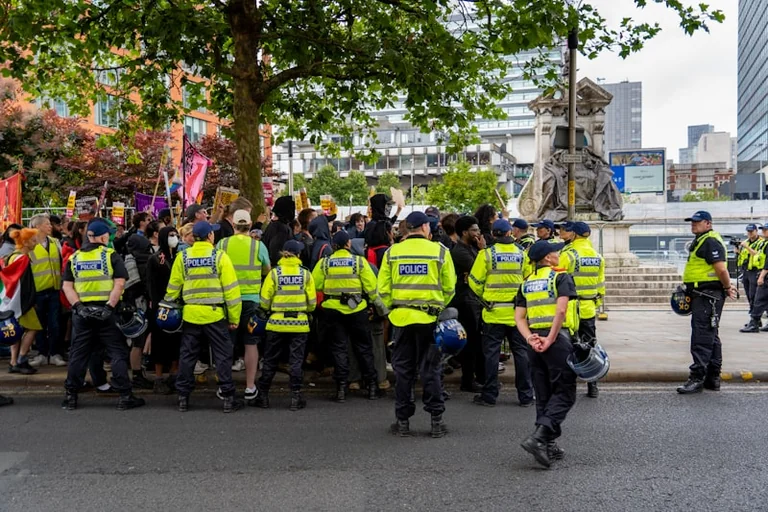
Henry Hunt, a nationally known reform speaker, was the principal attraction. Local magistrates, concerned about unrest, observed the meeting from a nearby building and ordered the arrest of Hunt and other figures on the platform.
Manchester and Salford Yeomanry entered the field, followed by regular cavalry. The mounted intervention broke up the meeting. UK Parliament’s account of Peterloo records that people were killed and many were injured.
The historical importance of the event does not depend on a graphic reconstruction. What mattered politically was the contrast between a reform meeting presented as peaceful and orderly and the use of mounted force to disperse it.
“Peterloo” turned the field into a national political symbol
The name “Peterloo” was a pointed comparison between St Peter’s Field and the Battle of Waterloo, fought four years earlier in 1815. Popularised through the radical press, the label was deliberately bitter: military language associated with national victory was redirected toward violence against civilians at home.
That compact name helped the event travel beyond Manchester. It also demonstrated the political power of newspapers, pamphlets, poems, prints and public testimony at a time when reformers depended on print to reach people excluded from formal institutions.
Eyewitness and press accounts became crucial because they challenged official interpretations and preserved different perspectives on the meeting. Samuel Bamford, a reformer who helped lead marchers from Middleton, later described the day in his writing. Journalist John Edward Taylor witnessed the event and subsequently founded the Manchester Guardian in 1821.
Accounts do not agree on every detail, and later historians have continued to examine names, injuries and individual experiences. Their wider value is clear: they made it harder for the authorities’ version of events to stand alone and linked freedom of the press with public accountability.
Repression came before the long sequence of voting reforms
Peterloo did not produce an immediate extension of the vote. Hunt and other reformers were prosecuted, and the government supported measures designed to restrict radical organisation. The Six Acts, passed later in 1819, tightened controls affecting large meetings, political publications and organised drilling.
That distinction matters. Peterloo became part of the argument for reform, but it was not a single turning point that directly created universal suffrage.
The Reform Act 1832 gave Manchester parliamentary representation and corrected some of the most conspicuous inequalities between growing towns and small boroughs. It still left most working-class men without votes and did not enfranchise women.
Further Reform Acts in 1867 and 1884 expanded the male electorate in stages. The Representation of the People Act 1918 extended voting rights to many women over 30 and broadened the male franchise. Women and men gained the parliamentary vote on equal terms in 1928.
Peterloo belongs within that longer history alongside Chartism, trade union organisation, women’s suffrage campaigns and repeated disputes over the boundaries of citizenship. Its contribution was cultural and political: it supplied later generations with evidence of what could happen when demands for representation met official fear of mass assembly.
Manchester remembers Peterloo in the modern city
The landscape around the former St Peter’s Field has changed substantially, but the event remains embedded in Manchester’s civic identity. A memorial designed by artist Jeremy Deller was unveiled near the site during the bicentenary year in 2019.
Its concentric stone circles preserve victim names and the names of communities from which people travelled. Annual remembrance, exhibitions, performances and historical research continue to connect the city’s present public spaces with the political gathering held there in 1819.
Peterloo endures because its central questions remain recognisable: who may gather in public, how authorities should respond to dissent, whether journalists can scrutinise state action and how political institutions represent people without power. The anniversary marks both the violence at St Peter’s Field and the unfinished, gradual character of democratic change.
Source: UK Parliament
Context & actions About this article
Source check Historical context
This account places the events confirmed by UK Parliament within the longer history of protest, political representation and electoral reform.
- Confirmed the meeting’s date and location as St Peter’s Field, Manchester, on 16 August 18...
- Distinguished the violent dispersal and immediate repression from later electoral reforms.
- Avoided disputed casualty totals and graphic descriptions.
- Checked the origin of the Peterloo name and Manchester’s present-day remembrance.
- Source
- UK Parliament
- Scope
- Manchester
- Updated
- 2026-08-16 08:51
Source check
Report a trust issue
Send a clear signal to community moderation if the source, facts or context need review.

Comments