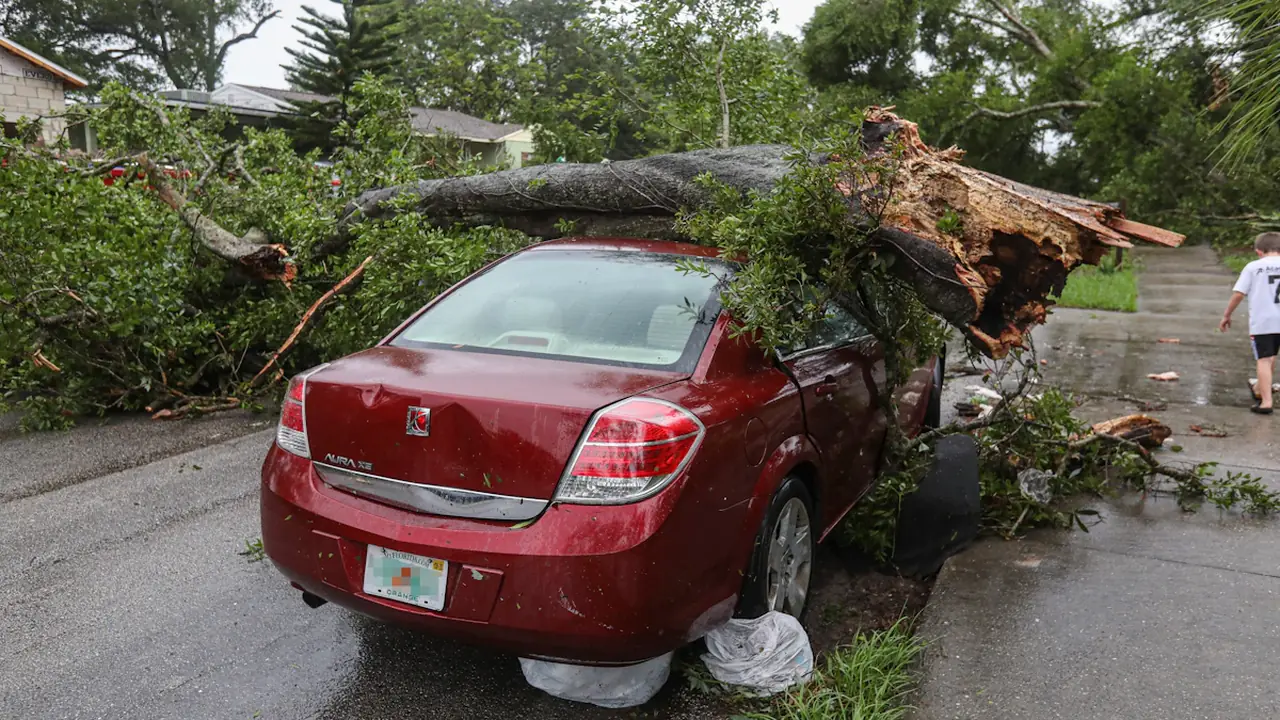
The Met Office’s chronology records the Great Storm as a major windstorm that crossed southern Britain on 15–16 October 1987. It remains a landmark in the history of British forecasting and public warnings, but it describes a past event: it cannot predict today’s weather or, by itself, measure current climate risk. The next useful check in any real storm is the Met Office’s current forecast and warnings for your area.
15–16 October 1987: how the storm unfolded
The Great Storm developed as a deep low-pressure system moved across the United Kingdom. The Met Office case study places the event in the wider meteorological context and documents its passage over 15–16 October. Its chronology is the starting point for understanding what happened, rather than a template for forecasting a future storm.
The storm brought exceptionally strong winds, particularly to southern parts of Britain. Trees were uprooted, buildings and infrastructure were damaged, transport was disrupted, and power supplies were affected. The scale of disruption made the event memorable well beyond the weather records themselves.
The chronology matters because a storm’s effects depend on more than a single wind figure. The area crossed, the timing, local exposure and the vulnerability of trees, buildings and services all shape what people experience. Historical accounts help explain the event; they do not make every later storm comparable.
What the Met Office record says about forecasting
The Great Storm is often discussed in connection with forecasting and the communication of severe weather. The Met Office account provides the event’s chronology and meteorological context. Public discussion of the storm has also focused on how forecasts and warnings were interpreted and communicated at the time.
That distinction is important. A retrospective account can document the weather and its impacts, while judgments about what was forecast, what warning was issued and how the public understood it need careful wording. The existence of a serious storm does not, on its own, establish exactly what every forecast said or what every person received.
The enduring lesson is practical: forecasts and warnings help people make decisions before dangerous conditions arrive, but they need to be understood alongside their timing, geographic coverage and stated uncertainty. Warnings are not guarantees of damage in every location; they signal conditions that may pose a risk and call for appropriate action.

How the storm affected daily life
The wind damage had consequences for travel, homes and essential services. Fallen trees could block roads and rail routes, while damage to buildings and power infrastructure could interrupt normal routines. Those effects show why severe-weather preparation includes more than checking whether it will be windy.
For the public, useful preparation begins with checking current, local guidance and considering how strong winds could affect a particular journey or property. Depending on the forecast and official advice, that can mean allowing extra travel time, securing loose outdoor objects, and avoiding wooded areas or exposed routes during dangerous conditions.
The specific steps should follow the warning and advice in force at the time. A 1987 account cannot substitute for a current forecast, and the right response depends on the present conditions and the location involved.
What the 1987 storm does not prove about today
The Great Storm is historical context, not a forecast. Its date, track and impacts do not tell readers whether Britain will experience similar weather this October, nor do they provide a direct measure of present-day climate risk. Making those claims would require current observations and appropriate long-term evidence, not analogy with one event.
A single storm also cannot settle how weather hazards have changed over time. To assess present conditions, readers need contemporary forecasts for immediate decisions and relevant climate evidence for questions about long-term patterns. Those are different questions, answered by different kinds of information.
The next verifiable milestone is therefore the next forecast or warning for the place and time that matter to the reader. For the history of 15–16 October 1987, the Met Office case study remains the relevant record; for what is happening now, consult the Met Office’s latest local forecast and warnings.
Source: Met Office
Context & actions About this article
Source check Historical context
The account uses the Met Office chronology for the Great Storm of 15–16 October 1987 and treats it as historical context, not a present-day forecast.
- Event dates: 15–16 October 1987
- Met Office chronology and meteorological context
- Current weather decisions require current local forecasts and warnings
- Source
- Met Office
- Scope
- United Kingdom
- Updated
- 2026-10-22 07:53
Source check
Report a trust issue
Send a clear signal to community moderation if the source, facts or context need review.

Comments