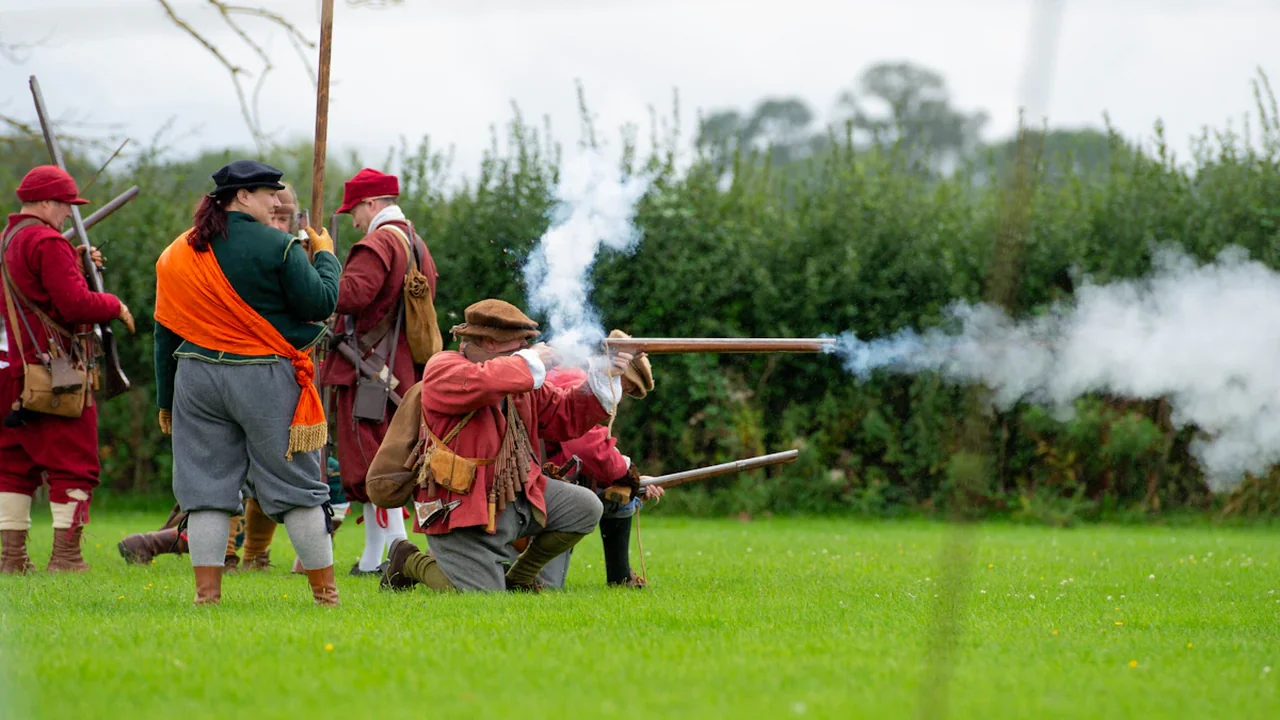
The Gunpowder Plot was a failed 1605 conspiracy to blow up the House of Lords during the state opening of Parliament. Guy Fawkes was one of the men involved, but the plot was carried out by a group of conspirators. Its discovery helped make November 5 a recurring date in British public memory, though the meaning of the commemoration has changed over time.
Why the House of Lords was the target
The conspirators planned to strike when the king and members of Parliament would be gathered for the state opening. The House of Lords was therefore significant both as a building and as the place where the country’s political leadership would assemble. The target makes clear that the plan was directed at the centre of government, rather than being an attempt to damage a structure for its own sake.
The plot arose in the tense political and religious climate of early seventeenth-century England. Religious divisions shaped relations between the Crown and its subjects, and the conspirators sought to force change through violence. That context helps explain the choice of target and the ambition of the plan, without making the attack inevitable or reducing the period to a simple clash between two sides.
The timing was central to the scheme: an attack during the state opening would have placed the king and Parliament in danger together. The plan failed before that destruction could take place. Remembering the parliamentary setting helps explain why the story is more than a tale about an individual discovered with explosives; it was a conspiracy aimed at the political order assembled at Westminster.

Guy Fawkes was one of several conspirators
Guy Fawkes became the best-known name attached to the plot, but he was not its only participant. UK Parliament’s historical account describes the Gunpowder Plot as a conspiracy and identifies Fawkes as one of those involved. Keeping the group in view matters because a familiar name and image can obscure the wider plan and the people behind it.
The distinction also helps separate the public symbol from the historical event. Fawkes is closely associated with November 5, but the intended attack was collective, and its target was the House of Lords during a major parliamentary occasion. Treating the plot as one man’s act leaves out both its political setting and the scale of what the conspirators intended.
How November 5 became a date of commemoration
The discovery of the plot gave November 5 its lasting association with remembrance. Over time, the date became linked with annual public observances often known as Bonfire Night or Guy Fawkes Night. Bonfires and fireworks have made the occasion familiar to generations, including people who may know little about the parliamentary crisis behind it.

The annual observance carries a date forward, even as its emphasis changes. The failure of the plot, the survival of Parliament and the figure of Fawkes have all become part of public memory. The familiar name of the night foregrounds one conspirator, while the event itself involved a group and a specific target: the House of Lords.
What November 5 means in public memory now
November 5 sits between a precise historical event and a broader seasonal tradition. Its continued recognition keeps a seventeenth-century attempt to strike at the political order in view, but modern observances may focus more on fireworks and gatherings than on the plot’s context. That difference is not a contradiction: public rituals can retain an association with an event while the details people recall shift over time.
The date remains culturally familiar partly because its name is easy to remember, while the parliamentary setting is less visible in the annual celebration. Returning to that setting clarifies what happened in 1605: a group planned an attack on the king and Parliament during the state opening, the plot failed, and November 5 became a recurring commemoration. Fawkes remains its best-known symbol, but he represents only one part of the story.
This account follows UK Parliament’s historical resource on the Gunpowder Plot and its parliamentary setting: https://www.parliament.uk/about/living-heritage/evolutionofparliament/parliamentaryauthority/the-gunpowder-plot/.
Source: UK Parliament
Context & actions About this article
Source check Historical context
UK Parliament’s historical account places the 1605 plot at the House of Lords and identifies Guy Fawkes as one of those involved.
- The plot targeted the House of Lords in 1605
- Guy Fawkes was one of several conspirators
- November 5 became associated with annual commemoration
- Source
- UK Parliament
- Scope
- United Kingdom
- Updated
- 2026-10-23 10:24
Source check
Report a trust issue
Send a clear signal to community moderation if the source, facts or context need review.




Comments