The free Evolving Earth display at the National Museum of Scotland in Edinburgh takes visitors from minerals formed during the early universe to examples shaped by modern human activity. It is part of the museum’s permanent galleries, is intended for the general public and does not require booking.
The exhibition is at the National Museum of Scotland, Chambers Street, Edinburgh, EH1 1JF. National Museums Scotland presented the display as new on 8 September 2026, but did not provide a separate opening date or fixed exhibition period. Because it is a permanent display, visitors do not need to plan around a closing date announced in the source.
The essentials
- Exhibition: Evolving Earth
- Venue: National Museum of Scotland
- Address: Chambers Street, Edinburgh, EH1 1JF
- Admission: Free
- Booking: Not required
- Duration: Permanent gallery display
- Audience: General public
- Date information: The announcement was published on 8 September 2026; no separate start date was supplied
No exhibition time, transport guidance or accessibility information was included in the announcement. Visitors who require those details should check current museum information before travelling.
What visitors can see in Evolving Earth
The display follows the increasing diversity of minerals across an exceptionally long span of history. Its earliest material includes the Allende Meteorites, which preserve the first diamonds and provide a link to conditions in the early universe.
A lunar meteorite represents the formation of the Moon and is being displayed at the museum for the first time. Another section examines the Great Oxidation Event, which occurred around 2.4 billion years ago. National Museums Scotland explains that cyanobacteria began releasing oxygen during this period, helping to create conditions for large, complex life and prompting a major increase in the diversity of mineral species.
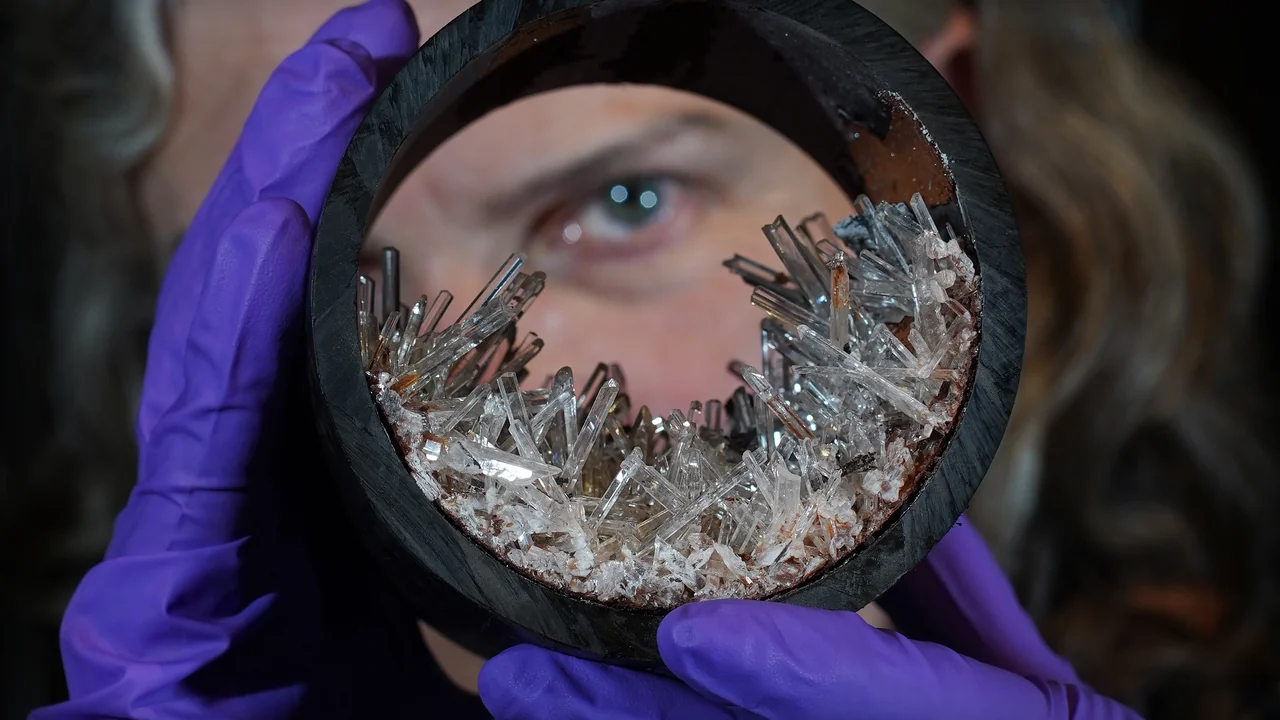
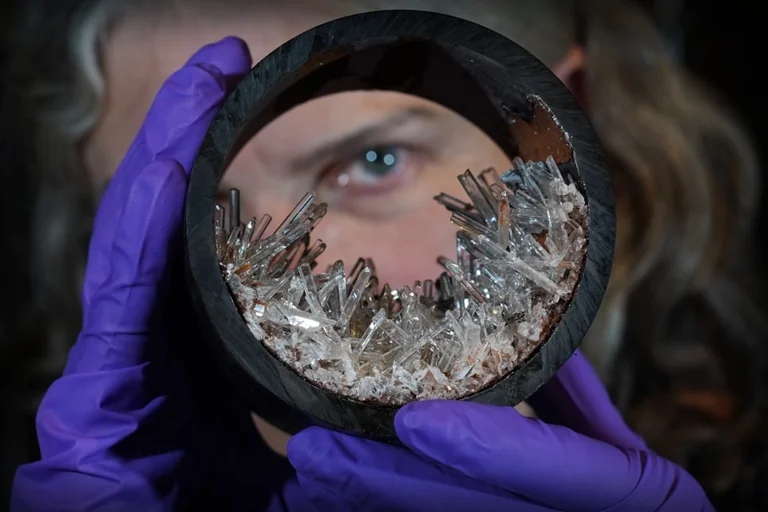
The story then reaches minerals influenced by human activity. One of the most immediate examples is a plastic pipe encrusted with gypsum crystals that are less than 40 years old. Gypsum occurs naturally, but the display shows how industrial activity can change where it forms and the forms in which it is found.
This contrast between meteorites, lunar material and a relatively recent industrial object is the exhibition’s central thread: mineral formation is continuing rather than belonging only to the distant past. Human actions including mining, waste production and shipping can move materials, create new environments and remove existing ones. Scientists have used the term Anthropocene to describe the idea that human activity is leaving a recognisable imprint on the geological record.
Dr Rachel Walcott, Principal Curator of Earth Systems, said the display brings the planet’s mineral story up to date by placing evidence of human influence alongside processes that began close to the formation of the universe.
Planning a visit to the Edinburgh display
Evolving Earth may suit visitors interested in geology, meteorites, planetary history or the physical evidence of humanity’s effect on Earth. Its permanent status also means it can be included in a wider visit to the National Museum of Scotland without a separate exhibition booking or admission charge.
The confirmed practical details are limited to its location within the museum’s free permanent galleries and the fact that booking is not required. National Museums Scotland did not specify a dedicated start time, daily schedule, transport arrangements or accessibility provision in its announcement. The museum’s current visitor information should therefore be consulted for any additional arrangements needed before travelling to Chambers Street.
Source: National Museums Scotland News
Context & actions About this article
Source check Source and visit details
Exhibition highlights and practical details were checked against information published by National Museums Scotland on 8 September 2026.
- Confirmed that Evolving Earth is part of the museum’s free permanent galleries
- Confirmed the National Museum of Scotland venue and Chambers Street address
- Confirmed that no booking is required
- Kept the missing exhibition start time, transport and accessibility details explicit
- Source
- National Museums Scotland News
- Scope
- Edinburgh, Scotland
- Updated
- 2026-09-08 13:36
Source check
Report a trust issue
Send a clear signal to community moderation if the source, facts or context need review.



Comments