
By GlobeBids Editorial Team
Catching a train depends on a simple agreement: the time on your clock must mean the same thing as the time in the timetable. In nineteenth-century Britain, different local times complicated that agreement. Railway companies adopted Greenwich Mean Time to coordinate journeys, helping turn a London observatory’s reference time into an everyday convention.
According to Royal Museums Greenwich, most railway companies were using GMT by the 1840s. Greenwich’s international role followed later, with the International Meridian Conference of 1884. These are connected developments, but they answer different questions: how to run a coordinated railway, and where to place the world’s reference meridian.
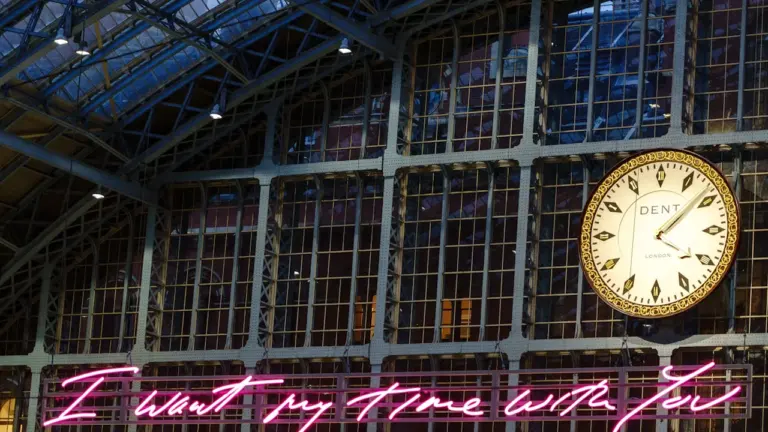
For passengers today, that distinction still matters. A shared time reference makes schedules intelligible, while seasonal clock changes determine which offset appears on the clock. Greenwich’s history, also reflected in Greenwich’s public clock, helps explain the first without confusing it with the second.
Why local clocks created a railway problem
Before standard time, a town’s time could follow its own local solar reference. Because Earth rotates, the Sun reaches the local meridian at different moments in places east or west of one another. Clocks set to those local references could therefore disagree without either being carelessly maintained.
That arrangement was easier to live with when most daily activity remained local. A meeting between neighbours did not require agreement with a clock in a distant town. Railways made the differences harder to ignore by linking places through scheduled departures, arrivals and connections.
A timetable needs a consistent way to describe when something happens. If each station uses its own local time, a passenger must understand those differences before comparing departure and arrival times. The difficulty lies in interpreting the numbers, even when every clock works correctly.
Consider a hypothetical connection between two towns whose clocks differ by several minutes. A traveller reading both timetables might appear to have enough time to change trains, yet be comparing two different time references. A shared clock convention removes that extra calculation.
Royal Museums Greenwich describes these local-time differences as a problem that helped drive the development of standard time based on the Greenwich meridian. Its account, “Greenwich Time Ball: one time for all”, places the familiar idea of a common time within this practical history.
Railway timetables gave GMT an everyday purpose
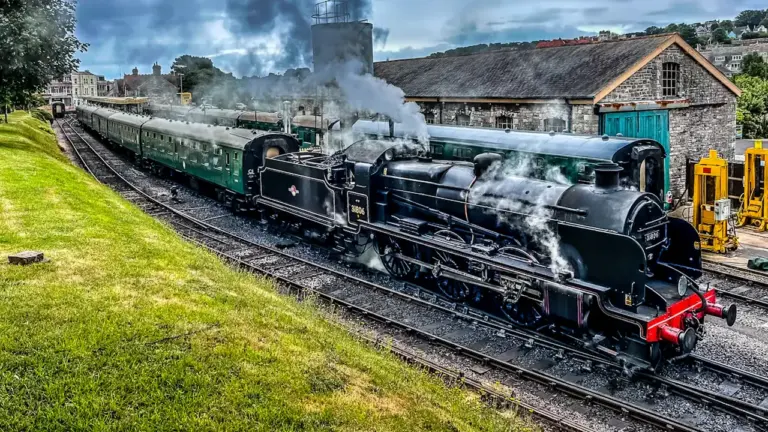
The railway solution was to use a common reference: Greenwich Mean Time. Once a company expressed its timetable in GMT, stations along its routes could describe departures and arrivals using the same basis. Passengers and railway staff no longer needed to reconcile a separate local time at every stop.
The word “mean” also matters. GMT refers to a time standard based on mean solar time at Greenwich. Mean solar time smooths out variations in the apparent motion of the Sun, providing a regular basis for clock time rather than simply following a sundial’s indication.
Royal Museums Greenwich’s history of the Royal Observatory says most railway companies had adopted GMT by the 1840s. That chronology shows how transport made a shared time reference useful well before Greenwich’s later international recognition.
The wording deserves care: most railway companies adopting GMT does not mean every clock across Britain changed together on one day. Railway adoption describes a developing convention across a network. It should not be compressed into an invented moment when an entire country simultaneously reset its clocks.

For travellers, the advantage was straightforward. A departure time could retain the same meaning throughout a journey. For railway operations, a shared reference gave schedules a consistent foundation. It did not guarantee punctual trains, but it made agreement about scheduled time possible.
Greenwich’s international role came later
Greenwich is a place in London, and the Royal Observatory Greenwich sits at the centre of this timekeeping story. Its significance extends beyond railway schedules because a meridian supplies a geographical reference as well as a basis for time.
A meridian is a line of longitude running between the poles. A prime meridian is the chosen zero point from which longitude is measured east and west. Earth’s geography does not dictate a uniquely necessary zero line; using one requires agreement.
According to Royal Museums Greenwich, the 1884 International Meridian Conference established Greenwich as the Prime Meridian and recommended a global time-zone system based on GMT. This gave Greenwich’s reference an international role, decades after British railway companies had begun using its time.
The sequence helps explain the scale of the change. Railways needed a common time across connected routes. International coordination required a reference that could relate places around the world. Greenwich linked these needs through an agreed geographical starting point.
A conference decision and the operation of clocks in individual countries are nevertheless different things. Establishing a reference meridian does not mean every country instantly adopts the same clock time. Time zones allow different local clock readings to relate to a common reference through offsets.
A reference meridian does not decide summer clock changes
The Prime Meridian answers a geographical question: where does the longitude scale begin? Standard time answers a coordination question: which time reference does a community or transport network use? Seasonal clock changes concern a further choice about the clock time used during part of the year.
Britain’s familiar distinction between GMT and British Summer Time illustrates this. British Summer Time is one hour ahead of GMT. Moving clocks for summer does not move Greenwich, redraw the Prime Meridian or undo the agreement that made shared railway time possible.
These distinctions prevent a common misunderstanding. Greenwich’s international recognition in 1884 was not the introduction of Britain’s seasonal clock changes. The meridian provides a reference; seasonal arrangements govern how civil clocks relate to that reference during particular periods.
For a modern journey, the useful habit is to read a timetable in its stated local time and check the relevant clock convention when crossing borders or travelling around a seasonal change. Matching a device’s time zone to the journey matters more than assuming every displayed time means GMT.
At Greenwich, the larger historical point is equally practical. A common time allowed people in different places to act on the same schedule. The next time you compare a departure with a connection, check that both times use the same local convention—the everyday agreement that railway time helped make familiar.
Source: Royal Museums Greenwich
Context & actions About this article
Source check Historical context
This explainer draws on Royal Museums Greenwich’s accounts of railway time and the Royal Observatory; the connection example is hypothetical.
- Most railway companies had adopted GMT by the 1840s.
- The 1884 International Meridian Conference established Greenwich as the Prime Meridian and...
- The reference meridian and seasonal clock changes serve different purposes.
- Source
- Royal Museums Greenwich: History of the Royal Observatory
- Scope
- London, United Kingdom
- Updated
- 2026-10-08 13:07
Source check
Report a trust issue
Send a clear signal to community moderation if the source, facts or context need review.


Comments