
A difference of 2p per litre adds £1 to a 50-litre fill-up. That makes the UK government’s weekly fuel averages a useful yardstick when you see a forecourt price. The comparison tells you whether that pump is above or below the national figure for the same fuel; it does not tell you what another nearby station charges.
By GlobeBids
Find the latest average for your fuel
The Department for Energy Security and Net Zero publishes weekly road fuel prices for petrol and diesel. Check the latest available entry and its date before comparing it with a pump. Use the petrol average for a petrol price and the diesel average for a diesel price.
A current numerical average cannot be stated here because the information supplied confirms the series, but contains no publication-day price. The linked government page is the place to find the latest figure available when you make your comparison. Record both its date and its pence-per-litre value so you know which week your calculation describes.
The published figure is a UK average, not a quote from a station near you. A forecourt can be above or below it without being unusually expensive or cheap for its area. Motorway services, rural stations and local competitors may charge different prices, and a weekly figure may lag behind a price change you see at the pump today.
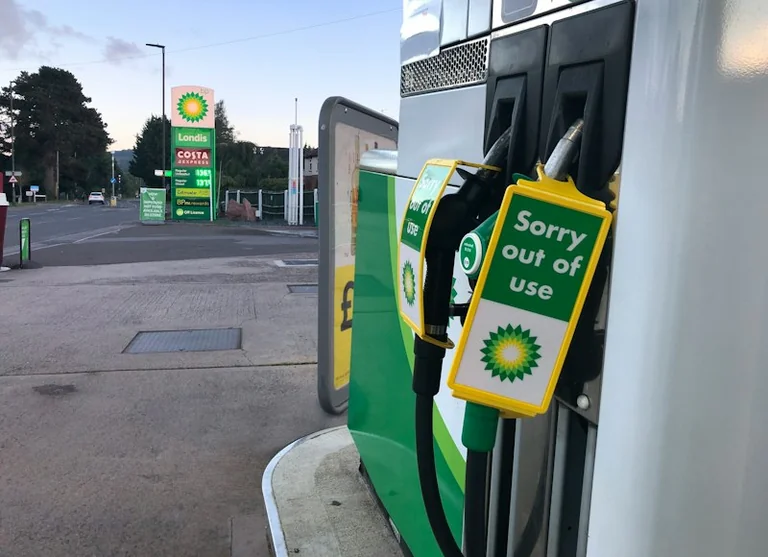
Turn the pump-price gap into a fill-up cost
Subtract the government average for your fuel from the forecourt price, using pence per litre for both. A positive result means the pump is above the national average; a negative result means it is below. Multiply the gap by the litres you expect to buy, then divide by 100 to express the difference in pounds.
For example, if a pump price is 2p per litre above the relevant weekly average, a 50-litre fill-up costs £1 more than 50 litres priced at that average: 2p × 50 = 100p. If the pump is 2p below it, the same calculation gives a £1 difference in the other direction. These are illustrations of the arithmetic, not claims about current UK prices.
Your actual saving from choosing another station depends on that station’s price and how much fuel you buy. A driver buying 25 litres would see half the 50-litre difference for the same per-litre gap. Travel to a cheaper pump can also use fuel, so the national comparison alone cannot establish which stop is best value for a particular journey.
For a practical check, compare prices at stations you could reasonably use, then place each against the latest government average for the correct fuel. If the weekly series changes, repeat the calculation with its new dated figure. That keeps the national benchmark useful while leaving the local buying decision to the prices you can actually pay.
Source: UK Department for Energy Security and Net Zero
Context & actions About this article
Source check How the comparison works
The calculation uses the government’s separate weekly petrol and diesel averages; no current price is quoted without a publication-day figure.
- Match the pump price to the average for the same fuel.
- Check the date of the latest government entry.
- Multiply the pence-per-litre difference by the litres you plan to buy.
- Source
- Department for Energy Security and Net Zero: weekly road fuel prices
- Scope
- United Kingdom
- Updated
- 2026-10-02 09:36
Source check
Report a trust issue
Send a clear signal to community moderation if the source, facts or context need review.


Comments