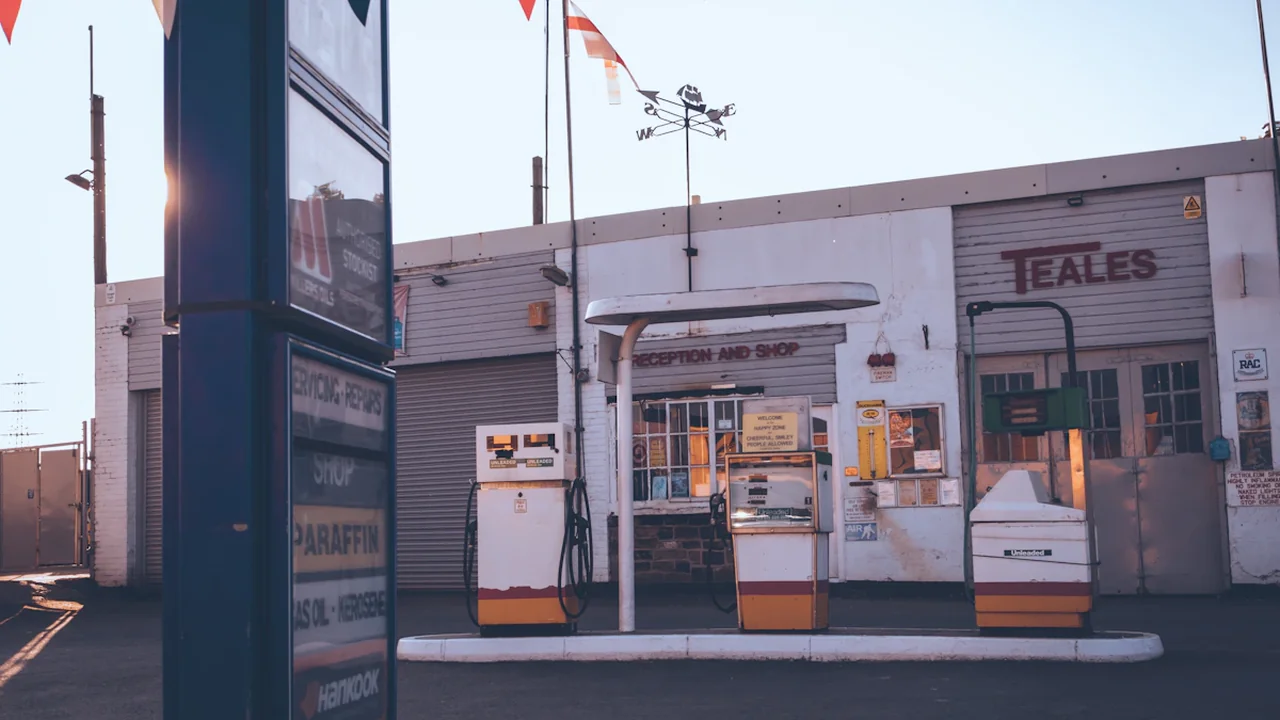
A cheaper pump can reduce your fuel bill, but the useful saving depends on how much you buy and how far you drive to reach it. For UK households comparing nearby forecourts today, Fuel Finder brings together live retail fuel prices and forecourt information across the country. Compare the same fuel grade, check any available update information and calculate the saving before changing your route.
By GlobeBids Editorial
Compare the same fuel grade on a route you already use
Start with the fuel your vehicle requires. Compare petrol with petrol or diesel with diesel, then make sure the grade matches. A standard-grade price and a premium-grade price are different purchases, so comparing them will not show the saving available on the fuel you intend to buy.
Use the official Fuel Finder collection for current service information. GOV.UK describes Fuel Finder as bringing together live retail fuel prices and forecourt information across the UK. Follow the current guidance there to understand how to access the information.
Build your shortlist around your actual journey: the drive to work, a supermarket trip or another planned errand. A station close to home may require more extra driving than one farther away that sits directly on your route. Compare the additional journey, rather than distance from your starting point alone.
For each candidate, note the matching fuel price, location and any available opening or access information. Keep the shortlist small enough to make a decision quickly. The aim is to find a convenient lower-cost stop, rather than spend a long time searching for a marginally cheaper litre.
Check when the price information was updated
Look for any timestamp or other indication of when the displayed price was reported or updated. If update information is available, consider it alongside the price. An apparently cheaper price with unclear timing gives you less confidence in the saving you calculated.
Do not assume that every display provides the same update details. If no timestamp is visible, treat the price as something to check before committing to a special journey. A live price service is useful for comparison, but the displayed figure should not be treated as a guaranteed price on arrival.
Check again shortly before leaving, especially when the saving is small or the trip would be solely for fuel. At the forecourt, confirm the price for your chosen grade before dispensing. If it differs from your earlier comparison, use the actual price to reconsider the purchase.
Calculate the saving on the litres you intend to buy
The calculation is straightforward: multiply the difference in pence per litre by the number of litres you intend to buy, then divide by 100 to express the saving in pounds.
Hypothetical example: a 5p-per-litre difference on 40 litres saves £2 before extra driving costs. This is an illustration, not a statement about today’s prices or a promise that a particular station will save you money.
The following figures all use the same hypothetical 40-litre purchase. They show the fuel-purchase saving before any additional travel costs.
| Price difference | Saving on 40 litres before extra driving costs |
|---|---|
| 1p per litre | £0.40 |
| 2p per litre | £0.80 |
| 3p per litre | £1.20 |
| 5p per litre | £2.00 |
| 8p per litre | £3.20 |
| 10p per litre | £4.00 |
Purchase size matters. At the same hypothetical 5p difference, buying 20 litres saves £1, while buying 60 litres saves £3. Use the amount you actually need and can safely put into the tank; a larger purchase should not be assumed just to make a detour look worthwhile.
If you normally choose a fixed spending amount, estimate the litres that budget will buy at the displayed price. For comparing stations, use a consistent litre quantity so the calculation stays clear. Buying £40 of fuel at each station compares the amount received, rather than the cost of an identical purchase.
Subtract the cost of the extra driving
Count all additional distance caused by choosing the cheaper forecourt, including any return leg or diversion needed to rejoin your route. If you are combining refuelling with an existing errand, count only the extra distance introduced by the fuel stop.
One way to estimate additional fuel cost is to use your vehicle’s typical consumption in litres per 100 kilometres. Multiply the extra kilometres by that consumption, divide by 100, then multiply the resulting litres by an assumed fuel price in pounds per litre.
For a fully hypothetical illustration, suppose the detour adds 10 kilometres, the vehicle uses 6 litres per 100 kilometres and fuel costs £1.50 per litre. The extra journey would use an estimated 0.6 litres, costing £0.90. Subtracting that from the £2 purchase saving leaves £1.10 after estimated extra fuel cost.
That £1.10 is not a complete measure of the journey’s cost. Traffic, idling and driving conditions can change consumption. Additional mileage also contributes to vehicle wear, while tolls or other direct charges could remove the remaining saving. Your time matters too, even if you do not give it a cash value.
When the estimated travel cost is close to the purchase saving, the result is sensitive to small changes. A stop already on your route may be the more useful choice, even if its price per litre is slightly higher.
Make these checks before you drive
Before committing to a fuel stop, run through a short checklist:
- Confirm that both prices refer to the fuel and grade your vehicle needs.
- Check any available price-update information shortly before departure.
- Calculate the saving using your intended litre purchase.
- Count the whole additional journey and estimate its fuel cost.
- Check available opening, access and forecourt information.
- Allow for traffic, direct charges and the time the diversion takes.
- Confirm the displayed price for your grade before dispensing fuel.
If a discount influences your comparison, check whether you qualify and whether it applies to the intended purchase. Keep a conditional discount separate from an ordinary displayed price until you know the conditions are met.
For today’s decision, compare two or three convenient stops, calculate the purchase saving and subtract the likely extra travel cost. Before setting off, revisit the official Fuel Finder collection for current service information and check the selected forecourt’s available price and access details.
Source: GOV.UK
Context & actions About this article
Source check How the savings are calculated
GOV.UK provides the Fuel Finder service context; all prices, purchase savings and detour costs used in the examples are hypothetical.
- Compare the same fuel type and grade.
- Review any available price-update information.
- Multiply the price difference by the intended litre purchase.
- Subtract estimated additional travel costs from the purchase saving.
- Source
- GOV.UK Fuel Finder collection
- Scope
- United Kingdom
- Updated
- 2026-10-07 11:15
Source check
Report a trust issue
Send a clear signal to community moderation if the source, facts or context need review.


Comments