By GlobeBids Culture Desk
Published 24 August 2026
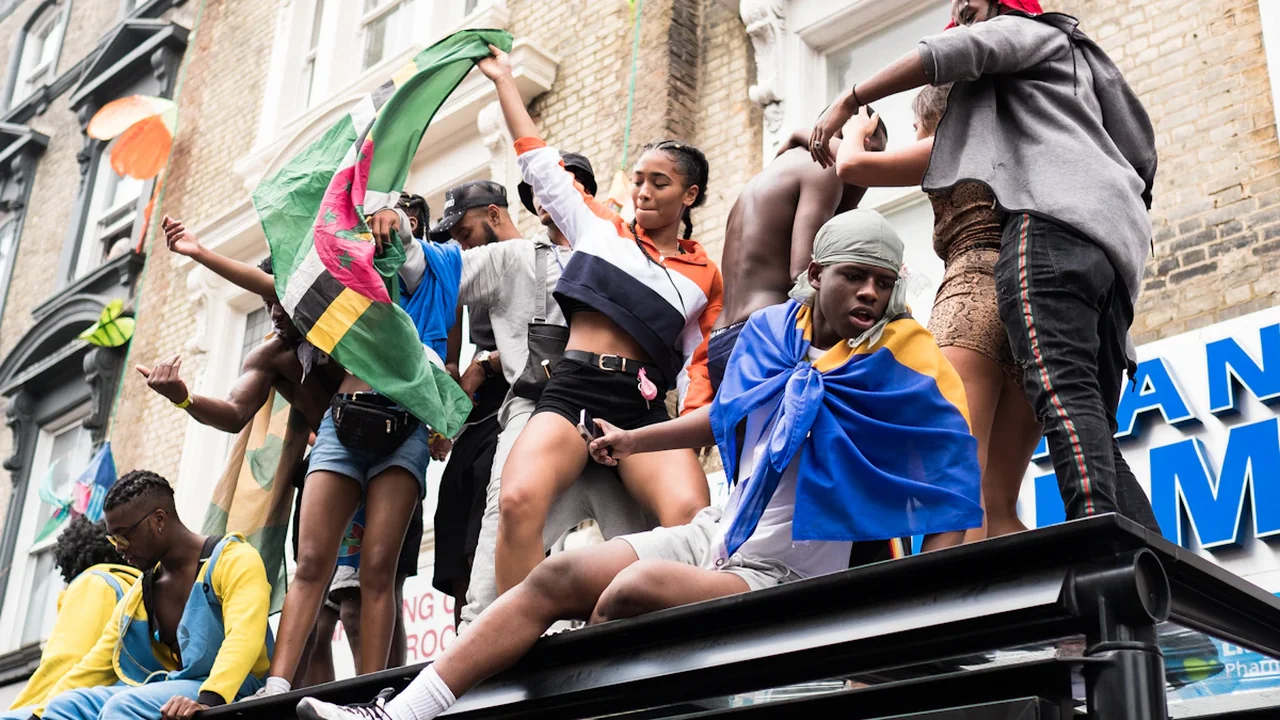
Notting Hill Carnival reaches a 60-year milestone in 2026, with families, groups and local visitors facing two clear planning dates. VisitBritain lists family day on Sunday, 30 August, followed by adult day on Monday, 31 August. The immediate priorities are deciding which day fits the group, allowing for transport changes and checking final event information before travelling.
The anniversary does not reduce Carnival to a single origin story. Its development connects post-war Caribbean migration, community organising, resistance to racism, music, food and the long transformation of west London’s streets into a major public cultural space.
Read also: UK Winter Bank Holiday: Will It Be Announced by 31 December?
Why the 60-year milestone begins with more than one date
The 2026 anniversary is tied to the lineage of the outdoor Notting Hill street event associated with 1966. However, the cultural history behind Carnival reaches further back.
Trinidad-born journalist and activist Claudia Jones organised an indoor Caribbean carnival in London in 1959, following the racist violence experienced by Black communities in Notting Hill the previous year. Her event helped establish celebration and performance as forms of public solidarity, although it was not the same outdoor procession that later developed in west London.
Community organiser Rhaune Laslett is closely associated with the 1966 Notting Hill street festival. Her work brought local residents, children, musicians and performers into a neighbourhood event intended to connect communities. Caribbean participation and performance became increasingly central as the event evolved.
That distinction matters in an anniversary year. Jones represents an important precursor in London’s Caribbean carnival tradition, while Laslett’s street festival forms part of the direct local lineage being marked 60 years later. Treating either woman as the sole author of everything Carnival became would flatten a history shaped by many organisers, artists, residents and sound-system crews.
Caribbean communities changed the sound and purpose of the streets
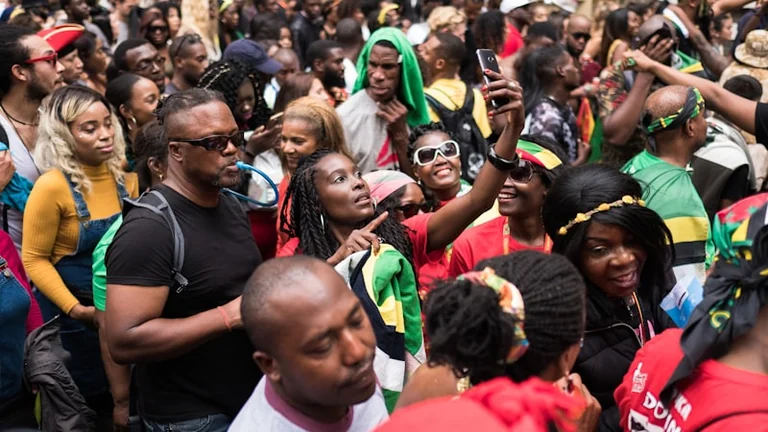
Notting Hill Carnival grew alongside communities whose roots included Trinidad and Tobago, Jamaica and other parts of the Caribbean. Masquerade bands, steelpan, calypso, soca, reggae and sound-system culture gave the event forms that were recognisably connected to Caribbean carnival and London’s Black musical life.
The sound system was especially significant. Music did not remain confined to a stage: it occupied streets and gathering points, creating distinct zones of rhythm and movement. That model helped shape the way Londoners experience Carnival, with audiences moving between processions, static sound systems, food traders and neighbourhood businesses.
Food also carries historical meaning. Caribbean dishes sold around Carnival are not simply refreshments added to a parade. They reflect migration, family businesses and cooking traditions maintained in London. A useful food trail therefore focuses on established local traders and clearly priced menus rather than trying to sample everything within the busiest part of the route.
Carnival has also remained connected to questions of belonging and public space. Its scale requires planning by organisers, emergency services, transport operators and local authorities, yet its cultural force comes from community participation. That balance between a locally rooted tradition and a city-scale event helps explain why it continues to influence London’s late-summer calendar.
What is different about the 2026 cultural calendar
The principal Notting Hill weekend follows the familiar division between a family-focused Sunday and a larger Monday programme. The VisitBritain August events calendar lists the 2026 dates as:
- Sunday, 30 August: Notting Hill Carnival family day
- Monday, 31 August: Notting Hill Carnival adult day
Family day is the clearer option for adults accompanying younger children, but the label should not be read as a promise of light crowds or effortless travel. It remains a major outdoor event, so families should set a meeting point, carry contact details and decide in advance when they will leave.
The cultural cycle continues beyond the bank holiday weekend. The Mayor of London’s event page says Black On The Square returns to Trafalgar Square on Saturday, 5 September 2026. City Hall describes it as a free, family-friendly event in its fourth year and connects its programme with the context of Notting Hill Carnival’s 60th year.
Black On The Square should be treated as a separate event, not an additional day of Notting Hill Carnival. Its central London setting and family programming offer another option for people interested in the wider season of Black culture but unable to attend the west London weekend.
Choosing between family day, adult day and Trafalgar Square
The best date depends on the group rather than the anniversary label alone.
- Choose 30 August when the priority is the family-day programme and an earlier, child-centred visit.
- Choose 31 August when the group wants the main Monday Carnival atmosphere and can manage heavier demand.
- Consider 5 September for a separate free family event in Trafalgar Square linked to the wider cultural season.
- Split food and cultural visits across different days if moving through dense crowds would be difficult.
Visitors with children should keep the plan deliberately simple. One meeting location, one food stop and a defined departure window are more useful than a long list of attractions. Ear protection may also be sensible for young children near powerful sound systems.
Groups should agree what happens if mobile reception becomes unreliable. Each person needs the meeting point written down, not only stored in a message thread. Anyone with accessibility requirements should consult the latest organiser and transport guidance before committing to a route.
Transport planning matters most at the end of the visit
Carnival changes how people move through west London. Station access, bus routes and road movements may be altered, and the most convenient station on a normal weekend may not be the best choice during the event. Exact arrangements should be checked against current Transport for London information shortly before departure.
A practical plan includes:
- An outward route and a different fallback route
- A meeting point outside the densest streets
- Enough walking time between the event area and an available station
- A charged phone and portable battery
- Water, weather-appropriate clothing and only essential belongings
- A departure time agreed before entering crowded areas
Evening plans need particular care. Carnival’s music, food and street culture have influenced London nightlife far beyond the event itself, but visitors should not assume the street programme operates as an unrestricted all-night festival. A restaurant booking or ticketed event elsewhere should allow substantial time for walking, queues and changed transport arrangements.
The next useful check is the final organiser and Transport for London guidance for 30–31 August. It will determine which stations, roads and access points are workable for each group, while the Mayor of London’s listing remains the relevant page for Black On The Square on 5 September.
Source: VisitBritain
Context & actions About this article
Source check Event date sources
The principal dates come from VisitBritain and the Mayor of London’s published event information.
- VisitBritain lists family day on 30 August 2026.
- VisitBritain lists adult day on 31 August 2026.
- The Mayor of London lists Black On The Square for 5 September 2026.
- Final transport arrangements should be checked before travel.
- Source
- VisitBritain August events calendar
- Scope
- London
- Updated
- 2026-08-24 16:43
Source check
Report a trust issue
Send a clear signal to community moderation if the source, facts or context need review.



Comments