By the GlobeBids History Desk | 22 August 2026
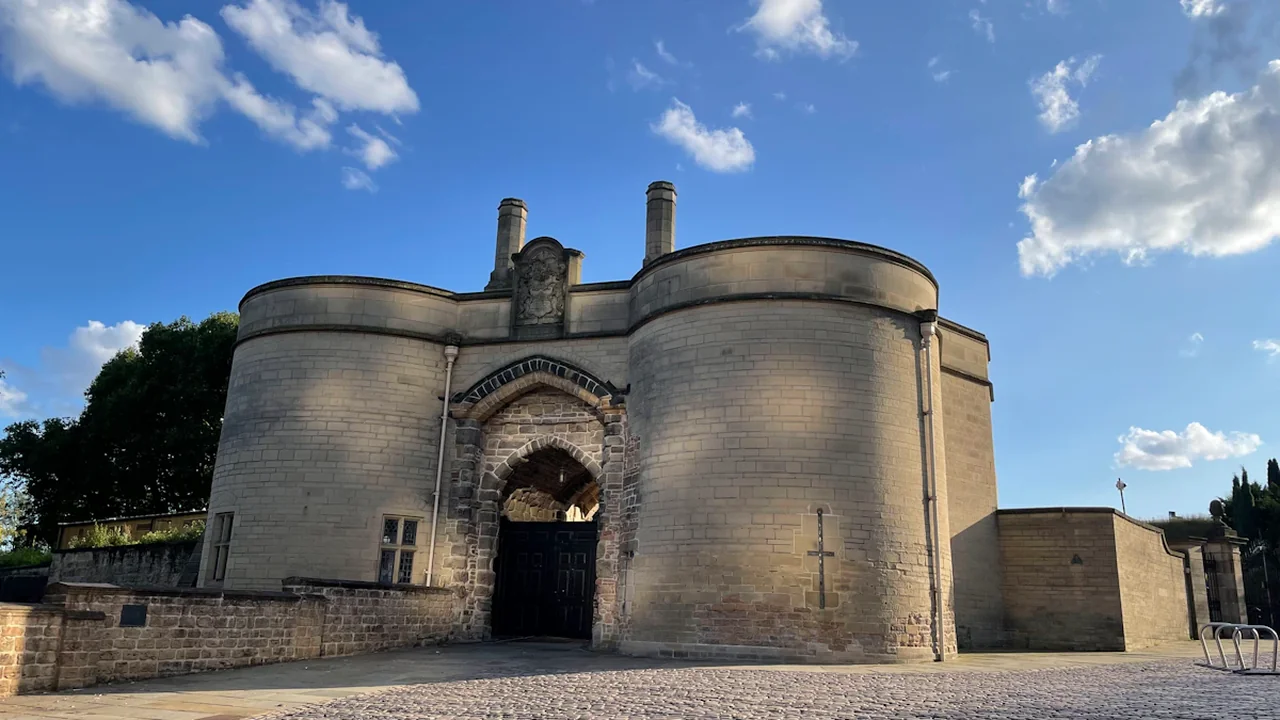
On 22 August 1642, Charles I raised his royal standard at Nottingham, publicly summoning supporters as his confrontation with Parliament became open war. The ceremony is conventionally treated as the beginning of the English Civil War, although violence, military preparations and conflict elsewhere in the king’s realms complicate any claim to a single starting point.
Nottingham’s place in the story comes from that unmistakable public act. Raising the standard declared the king’s intention to prosecute his cause by force and called loyal subjects to join him. It was a political and military signal, not a battle, and the first major field engagement would not occur until Edgehill two months later.
Why Charles I raised his standard in Nottingham
By August 1642, trust between Charles I and the Parliament of England had collapsed. The king had left London, both sides were gathering troops, and rival claims to lawful authority could no longer be contained within parliamentary debate or royal proclamations.
The standard represented the monarch in war. Its appearance at Nottingham announced that Charles expected armed service from his supporters, later commonly called Royalists. Parliamentarians were simultaneously organising forces in the name of defending Parliament, the kingdom and what they regarded as established law and religion.
Nottingham was therefore the setting for a declaration rather than a decisive military encounter. The king did not secure an instant mass army merely by raising the banner, and the city did not become the permanent centre of Royalist operations. Its importance is symbolic: a constitutional crisis had acquired the forms and language of war.
The ceremony also reveals a central problem of 1642. Both camps claimed legitimacy. Charles presented resistance to him as rebellion against the lawful sovereign. Parliament’s supporters argued that the king’s advisers and policies threatened the laws, liberties and Protestant religion of the kingdom. Neither side began by describing its cause as a rejection of the entire political order.
The dispute involved power, taxation, religion and armed force
The war cannot be reduced to one quarrel or one inevitable sequence of events. Long-running disagreements accumulated until compromise became increasingly difficult.
Charles I defended substantial royal powers, including his authority to choose ministers, direct foreign policy and govern the Church of England. Many MPs believed that taxation required parliamentary consent and that Parliament had a duty to challenge policies considered unlawful or dangerous. Charles’s years of Personal Rule, when he governed without Parliament from 1629 to 1640, deepened those suspicions.
Money was inseparable from power. The Crown needed revenue to govern and wage war, but controversial methods of raising funds generated opposition. When military failures forced Charles to recall Parliament, MPs used control of taxation to demand political and religious reforms.
Religion made the crisis more combustible. Protestants disagreed sharply over the organisation and worship of the Church of England. Critics feared innovations they associated with Catholicism, while the king defended bishops and a more ceremonial religious settlement. Distrust was intensified by Charles’s marriage to the Catholic Henrietta Maria and by the wider religious conflicts affecting England, Scotland and Ireland.
Control of the armed forces became the immediate constitutional breaking point. Following rebellion in Ireland, king and Parliament disputed who could be trusted to command troops. Parliament advanced its Militia Ordinance without royal assent, while Charles issued commissions of array to mobilise supporters. Competing orders reached counties and local officeholders, forcing communities to decide which authority they would obey.
The attempted arrest of five MPs in January 1642 further damaged confidence in the king. Parliament’s Nineteen Propositions, presented in June, then demanded extensive influence over ministers, the Church and military appointments. Charles rejected terms that he believed would strip the monarchy of essential authority.
From political breakdown to Edgehill
A short chronology shows how quickly the confrontation hardened:
- January 1642: Charles I enters the House of Commons in an unsuccessful attempt to arrest five members.
- Spring and summer 1642: King and Parliament issue rival declarations and compete for control of county militias, weapons and local officials.
- June 1642: Parliament presents the Nineteen Propositions; Charles rejects the demands.
- 22 August 1642: Charles raises the royal standard at Nottingham, conventionally marking the opening of the war.
- 23 October 1642: Royalist and Parliamentarian armies fight the Battle of Edgehill, the first major pitched battle of the conflict.
Edgehill was fought in Warwickshire, not Nottingham. Its inconclusive result demonstrated that neither camp could quickly impose a settlement, helping to turn the confrontation into a prolonged and destructive war.
Civilians faced divided loyalties and material hardship
The transition to war reached far beyond soldiers and political leaders. Counties, towns, parishes and families had to respond to rival demands for money, horses, weapons, accommodation and labour. Allegiance could reflect religion or political conviction, but also local rivalries, family connections, economic interests and immediate concerns about security.
Communities occupied by armies faced requisitioning and compulsory payments. Troop movements disrupted farming and trade, while sieges damaged buildings, supplies and local economies. Disease could follow crowded military encampments and displaced populations. Even places away from major battles experienced taxation and the absence, injury or death of local men.
Nottingham itself became strategically contested after the ceremony that made it famous. Control of towns, roads, bridges and fortified positions mattered throughout the conflict, and local experiences could change as military fortunes shifted.
The political effects were equally profound. Parliament developed stronger administrative and financial machinery to sustain its forces. Local committees acquired extensive responsibilities, while the prolonged struggle encouraged arguments about representation, religious toleration, sovereignty and the accountability of rulers.
The eventual consequences went far beyond anything clearly settled at Nottingham. Charles I was defeated, tried and executed in 1649. The monarchy and House of Lords were abolished, England became a republic, and military power remained central to government until the monarchy was restored in 1660.
Why historians use different names and boundaries
“English Civil War” is familiar and useful, but it can conceal the conflict’s wider setting. Some historians refer to the English Civil Wars because England experienced more than one phase of fighting between 1642 and 1651. Others place those wars within the Wars of the Three Kingdoms, a connected series of conflicts across England, Scotland and Ireland.
That broader term matters because events in each kingdom affected the others. Charles ruled all three, but their political institutions and religious settlements differed. Conflict with Scotland helped force the king to recall the English Parliament, while rebellion and war in Ireland intensified the struggle over control of an army.
Period boundaries also vary according to the question being asked. A military account may begin with campaigning in 1642 and end with the last major Royalist defeat in 1651. A constitutional history might reach back to the disputes of the 1620s or continue through the republic, Protectorate and Restoration.
Encyclopaedia Britannica outlines the wars’ chronology, factions and intertwined political and religious causes. The UK Parliament places the struggle within the longer development of parliamentary authority.
Nottingham’s lasting place in British political history
The raising of the standard remains memorable because it transformed an abstract dispute into a visible choice. Arguments about taxation, religion, ministers and the militia were no longer confined to petitions and proclamations. People across the country would now be asked to provide money, service or obedience to competing centres of authority.
Calling 22 August the war’s conventional opening is therefore more accurate than treating it as an uncontested first act. Nottingham supplied the enduring symbol: a king beneath his standard, asserting his right to command. The months and years that followed tested whether that command could prevail against Parliament’s rival claim to act for the kingdom.
Source: Encyclopaedia Britannica
Context & actions About this article
Source check Historical context
This account distinguishes Nottingham’s symbolic declaration of war from the conflict’s longer constitutional origins and subsequent battles.
- Checked the principal chronology against Encyclopaedia Britannica.
- Checked the constitutional dispute against the UK Parliament’s historical overview.
- Distinguished the Nottingham ceremony from the Battle of Edgehill.
- Placed the English conflict within the wider Wars of the Three Kingdoms.
- Source
- UK Parliament
- Scope
- Nottingham
- Updated
- 2026-08-22 12:07
Source check
Report a trust issue
Send a clear signal to community moderation if the source, facts or context need review.


Comments