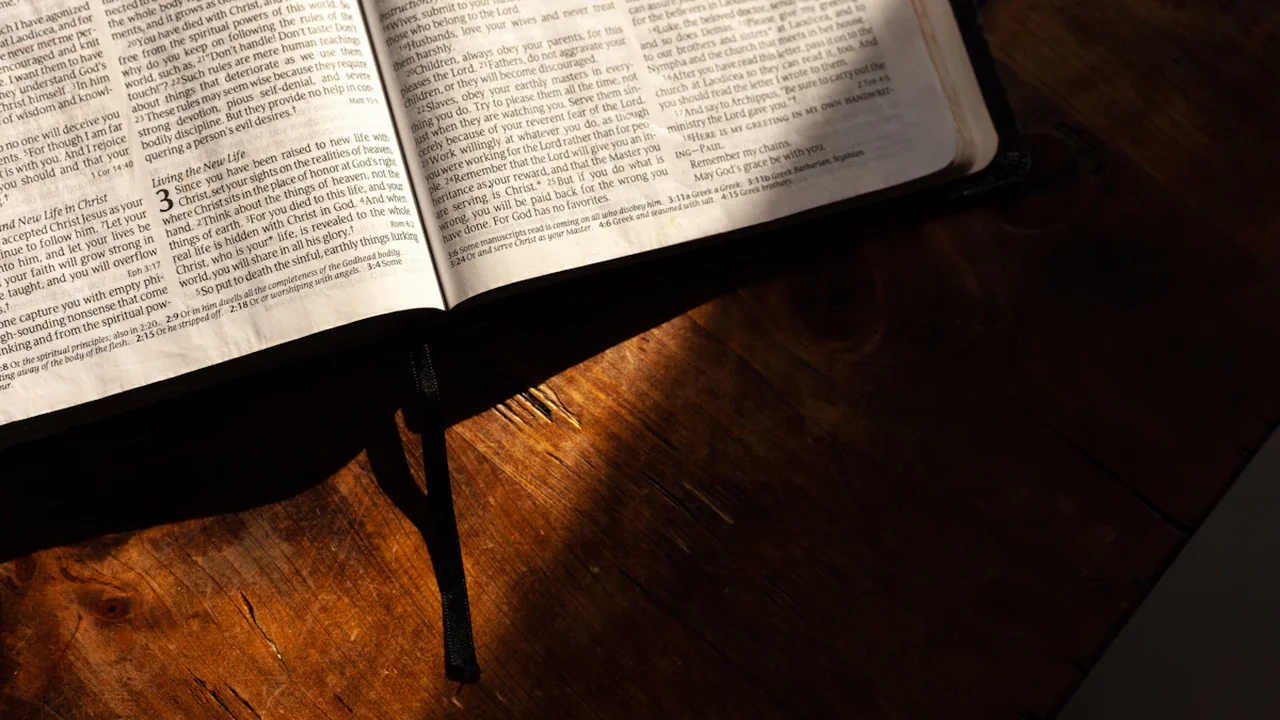
By GlobeBids History Desk | 6 October 2026
William Tyndale is traditionally remembered on 6 October 1536, the date often given for his execution near Brussels. His lasting influence lies in the English Bible he helped make available through print: generations encountered biblical stories, prayers and arguments in wording shaped by his translations. The exact day of his death is uncertain, but the anniversary offers a way to trace how his work travelled far beyond his lifetime.
Why Tyndale translated the Bible into English
In Tyndale’s England, church services and scholarly study were closely tied to Latin. English biblical texts existed, but Tyndale pursued a new translation from the languages of the biblical books and sought to have it printed for a wider readership. That ambition joined a religious question to a publishing one: who could read scripture directly, and who had the authority to decide what it said?
Tyndale translated the New Testament chiefly from Greek and worked on the Old Testament from Hebrew. Those choices mattered because translation involved more than replacing one word with another. He had to decide how a sentence should sound to an English reader while carrying ideas from texts written in different languages, places and periods.
His work developed during the Reformation, when disputes over scripture, church authority and religious practice crossed Europe. Tyndale could not secure the support he wanted for his project in England. He continued his work on the continent, where access to printers allowed English copies to be produced and sent across borders.
Printing carried his words into a religious conflict
A complete printed edition of Tyndale’s English New Testament appeared in 1526. Its small format made copies easier to carry, while printing made it possible to produce many more than a handwritten manuscript could provide. That reach also alarmed authorities who opposed the translation and its circulation. Copies were seized and burned in England.

Tyndale did not stop with one edition. He revised the New Testament, with an important edition appearing in 1534, and published an English translation of the first five books of the Old Testament in 1530. He also translated other Old Testament material. His English Bible was therefore a body of work produced and revised over years, rather than a single completed volume.
The distinction matters because familiar English Bibles came later. Tyndale did not translate the entire Bible that readers now find in one book, and he did not write the King James Bible of 1611. Later translators drew on his work while making their own editorial and translation decisions.
Tyndale was arrested in 1535 in the Low Countries and held at Vilvoorde. He was executed there in 1536 after being condemned for heresy. 6 October is the traditional anniversary, although the surviving record does not establish the precise day beyond doubt. His death belongs to the story of religious persecution; the survival and reuse of his words belong to the history of publishing as well.
How Tyndale’s wording outlived his editions
Tyndale’s influence came partly from making complex material readable aloud. He often chose direct English words and sentence rhythms that later editors could retain. As English Bible editions multiplied, readers heard and repeated language carried forward from his translations, sometimes without knowing whose choices lay behind it.
One example is “the powers that be,” a rendering found in Tyndale’s New Testament at Romans 13:1 and retained in the King James Bible. Its presence in his translation shows a line of influence; it does not prove that he invented the phrase. Earlier usage and other translations must be checked before any expression can be called his coinage.

That caution applies to long lists of phrases attributed to Tyndale online. A memorable line might appear in one of his editions, have an older English precedent, or reach modern readers through a later revision. The more precise question is often whether Tyndale helped establish a wording in a widely printed Bible, rather than whether he was the first person ever to say it.
The King James Bible is central to that distinction. Published 75 years after Tyndale’s death, it became enormously influential in its own right. Its translators worked within a tradition of earlier English Bibles, including those that had incorporated Tyndale’s language. A phrase shared by Tyndale and the King James Bible should not automatically be assigned exclusively to either one.
Why the anniversary still matters to English readers
Tyndale’s story connects the history of English to the technology that spread it. A translator’s choices could be repeated across many printed copies, then revised, preserved or replaced by later editors. Printing gave those choices a reach that a manuscript translation could rarely match. Religious conflict made the same copies dangerous to own or distribute.
His legacy is also a reminder that everyday language rarely has one identifiable inventor. Expressions gain force when people encounter them repeatedly—in books, worship, speech and later writing. Tyndale helped put English biblical language into that cycle, even though the editions most familiar today were produced after his death.
For a reader following a phrase back through history, the useful next step is to compare its wording in a specific Tyndale edition with earlier English texts and later Bibles. That comparison shows what he translated, what subsequent editors kept, and where a claim of invention goes further than the evidence allows.
Source: Editorial research
Context & actions About this article
Source check Historical context
6 October is traditionally given as Tyndale’s execution date, but the precise day is uncertain.
- Tyndale’s printed New Testament appeared in 1526 and was revised in 1534.
- His translation of the first five Old Testament books appeared in 1530.
- The King James Bible was published in 1611, after Tyndale’s death.
- Scope
- Europe and the English-speaking world
- Updated
- 2026-10-06 10:02
Source check
Report a trust issue
Send a clear signal to community moderation if the source, facts or context need review.




Comments