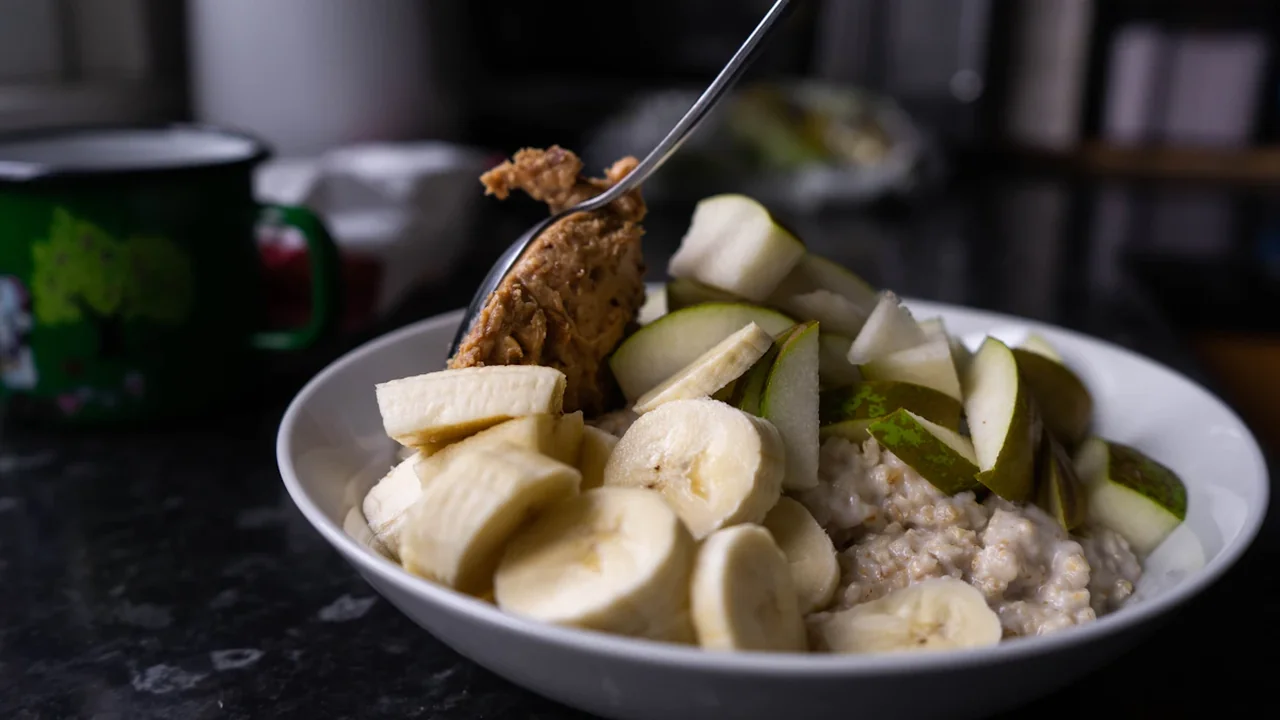
This pear and cinnamon porridge makes two warm breakfast bowls in about 15 minutes, using rolled oats, milk or a suitable alternative, and one ripe pear. Add the fruit early for softer pieces that blend into the oats, or near the end for a firmer bite.
By GlobeBids Editorial Team
The recipe uses a saucepan and a gentle simmer. The quantities below give a creamy starting point; the final consistency depends on your oats, your chosen milk and how juicy the pear is. Keep a little extra liquid nearby so you can loosen the porridge before serving.
Ingredients for two bowls
- 100 g rolled oats, sometimes labelled porridge oats
- 500 ml dairy milk or unsweetened oat or soy drink, plus 30–60 ml extra if needed
- 1 medium ripe pear, about 180 g before coring
- ½ teaspoon ground cinnamon
- A small pinch of salt, optional
- 1–2 teaspoons maple syrup or honey, optional and added to taste
For an optional nut-free topping, use 2 tablespoons pumpkin seeds and a few thin pear slices. Reserve the slices from your recipe pear before chopping the rest, or use a little additional fruit.
Choose ordinary rolled oats for the timings here. Instant oats can soften faster, while steel-cut oats need substantially longer and a different liquid allowance. If the packet gives a different cooking time, use that as your guide and adjust the liquid as the oats soften.
Dairy milk gives a creamy result. Unsweetened oat drink or soy drink also works, although flavour and thickness vary between products. Choose a drink you enjoy on its own, since its taste will remain noticeable in the finished bowl.
Preparation and cooking times
Allow 5 minutes to prepare the ingredients and 10 minutes to cook and rest the porridge. The cooking allowance includes bringing the mixture to a gentle simmer, simmering for roughly 5–7 minutes, and resting for 1 minute off the heat.
You will need a medium saucepan, a spoon or spatula, a chopping board and a knife. A measuring jug and kitchen scales make it easier to repeat the consistency you like. Use a saucepan with enough space to stir without spilling milk over the sides.
Wash the pear, remove its core and cut the flesh into pieces about 1 cm across. Leave the skin on for a little texture, or peel it if you prefer a smoother bowl. Smaller pieces soften more quickly than larger chunks.
How to cook pear and cinnamon porridge
- Combine the base. Put the oats, 500 ml milk or plant drink, cinnamon and optional salt into the saucepan. Stir well so the cinnamon disperses through the liquid.
- Choose when to add the pear. For soft fruit, stir the chopped pear into the cold mixture now. For firmer pieces, keep it aside until the final 1–2 minutes of simmering.
- Warm gently. Set the pan over medium heat and stir regularly until small bubbles appear. Reduce the heat to maintain a gentle simmer. Avoid a vigorous boil, which can make the milk rise quickly and the oats catch on the bottom.
- Simmer until creamy. Cook for about 5–7 minutes, stirring frequently and scraping across the base of the pan. The oats should be tender and the mixture should still move easily when stirred. Add a splash of extra milk if it becomes stiff before the oats are ready.
- Finish the fruit. If you reserved the pear for a firmer texture, stir it in for the last 1–2 minutes. Taste a piece: it should be warmed through while retaining the bite you prefer.
- Rest and serve. Remove the pan from the heat and let it stand for 1 minute. Taste before adding any syrup or honey, then divide between two bowls. Add your topping and another splash of milk if needed.
Porridge thickens as it stands. Turn off the heat while it looks slightly looser than your ideal serving consistency, then check it again after the short rest.
When to add pear for your preferred texture
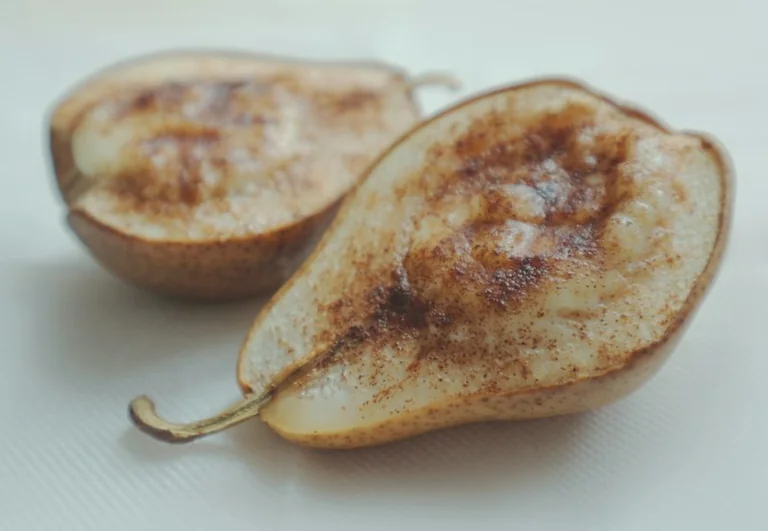
For softer pear, add the chopped fruit at the beginning. It warms while the milk comes to a simmer and then cooks alongside the oats. A ripe pear will soften more readily; a firm pear may retain some bite even after the full cooking time.
For firmer pear, add it during the final 1–2 minutes of simmering. This gives you distinct pieces throughout the porridge. Choose a ripe but firm pear: very soft fruit can break down quickly even when added late.
For the greatest contrast, cook half the chopped pear with the oats and scatter the remaining half over the finished bowls. The cooked portion mixes into the creamy base, while the fresh portion supplies a crisp or juicy topping, depending on ripeness.
If your pear is particularly hard, chop it smaller and use the early-addition method. Check a piece before serving. You can simmer a little longer to soften it, adding milk as needed to keep the oats from becoming too thick.
A simple nut-free topping
Pumpkin seeds add crunch without using nuts. Scatter 1 tablespoon over each bowl, alongside the reserved pear slices. For a toasted flavour, warm the seeds in a dry frying pan over medium-low heat for 2–3 minutes, shaking the pan frequently, then let them cool slightly.
If you prefer a seed-free topping too, use pear slices and a spoonful of plain yogurt or a suitable plant alternative. A light extra dusting of cinnamon is enough; taste first because the porridge already contains it.
When preparing breakfast for someone with a nut allergy, check ingredient labels for relevant cross-contact warnings and use clean utensils. A topping made without nuts still needs ingredients suitable for the person eating it.
Adjust the bowl before serving
If the porridge is too thick, stir in extra milk a tablespoon at a time. If it is too loose, simmer briefly while stirring, then reassess after resting. Sweeten last: ripe pear may provide all the sweetness you want.
For one serving, halve the ingredients and use a smaller saucepan. Begin checking the oats early because the smaller quantity may heat faster. Before taking the bowl to the table, taste an oat and a pear piece; tenderness and fruit texture are the most useful checks.
Source: Editorial research


Comments