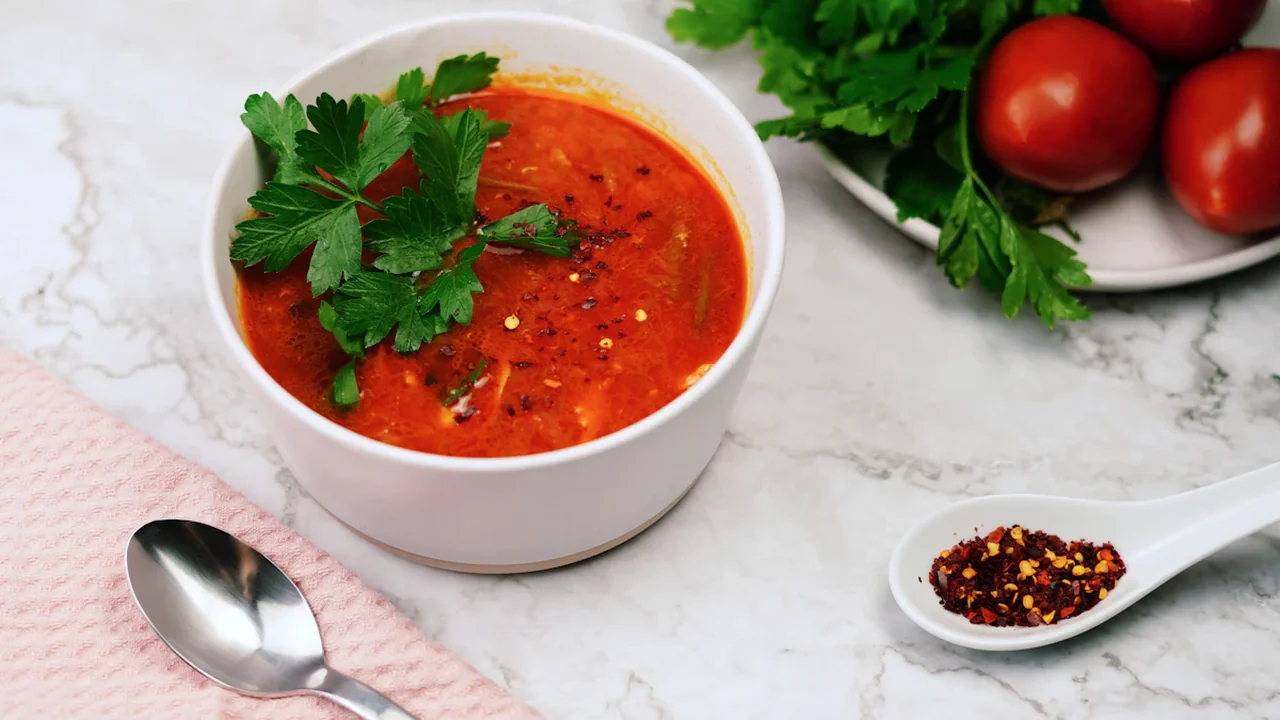
Ripe late-summer tomatoes and red peppers become four generous lunches with little hands-on work in this freezer-friendly soup. Roasting concentrates their flavour, while adding the stock gradually prevents juicy tomatoes from turning the finished soup thin. Balance any sharpness with salt, pepper and careful reduction before considering sugar.
By GlobeBids Food Desk
Published September 1, 2026
Ingredients for four generous portions
- 1.4 kg ripe tomatoes, halved or quartered if large
- 3 large red peppers, deseeded and cut into broad pieces
- 1 large onion, peeled and cut into wedges
- 6 garlic cloves, left unpeeled
- 3 tablespoons olive oil
- 1 teaspoon fine salt, plus more to taste
- 1/2 teaspoon freshly ground black pepper
- 350-500 ml vegetable or chicken stock
- 1 teaspoon red wine vinegar or lemon juice, only if needed
- A small handful of fresh basil leaves, optional
- Plain yoghurt, cooked beans or wholemeal toast, optional for serving
Choose ripe tomatoes with a strong aroma, but do not worry if they are very juicy. Their water content can be managed during roasting and blending. Keep the initial quantity of stock modest because it is much easier to thin a concentrated soup than to rescue an overly diluted one.
Roast the vegetables until their edges caramelise
Heat the oven to 220°C, 200°C fan or 425°F. Divide the tomatoes, peppers and onion between two large, rimmed roasting trays. Keeping the vegetables in a single loose layer helps moisture escape; crowding everything into a small dish encourages steaming.
Drizzle with the olive oil and season with one teaspoon of salt and the black pepper. Add the unpeeled garlic cloves to the trays. Turn the vegetables so they are lightly coated, then arrange most of the tomatoes cut-side up to expose their wet flesh to the oven’s heat.
Roast for 35-45 minutes, swapping the trays halfway through if they are browning unevenly. The peppers and onions should have dark golden edges, the tomatoes should have collapsed, and some of their liquid should have evaporated. Caramelised edges bring savoury depth, but extensively blackened garlic or onion can make the soup bitter.
Leave the trays for a few minutes, then squeeze the soft garlic from its skins. Transfer the roasted vegetables and garlic to a large saucepan. Keep any abundant tray liquid separate at first rather than pouring it all in automatically.
Control the consistency when tomatoes release lots of water
Begin with 350 ml of stock and a small amount of the reserved roasting liquid. Bring the mixture to a gentle simmer for five minutes, then blend it to the texture you prefer. Add more stock or tray juices in small quantities only when the soup is thicker than wanted.
Watery tomatoes are not a failure: they simply need more evaporation. If the blended soup is too thin, simmer it uncovered in a wide saucepan for 5-15 minutes. Use moderate heat, stir regularly and reduce the heat if the thick soup begins to spit. A wide pan exposes more surface area and reduces the soup more evenly than aggressive boiling in a narrow pot.
Do not leave reducing soup unattended. As it thickens, it can catch on the base and splash. Stop reducing when the soup lightly coats a spoon; it will become slightly thicker as it cools.
Taste only after the consistency is right. Salt can make tomatoes taste rounder and less sharply acidic, so adjust it a pinch at a time. Add basil if using. If the soup still tastes flat, a small splash of red wine vinegar or lemon juice can sharpen it. If it tastes acidic, first try salt, more cooking time or a spoonful of yoghurt at serving rather than automatically adding sugar.
Blend hot soup without trapping dangerous steam
An immersion blender is the simplest option. Take the saucepan off the heat, place it on a stable surface and keep it no more than about two-thirds full. Submerge the blender head completely before switching it on, use short pulses initially and keep the blade below the surface to limit splashes.

For a countertop blender, use only a jug specifically rated for hot liquids. Let the soup cool for 10-15 minutes, work in small batches and follow the manufacturer’s venting instructions. Never fill the jug above half full, and do not seal steam inside it. Keep the lid’s steam vent open without placing your hand directly over it.
A sealed personal or bullet blender is unsuitable for hot soup because expanding steam can force the lid off or break the container. If the only available blender cannot safely vent hot liquid, let the soup cool fully before blending and reheat it afterwards.
Blend briefly for a rustic texture or longer for a smoother result. Tomato skins may leave a little texture even after thorough blending. For an exceptionally smooth soup, pass it through a fine sieve, although this is optional and removes some useful vegetable pulp.
Make the soup without an oven
For an oven-free version, heat two tablespoons of the oil in a large, wide saucepan. Cook the sliced onion and peppers over medium heat for 10-12 minutes until softened and golden at the edges. Add peeled, sliced garlic and cook for one minute without letting it burn.
Add chopped tomatoes, the remaining tablespoon of oil, salt and pepper. Cook uncovered for 20-30 minutes, stirring occasionally, until the tomatoes collapse and excess liquid evaporates. Add 350 ml of stock, simmer for another five minutes and blend safely. The flavour will be less roasted, but browning the onions and peppers before adding the tomatoes still provides depth.
Turn each bowl into a fuller lunch
The soup is substantial enough for a light meal, but a protein or carbohydrate addition makes it more sustaining. Useful options include:
- Stirring in drained cannellini beans or chickpeas after blending
- Blending a portion of white beans into the soup for extra body
- Adding cooked red lentils and enough stock to loosen the texture
- Serving with wholemeal toast, a cheese toastie or garlic bread
- Finishing with plain or Greek yoghurt and basil
- Using an unsweetened plant-based yoghurt for a dairy-free topping
Check stock, bread and yoghurt labels when cooking for particular allergies or dietary needs. Beans absorb liquid while standing, so expect to add a splash of stock or water when reheating.
Cool, freeze and reheat individual portions
Let leftover soup cool promptly and divide it into shallow containers. Refrigerate it within two hours, then keep it chilled for up to three days. For workday lunches, freeze cooled soup in single portions with a little empty space for expansion.
The soup keeps well in the freezer for up to three months. Freeze it without yoghurt or fresh basil, as dairy can separate and basil may darken. Label each container with the contents and freezing date.
Thaw overnight in the refrigerator when possible. Reheat in a saucepan over medium-low heat, stirring regularly, until steaming throughout. Frozen soup can also be reheated gently from frozen in a covered saucepan; add a splash of water, loosen the edges as they melt and stir frequently. Adjust the seasoning and consistency only after the soup is fully hot.
Source: Editorial research
Context & actions About this article
Source check Recipe method
This recipe controls variable tomato moisture by roasting in uncrowded trays, adding stock gradually and reducing the soup before final seasoning.
- Vegetables are roasted in a loose single layer to encourage evaporation.
- Stock is added gradually so juicy tomatoes do not produce thin soup.
- Hot liquid is blended only with vented, heat-safe equipment.
- Freezing and reheating instructions exclude fresh dairy garnishes.
- Scope
- International
- Updated
- 2026-09-01 15:37
Source check
Report a trust issue
Send a clear signal to community moderation if the source, facts or context need review.


Comments