By GlobeBids Consumer Desk | 17 August 2026
Every 1p-per-litre difference adds or removes 50p from the cost of buying 50 litres of fuel. That makes a 5p gap worth £2.50 and a 10p gap worth £5. The calculation can help UK drivers budget for holiday travel, but only if petrol and diesel are compared separately and the cost of reaching a cheaper forecourt is included.
The 50-litre calculation in pounds and pence
For a 50-litre purchase, multiply the price difference in pence per litre by 50, then divide by 100 to convert pence into pounds.
Read also: UK fuel prices: check the latest weekly averages
| Price difference | Change to 50-litre bill |
|---|---|
| 1p per litre | £0.50 |
| 5p per litre | £2.50 |
| 10p per litre | £5.00 |
The calculation works in both directions. A station charging 5p less per litre saves £2.50 on 50 litres, while one charging 5p more increases the bill by the same amount.
To estimate the full purchase price, multiply the displayed pence-per-litre figure by the number of litres and divide by 100. Drivers buying less than 50 litres should use the actual quantity rather than assuming the headline saving applies to a full tank.
Keep petrol and diesel comparisons separate
A petrol driver should compare petrol prices at different stations. A diesel driver should do the same with diesel prices. Comparing one fuel with the other does not reveal whether a particular forecourt offers good value for the vehicle being filled.
For petrol, a 5p-per-litre gap changes a 50-litre purchase by £2.50. For diesel, the same 5p gap has exactly the same effect on a 50-litre purchase. The arithmetic is identical, but the displayed starting prices may differ.
Tank capacity is not the same as the amount purchased. A vehicle with a 50-litre tank may need only 35 litres at the pump, in which case every 1p-per-litre difference changes that visit’s bill by 35p.
Weekly UK averages provide context, not a local quote
The Department for Energy Security and Net Zero publishes weekly UK road-fuel pump-price data for petrol and diesel. These national figures can show the wider price environment, but they are averages rather than a promise of what any individual station will charge.
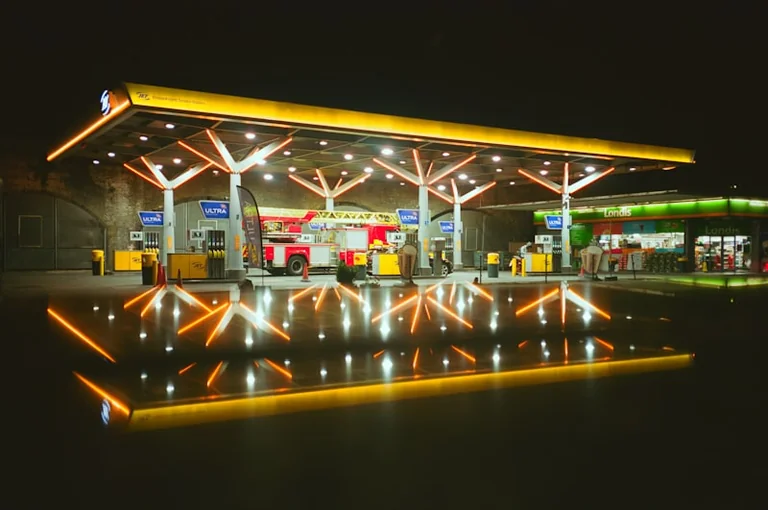
A local supermarket, an independent forecourt and a motorway service area may display different prices. The figure available on a particular day can also differ from the latest weekly average because the two observations were recorded at different times.
RAC Fuel Watch provides additional consumer-facing petrol and diesel price information and commentary. Neither national source replaces checking the price board at the station a driver plans to use.
A cheaper pump is worthwhile only if the journey still costs less
Before making a detour, compare the likely pump saving with the additional fuel consumed and any extra time or inconvenience. A 5p-per-litre saving on 50 litres is £2.50, but that is the maximum gross saving before the detour cost is deducted.
For example, if an additional round trip consumes £1.80 of fuel, a £2.50 pump saving leaves a net benefit of only 70p. If the detour costs more than £2.50, the cheaper displayed price produces no overall saving for that journey.
A practical comparison should include:
- The correct petrol or diesel price at each forecourt.
- The number of litres likely to be purchased.
- Fuel used on any additional distance.
- Loyalty discounts, including minimum-spend or app conditions.
- Whether the offer applies at that station and on that date.
Check prices before setting off or ask a passenger to do so. Never hold or operate a phone while driving, including when approaching or leaving a petrol station.
Treat every current price as a dated snapshot
No live national average is used in the calculations above; they explain the effect of price differences without presenting an untimestamped current figure. When comparing a published average with a forecourt, note the source’s week or publication date and the date and time the local price was observed.
The most useful final check is the station’s displayed price immediately before purchase. Recalculate the saving using the litres actually needed, then decide whether the complete journey cost—not merely the lowest number on a price board—fits the household transport budget.
Source: Department for Energy Security and Net Zero
Context & actions About this article
Source check How the calculation works
The cost examples use straightforward 50-litre arithmetic, while national averages and local forecourt prices are treated as separate, dated observations.
- Petrol and diesel prices are compared separately.
- Every 1p-per-litre difference is calculated as 50p for 50 litres.
- National averages are not presented as local forecourt quotes.
- No untimestamped current average is used.
- Source
- Department for Energy Security and Net Zero weekly statistics
- Scope
- United Kingdom
- Updated
- 2026-08-18 07:43
Source check
Report a trust issue
Send a clear signal to community moderation if the source, facts or context need review.




Comments