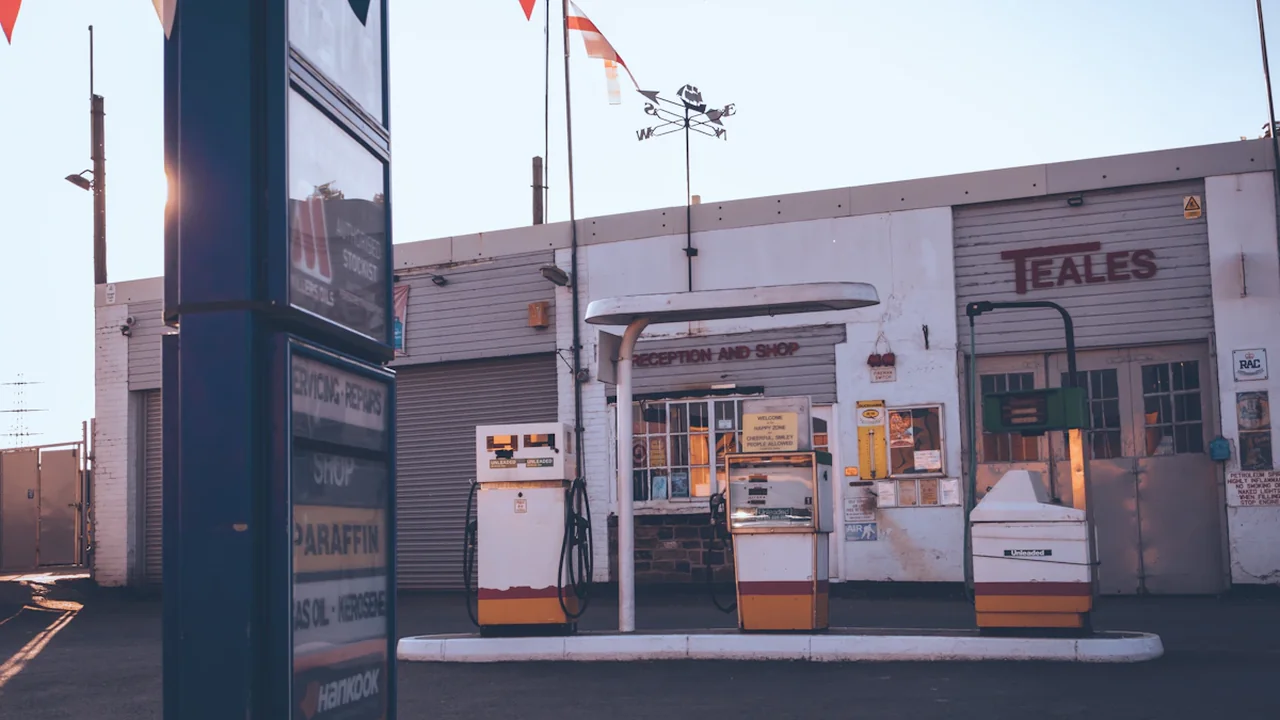
A pump that is 2p per litre cheaper saves 80p on a 40-litre fill before you account for the drive to reach it. For an October journey in the United Kingdom, compare the price for the amount you expect to buy, then subtract the cost of any extra miles. The cheapest sign may still be the best choice if the station is already on your route.
Calculate the saving for your actual fill
Subtract the lower price from the higher price, both in pence per litre. Multiply the difference by the litres you plan to buy, then divide by 100 to get pounds. A 3p-per-litre gap on 20 litres saves 60p; on 50 litres, it saves £1.50.
Use a realistic fill amount rather than your tank’s full capacity. Check that both prices are for the same fuel type: petrol and diesel prices cannot be compared as substitutes. If your car needs a particular grade, compare that grade at each station.
RAC Fuel Watch tracks UK petrol and diesel prices and can provide national context. A national figure does not tell you what a nearby forecourt will charge when you arrive, so check the displayed local price before deciding.

Include the extra miles to the cheaper station
Count only the distance added to your planned route, including any return leg. Estimate the fuel used on that detour and multiply it by the price per litre. If you know your car’s economy in UK miles per gallon, divide the extra miles by that figure and multiply by 4.546 to estimate litres used.
For example, suppose one station is 2p per litre cheaper and you expect to buy 40 litres. The pump saving is 80p. A four-mile detour in a car achieving 40 UK mpg uses about 0.45 litres. At an illustrative price of £1.50 per litre, that fuel costs about 68p, leaving roughly 12p saved. These example prices are calculation inputs, not current UK averages or quoted forecourt prices.
Time, traffic and vehicle wear can erase a small remaining saving. If the cheaper station lies directly along your route, the extra fuel cost may be close to zero. Before setting off, compare the same fuel grade at stations you can conveniently reach and recalculate if you expect to buy only a small amount.
Source: RAC
Context & actions About this article
Source check How the comparison works
GlobeBids uses a worked calculation to show how pump savings change after the fuel cost of a detour.
- Compare the same fuel type and grade at both stations.
- Multiply the pence-per-litre difference by the litres you expect to buy.
- Subtract the estimated fuel cost of miles added to your route.
- Source
- RAC Fuel Watch
- Scope
- United Kingdom
- Updated
- 2026-09-30 11:43
Source check
Report a trust issue
Send a clear signal to community moderation if the source, facts or context need review.

Comments