
William of Normandy landed at Pevensey, East Sussex, on the morning of 28 September 1066. Three days earlier, King Harold Godwinson had defeated Harald Hardrada at Stamford Bridge. William’s arrival brought a second invasion onto English soil and set the course toward the Battle of Hastings on 14 October. The landing and the battle were separate events, more than two weeks apart.
Pevensey’s changed shoreline hides its landing place
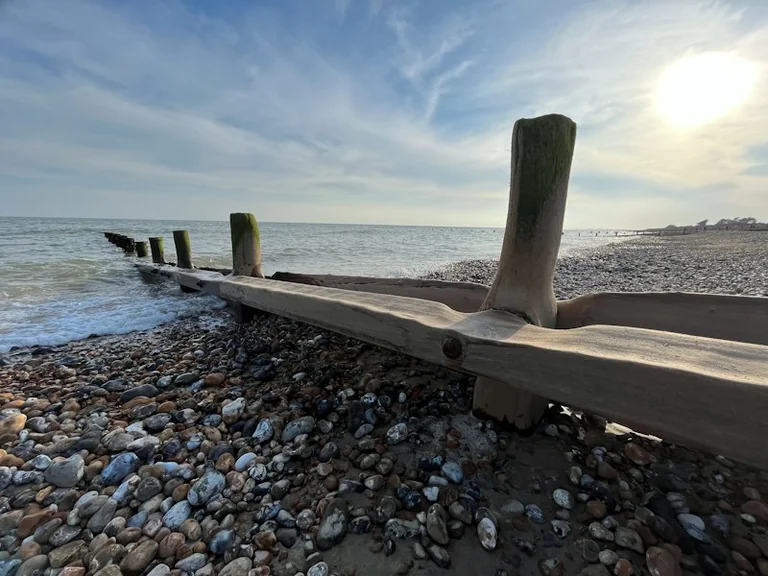
The coast at Pevensey looks substantially different from the one William’s fleet approached in 1066. English Heritage’s account of the Norman invasion dates the landing to the morning of 28 September and notes how much the coastline has changed. Today’s landscape therefore needs some imagination: the present position of the shore cannot be treated as a precise picture of the landing place.
That physical change helps explain why Pevensey matters. It was the point where William’s expedition reached England. A landing did not decide who would rule the country, but it gave William and his forces a foothold from which the invasion could continue. The story begins at the coast before it reaches the battlefield.
Read also: Battle of Hastings: What Happened on 14 October 1066
Pevensey is sometimes folded into a single account of “the Battle of Hastings.” Keeping the places apart makes the sequence clearer. Pevensey marks William’s arrival; Hastings refers to the later battle between his forces and Harold’s. The two locations belong to the same campaign, but they record different moments in it.
From Stamford Bridge to Hastings in less than three weeks
The dates show how quickly the crisis developed:
- 25 September 1066: Harold defeated Harald Hardrada at Stamford Bridge.
- 28 September 1066: William’s fleet landed at Pevensey.
- 14 October 1066: William and Harold’s forces fought the Battle of Hastings.
Harold’s victory at Stamford Bridge came first. William’s landing followed only three days later, while Harold still faced the consequences of the northern battle. English Heritage’s history of the Battle of Hastings places the battle after both Harold’s victory and William’s arrival.
The dates also prevent a common misunderstanding. William did not land at Pevensey on 14 October and immediately fight at Hastings. Sixteen days passed between the landing and the battle. During that interval, an invasion that had begun at the Sussex coast became a direct contest with the English king.
The sequence matters more than any single date viewed alone. Stamford Bridge shows that Harold had just fought and won against one challenger. Pevensey shows that another challenger had reached England. Hastings was the later confrontation that followed William’s arrival. Together, the three dates explain why late September and early October 1066 are so closely linked in accounts of the Norman Conquest.
Why the Pevensey landing mattered
An invasion fleet at sea posed a threat. A force that had landed posed an immediate problem on land. Pevensey was the point at which William’s attempt to take the English throne became a presence in England that Harold had to confront.
The landing’s importance does not depend on treating it as a battle or claiming that the outcome was already settled. On 28 September, the decisive clash still lay ahead. What had changed was the situation facing Harold: after his victory at Stamford Bridge, William was now in the country with an invading force.
Pevensey also gives the events a geographical starting point. The campaign that ended in battle on 14 October did not begin on the battlefield. It began with a crossing and a landing on the Sussex coast. Reading the events in that order makes the Battle of Hastings easier to understand as the outcome of a developing invasion rather than an isolated encounter.
Reading the landscape today
The changed coast is a useful caution for anyone trying to picture 1066 from Pevensey today. The view can help locate the story in East Sussex, but it cannot by itself show where the water met the land when William arrived. English Heritage’s account of Pevensey is the better starting point for that question; its battlefield history provides the later date and setting of the battle.
Those two places offer a simple way to keep the history straight. At Pevensey, consider the arrival of William’s fleet on 28 September and the coastline it encountered. At the Battle of Hastings site, consider the confrontation that came on 14 October. The distance between those dates is part of the story: landing made the invasion possible on English soil, while battle determined what happened when the two forces met.
Source: English Heritage
Context & actions About this article
Source check Historical context
English Heritage dates William’s Pevensey landing to 28 September 1066 and the Battle of Hastings to 14 October.
- Pevensey landing: morning of 28 September 1066
- Harold’s victory at Stamford Bridge: three days before the landing
- Battle of Hastings: 14 October 1066
- Source
- English Heritage: The Norman invasion
- Scope
- East Sussex, England
- Updated
- 2026-10-13 09:24
Source check
Report a trust issue
Send a clear signal to community moderation if the source, facts or context need review.




Comments