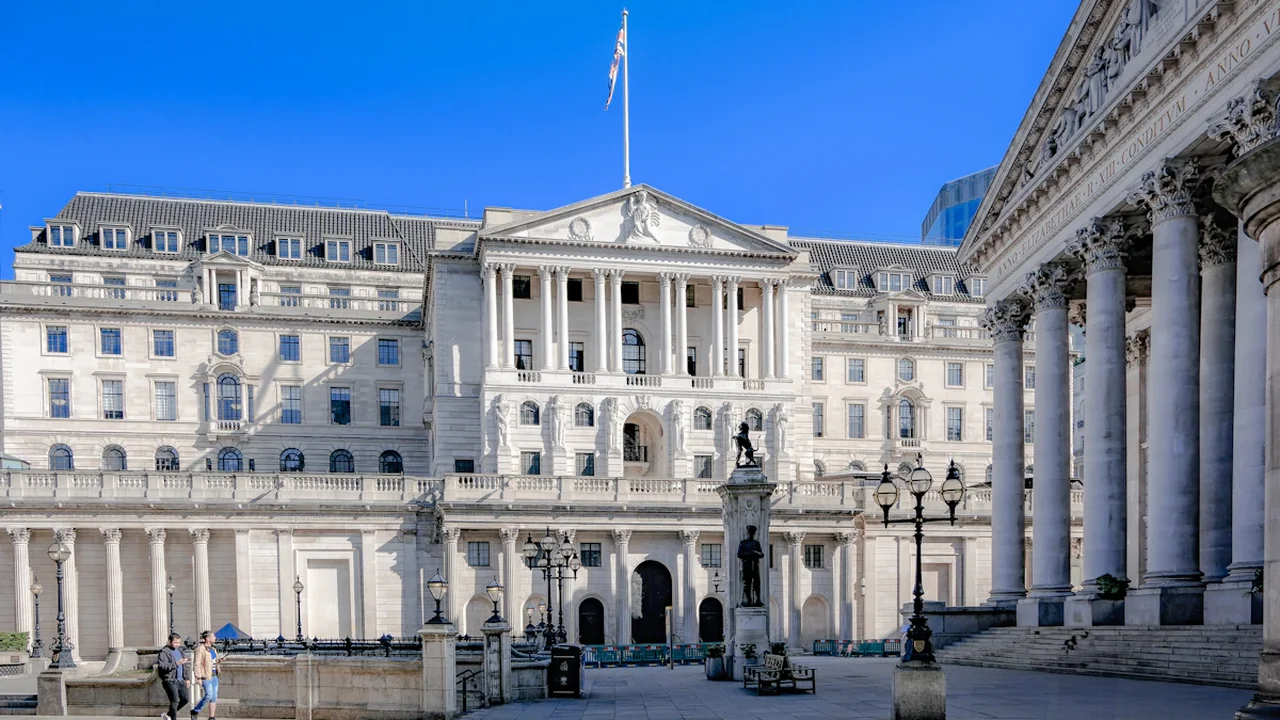
The Bank of England’s next scheduled Monetary Policy Committee decision will determine whether Bank Rate falls, stays put or rises. The Bank publishes committee decisions on its monetary policy page and maintains a separate page for the current rate. The exact meeting date and rate in force must be checked there before the decision; together, they set the deadline and baseline for resolving this forecast.
When the next decision is due
The Bank of England’s official monetary policy calendar is the authoritative place to identify the next scheduled decision. The forecast concerns the committee’s announcement at that meeting, not a possible change at a later meeting or market expectations beforehand. The calendar therefore establishes the event’s deadline, while the committee’s release establishes what happened.
The supplied source information does not state the next meeting date or the latest Bank Rate. Those details should be checked on the Bank’s current calendar and rate page rather than taken from older coverage. This matters because both the date and the rate in force can change, and an earlier figure could give readers the wrong deadline or starting point.
The scheduled decision is a public policy announcement. It can affect borrowing costs across the UK, though the effect on an individual mortgage, savings account or loan depends on the product and its terms. Some rates move with Bank Rate; others are fixed or respond to broader market conditions.
The rate baseline and outcome rule
The forecast asks whether the committee announces a lower Bank Rate than the rate in effect immediately before its next scheduled decision. The Bank’s official current-rate page provides the reference for identifying that baseline. If Bank Rate changes before the meeting, the rate immediately before the decision—not the rate when someone first considers the forecast—is the relevant comparison.
A reduction of any size counts as a cut under this rule. If the committee leaves the rate unchanged, that is a hold; if it raises the rate, that is a rise. The result depends on the announced Bank Rate itself, not whether the decision matches expectations, how individual committee members vote or whether the Bank changes other parts of monetary policy.
In short, the outcome is YES if the Bank announces a lower rate and NO if it holds or raises it. The source material identifies where to check the current rate but provides no numerical figure, so a rate number is not stated here. Readers should confirm the latest published rate and its effective date on the Bank’s page before the announcement.
What Bank Rate can mean for borrowers and savers
Bank Rate is an indicator of the direction of monetary policy, but it does not translate one-for-one into every borrowing or savings rate. A variable-rate mortgage may respond differently from a fixed-rate deal, and lenders may take account of other funding and commercial factors. The committee’s decision alone cannot establish how a particular customer’s payments will change.

For households and businesses, the practical point is that a cut, hold or rise is a change in the policy rate, not a complete description of individual product pricing. The forecast result can identify the committee’s decision; it cannot determine the terms offered by a lender or the effect on a specific account.
What is known before the announcement
The calendar can confirm when the committee is due to decide, but it cannot establish the outcome in advance. The supplied official information confirms where the Bank publishes its decisions and current rate, but it contains no recent inflation, wage, activity or committee-voting data from which to assess the likely result.
A cut, hold or rise can depend on how policymakers assess incoming evidence and the outlook for inflation. Until the committee publishes its decision, a claim that one outcome is certain would go beyond the information available here. The distinction is clear: the scheduled event can be verified on the Bank’s calendar, while the decision remains unknown until the release.
Readers following the forecast can check the official calendar for the confirmed date and the current-rate page for the baseline. Commentary and forecasts may help explain expectations, but they do not replace the committee’s published decision as evidence of the result.
The Bank’s release settles the result
The Bank of England’s monetary policy page is the primary source for the committee’s decision release. The resolution rule compares the announced Bank Rate with the rate in effect immediately before that decision:
- YES: the Bank announces a lower Bank Rate.
- NO: the Bank holds or raises Bank Rate.
The published decision is the public evidence used to settle the outcome. If the committee issues its announcement on the scheduled date, that release controls the result; forecasts, polling and later changes do not alter what the committee decided at that meeting.
The next check is the Bank’s official calendar for the decision date, followed by its current-rate page for the baseline. On decision day, the committee’s release on the Bank of England monetary policy page provides the authoritative result. This forecast concerns a public policy outcome and is not financial advice.
Source: Bank of England
Context & actions About this article
Source check How the forecast is resolved
The Bank of England’s published decision resolves the forecast by comparing the new Bank Rate with the rate in effect immediately beforehand.
- Confirm the next decision date on the Bank’s monetary policy calendar.
- Check the current Bank Rate page for the pre-decision baseline.
- Use the committee’s published decision release to determine the outcome.
- Source
- Bank of England monetary policy
- Scope
- United Kingdom
- Updated
- 2026-10-09 10:50
Source check
Report a trust issue
Send a clear signal to community moderation if the source, facts or context need review.




Comments