By GlobeBids Culture Desk
Updated: August 27, 2026
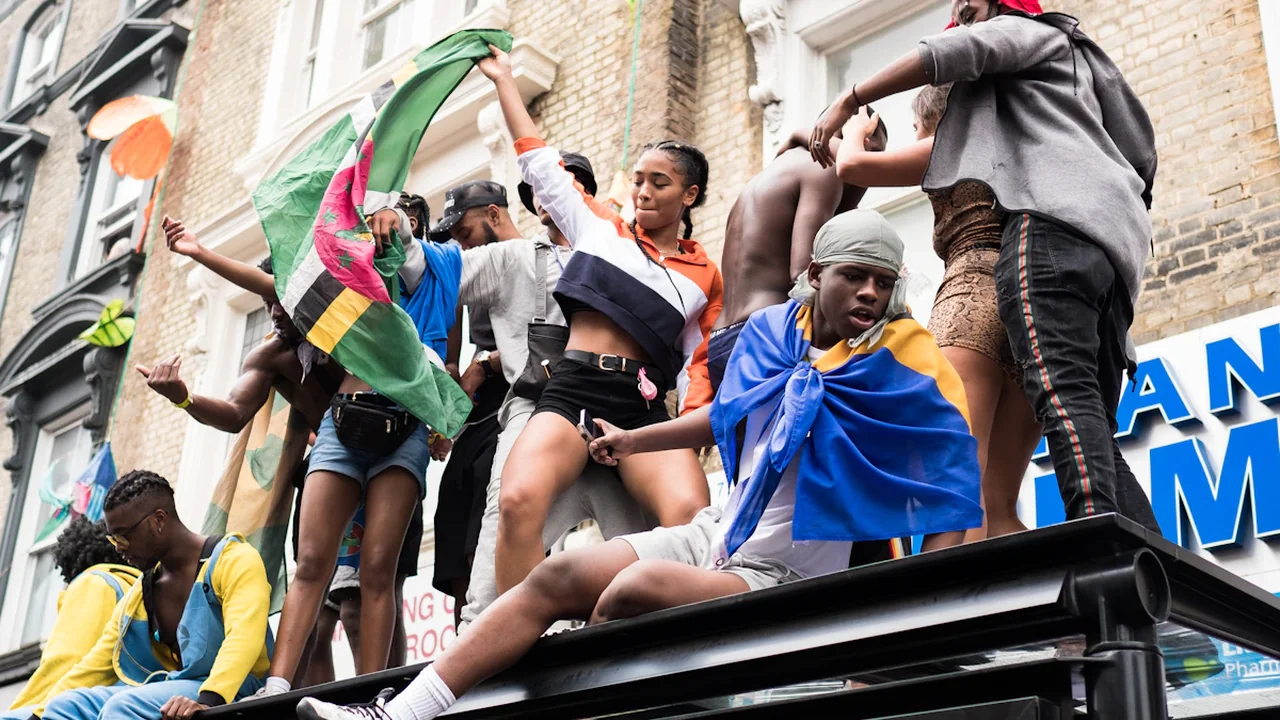
Notting Hill Carnival, held in west London over the August Bank Holiday, grew from Caribbean British community organising amid the racial hostility of post-war Britain. It did not begin with one founder or a single event. Today’s celebration combines several histories, including Claudia Jones’s indoor Caribbean carnival, Rhaune Laslett’s neighbourhood festivals and the work of generations of Caribbean performers, organisers and residents.
Notting Hill becomes a Caribbean cultural stage
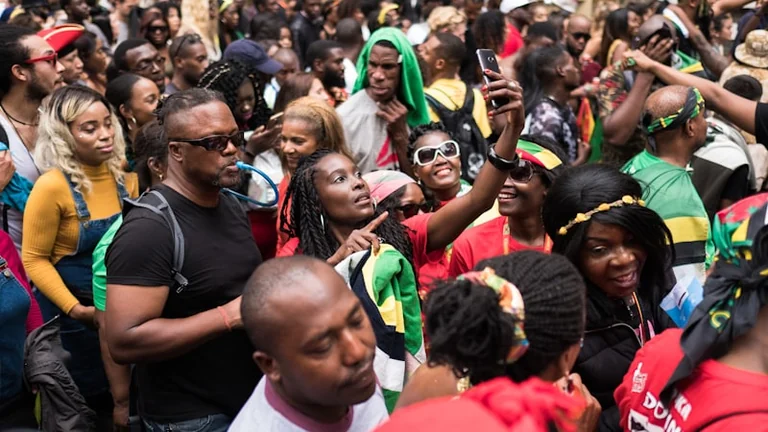
On Carnival weekend, the streets of Notting Hill become performance spaces for masquerade bands, steel-pan musicians and mobile sound systems. Calypso, reggae, soca and other Caribbean music traditions can be heard across an event that now occupies a prominent place in London’s cultural calendar.
Read also: Watch the Social Housing Bill’s final Lords stage in London
Those visible forms carry different island histories. Trinidad and Tobago contributed traditions of masquerade, steel pan and calypso, while Jamaican sound-system culture helped reshape the street experience. Communities from across the Caribbean and their British-born descendants have continued to expand the celebration.
The location matters. Notting Hill was not simply selected as a picturesque festival setting. It was a neighbourhood where Caribbean migrants established homes, businesses and social networks while confronting discrimination in housing, employment and public life.
Racial hostility shaped the need for public solidarity
Thousands of people from the Caribbean settled in Britain after the Second World War, including arrivals associated with the Windrush generation. London needed workers, but many Black residents encountered a colour bar that restricted where they could live, work or socialise.
Notting Hill had a growing Caribbean population alongside severe housing pressures and openly racist organising. In 1958, groups of white attackers targeted Black residents during several nights of violence in Notting Hill and nearby areas. The attacks exposed conditions that Caribbean Londoners had already been experiencing in daily life.
Community responses included political campaigning, journalism, mutual support and cultural gatherings. Carnival offered more than entertainment in this setting: music, dance and performance created opportunities for Caribbean people to meet, assert their presence and present their culture on their own terms.
Claudia Jones organised an indoor Caribbean carnival
Claudia Jones, a Trinidad-born journalist and political organiser, was one of the most important figures in this history. She founded the West Indian Gazette, which reported on issues affecting Britain’s Caribbean communities and helped connect people across London.
In January 1959, Jones organised an indoor Caribbean carnival at St Pancras Town Hall. The event followed the 1958 racial violence and brought Caribbean music, dance, costume and performance before a large audience. Further indoor celebrations followed in London venues.
Jones’s carnival is widely treated as a crucial precursor to Notting Hill Carnival, but it was not the same event as the later outdoor street festival. It took place indoors, outside Notting Hill, and belonged to a series of cultural initiatives created by Jones and her collaborators.
Its lasting importance lies in the principle it demonstrated: Caribbean performance could become a public expression of community confidence and solidarity in Britain.
Rhaune Laslett helped bring festival activity onto local streets
A separate strand developed within Notting Hill during the 1960s. Rhaune Laslett, a local community activist, organised neighbourhood events intended to bring together children and residents from the area’s different ethnic communities.
Her 1966 Notting Hill street festival included Caribbean participation. Trinidadian musician Russell Henderson and his steel band became associated with a procession through the neighbourhood, helping transform a local festival into something more recognisably connected with Caribbean street carnival.
Laslett’s events and Jones’s indoor carnivals should not be collapsed into one origin story. Jones established an influential Caribbean cultural response to racism; Laslett organised community festivals rooted in Notting Hill’s streets. The modern Carnival emerged as these histories met the creative work and leadership of local Caribbean communities.
That is why assigning the event to one founder is misleading. Performers, bandleaders, costume makers, sound-system operators, residents and successive organising groups all shaped what followed.
Four cultural forms gave Carnival its character
The event’s development can be understood through four traditions that changed how the streets looked and sounded:
- Masquerade, or “mas”: Costumed bands use design, movement and performance to develop themes rooted in Caribbean carnival practice.
- Steel bands: Steel-pan ensembles carry a musical tradition developed in Trinidad and Tobago from tuned metal instruments.
- Calypso: The Trinidadian form combines memorable melodies with storytelling, humour and social or political commentary.
- Sound systems: Jamaican-rooted crews use powerful speakers, selectors and DJs to create distinct music spaces within the wider Carnival.
Sound systems became increasingly important during the 1970s, expanding the music beyond the parade and steel-band traditions. They made room for reggae and other genres while creating gathering points with their own identities and audiences.
These forms are related but not interchangeable. A masquerade band is a moving visual and musical performance; a steel band is an instrumental ensemble; a sound system is a music operation centred on recorded sound and live selection. Together, they show why Carnival is better understood as a network of Caribbean practices than as one uniform spectacle.
A short timeline of the Carnival’s development
- 1958: Racist attacks in Notting Hill intensify demands for solidarity and political action.
- January 1959: Claudia Jones organises an indoor Caribbean carnival at St Pancras Town Hall.
- Mid-1960s: Rhaune Laslett’s neighbourhood festivals bring community celebration onto Notting Hill’s streets.
- 1970s: Caribbean leadership and sound-system culture become increasingly central to the outdoor event.
- Today: Notting Hill Carnival continues as a major Caribbean cultural celebration shaped by multiple communities and traditions.
Check official plans before travelling to Notting Hill
Carnival’s history remains visible in its music, costumes and use of the street, but the practical arrangements are contemporary and can change each year. Programme times, procession information, access routes, transport advice and accessibility details should be checked shortly before travelling.
The official Notting Hill Carnival website provides visitor information and event announcements. The reference history of Notting Hill Carnival offers additional chronological context, including the roles associated with Claudia Jones, Rhaune Laslett and the Caribbean communities of 1960s Notting Hill.
For anyone attending, the most useful final check is the official programme and travel guidance for the specific Carnival year, rather than assuming that routes, station arrangements or performance times remain unchanged.
Source: Notting Hill Carnival
Context & actions About this article
Source check Historical context
This account distinguishes the indoor, neighbourhood and Caribbean community traditions that contributed to the modern Carnival.
- Confirmed the official event’s identity as a Caribbean cultural celebration in Notting Hil...
- Distinguished Claudia Jones’s indoor carnival from later Notting Hill street events.
- Reviewed the documented association between Rhaune Laslett and 1960s neighbourhood festiva...
- Directed visitors to the official site for current programme and travel information.
- Source
- Notting Hill Carnival
- Scope
- London
- Updated
- 2026-08-28 12:10
Source check
Report a trust issue
Send a clear signal to community moderation if the source, facts or context need review.
Comments