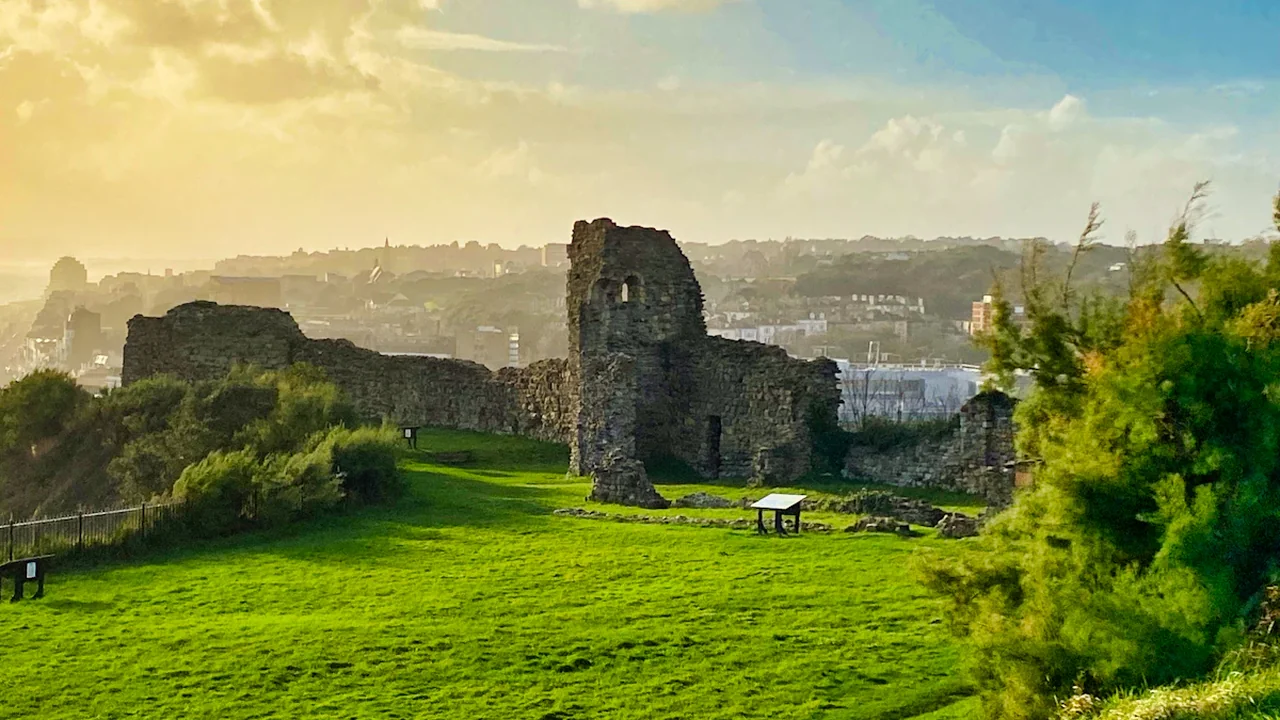
On 14 October 1066, William, Duke of Normandy, defeated Harold II at the Battle of Hastings. The victory opened the way for William to take the English crown, but it did not end resistance or transform the country overnight. The next milestone was his coronation in December; the changes to landholding and government unfolded over years.
A succession dispute drew William across the Channel
The battle was the climax of a campaign shaped by a contested succession. When King Edward the Confessor died in January 1066, Harold Godwinson was crowned king. William claimed that Edward had promised him the throne and that Harold had previously sworn to support his claim. Those claims formed part of William’s case, but they did not make his succession uncontested.
Harold faced another claimant first. In September, the Norwegian king Harald Hardrada invaded northern England with Harold’s estranged brother, Tostig. Harold marched north and defeated them at Stamford Bridge on 25 September. He then had to move his army south after William landed in Sussex.
That sequence matters: Hastings was not an isolated clash between England and Normandy. Harold’s forces had just fought a major battle in the north, while William had crossed the Channel with an invading army and established a foothold in southern England. The campaign brought the competing claims to the throne into direct conflict.
Hastings opened the road to London
On 14 October, Harold’s army took a defensive position on high ground, while William’s forces attacked. The fighting lasted through the day. Britannica records the outcome as a victory for William and the death of Harold. The precise details of Harold’s death and some familiar battlefield stories have been debated, so they should not be presented as certain eyewitness accounts.

William’s victory did not amount to immediate control of all England. He advanced toward London as opposition continued, and his forces used both military pressure and political negotiation to secure submission. The battle’s importance was that it removed Harold and weakened the organized resistance to William’s claim, making his eventual coronation possible.
William was crowned king at Westminster Abbey on 25 December 1066. That was a separate event, more than two months after Hastings. The coronation gave his rule a formal and religious setting, but it did not mean that every region had accepted Norman authority or that the conquest was complete.
Norman rule changed who held land
Over the following years, William’s government redistributed much of England’s land among the king’s supporters. English landholders lost estates, and Norman lords became dominant among the new elite. This was a major shift in who controlled land and owed service to the crown, though the pace and extent of change varied across the country.
Landholding also became a foundation of royal power. The king’s relationship with leading tenants, and their obligations to him, helped organize the new ruling order. Castles built after the invasion served as military strongholds and centers of control in strategic places. These changes made the conquest visible well beyond the battlefield: authority was reinforced through control of estates, fortifications and local administration.

The transformation was not simply a replacement of every English practice. William retained parts of the existing administrative system where they served royal government, while placing new rulers over many communities and estates. The result combined continuity in some institutions with a sharp change in the people who held the highest offices and the largest lands.
The Domesday survey recorded the new order
In 1085, William ordered a survey of land and resources across much of England. The findings, compiled in what became known as Domesday Book, helped the crown assess who held land and what it was worth. It was a record of the kingdom under Norman rule, nearly two decades after Hastings, rather than a document created at the moment of invasion.
The survey shows how far the political settlement had progressed: the new regime needed detailed information about estates, obligations and wealth to govern and raise revenue. It also gives historians evidence about the scale of landholding changes, while requiring care because it reflects the crown’s administrative purposes and categories.
Historic England places the battle within this broader Norman Conquest and its lasting significance. The key sequence is clear: Hastings on 14 October 1066, William’s coronation in December, and the gradual consolidation of his rule in the years that followed. The next major milestone was the Domesday survey, ordered in 1085 and completed in 1086.
Source: Encyclopaedia Britannica
Context & actions About this article
Source check Historical context
Britannica confirms the battle date and outcome, while Historic England places Hastings within the wider Norman Conquest.
- Battle date and outcome
- The December coronation date
- The gradual changes to landholding and government
- Source
- Encyclopaedia Britannica
- Scope
- England
- Updated
- 2026-10-14 09:10
Source check
Report a trust issue
Send a clear signal to community moderation if the source, facts or context need review.




Comments