
The Battle of Hastings on 14 October 1066 ended with William of Normandy defeating King Harold Godwinson, opening the way for a new ruling elite to take power in England. The change unfolded over months: the succession crisis that brought rival claims to the throne, the battle itself, and William’s eventual coronation on 25 December. English Heritage and Encyclopaedia Britannica provide the background for this account; some details of the battle remain debated.
1066 began with a disputed succession
When King Edward the Confessor died on 5 January 1066, he left no direct heir. Harold Godwinson, a powerful English nobleman, was chosen king and crowned the following day. William, Duke of Normandy, also claimed the throne, arguing that Edward had promised it to him and that Harold had previously sworn to support his claim.
The precise force of those claims is contested. Medieval accounts were written amid competing political interests, and historians differ over what Edward promised and what Harold’s oath meant. What is clear is that Harold became king in England while William prepared to challenge his rule.
September brought another invasion
William was not Harold’s only rival. In September, the Norwegian king Harald Hardrada invaded northern England with support from Harold’s estranged brother, Tostig. Harold marched north and defeated their forces at the Battle of Stamford Bridge on 25 September. Both Hardrada and Tostig were killed.
That victory came just as William’s Norman army landed on the south coast. Harold’s forces had to travel rapidly from the north to meet the new threat. The timing and the long march shaped the situation before Hastings, although the surviving evidence does not settle every detail of the English army’s condition or numbers.
Harold and William met near Hastings on 14 October
The armies fought near the town of Hastings, at a site now associated with Battle, East Sussex. Harold’s troops held a defensive position on a ridge, while William’s army included cavalry and archers as well as infantry. The battle lasted much of the day.
The broad outcome is established: William won, and Harold was killed. The exact sequence of events is less certain. Accounts describe repeated Norman attacks and a collapse of the English position late in the battle. The famous image of Harold struck in the eye comes from the Bayeux Tapestry, but historians debate whether it should be read as a literal depiction of his death.
William’s victory became a takeover of the kingdom
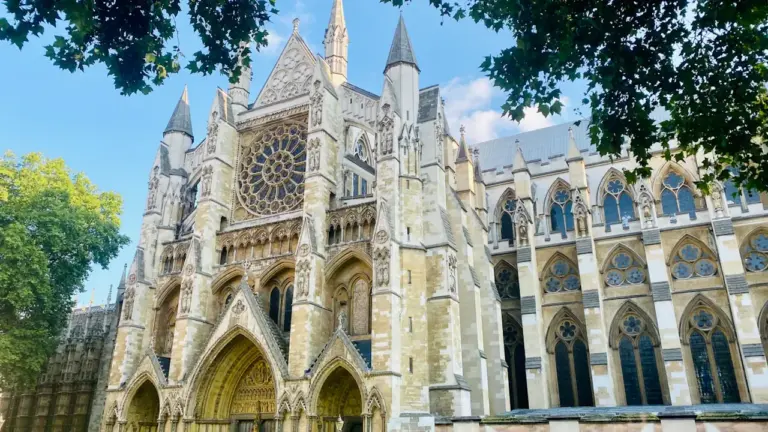
Winning at Hastings did not instantly give William control of all England. He moved toward London, faced resistance, and secured the submission of leading English figures. On 25 December 1066, he was crowned king at Westminster Abbey.
The new king then had to make his authority effective across the country. Resistance continued, especially in the north, and William’s campaigns included severe destruction. Over time, Norman rulers replaced many of the leading English landholders and placed castles and royal officials in strategic locations. The scale and pace varied by region; the conquest was a process, not a single day’s transfer of power.
The ruling elite changed, while England’s institutions evolved
The Norman takeover brought a new aristocracy, closer links between England and Normandy, and lasting changes to landholding and government. French-speaking rulers and nobles became prominent, while English remained the language of most people. The languages and customs met and changed over generations; English did not disappear.
The conquest also reshaped the church and the building landscape, including the spread of castles and changes to major religious institutions. Yet Hastings did not erase every older practice. Royal government continued to rely on existing structures even as new rulers adapted them to strengthen control.
The next milestone was the 1086 Domesday survey
By 1086, William ordered a wide survey of land, property and resources across much of England. Known as Domesday Book, it recorded who held land and what it was worth, giving the king a detailed account of the realm under Norman rule.
The survey is a useful endpoint for tracing the change that began in 1066: Hastings decided who could claim the crown by force, while the decades that followed established a new ruling class and a more securely documented royal administration.
Source: English Heritage
Context & actions About this article
Source check Historical context
The battle’s date, William’s victory and the subsequent Norman takeover are established; the succession claims and some battlefield details remain debated.
- Battle date: 14 October 1066
- Harold’s death and William’s victory
- William’s coronation on 25 December 1066
- Norman consolidation continued after the battle
- Source
- English Heritage
- Scope
- England
- Updated
- 2026-10-12 09:32
Source check
Report a trust issue
Send a clear signal to community moderation if the source, facts or context need review.



Comments