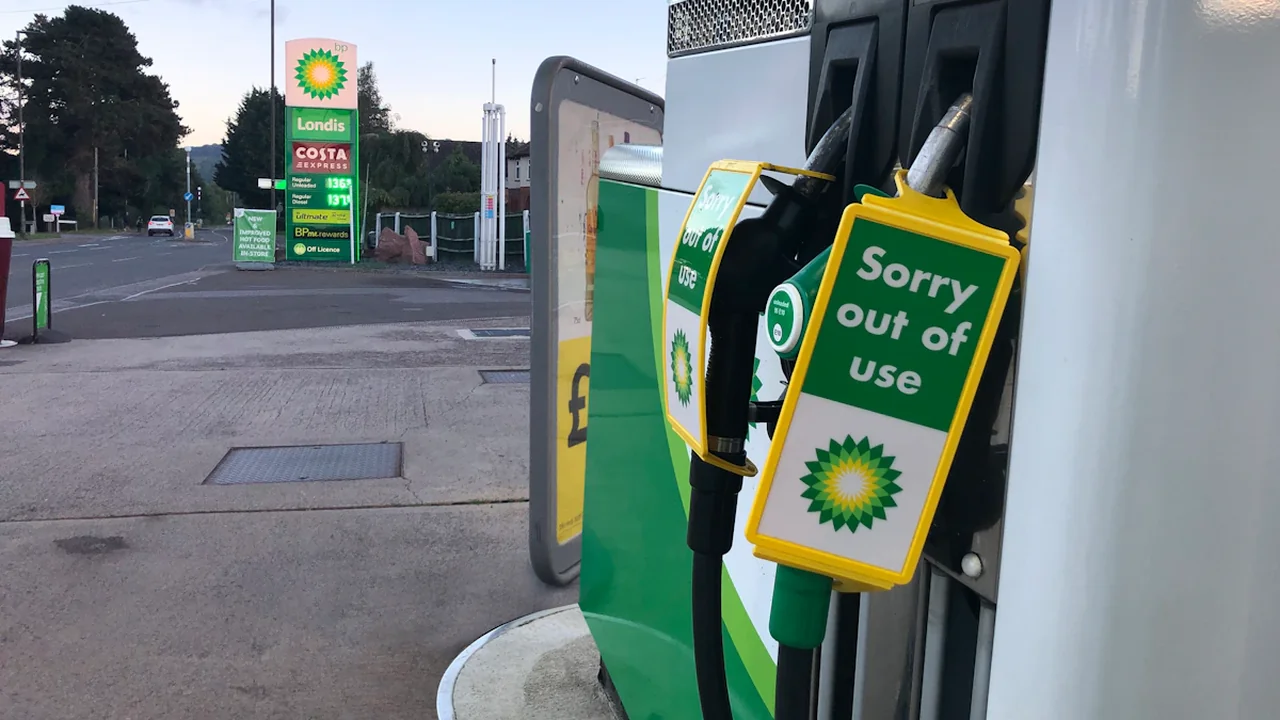
A cheaper pump price can still cost more if reaching it adds a long detour. Before a longer drive, compare the right fuel type at forecourts along your route, check any supermarket offer’s conditions, and include the extra miles in your calculation. The Competition and Markets Authority (CMA) publishes information about its road fuel market study and fuel price monitoring work; use its current materials for market context rather than relying on an unverified national average.
Check prices for your fuel type and route
Start with a fuel price comparison service or app that lets you search by postcode and fuel type. Enter the area where you expect to refuel, then check petrol or diesel specifically. Prices can vary between nearby forecourts, and a listing for one fuel does not tell you the price of another.
Use the postcode for a planned stop or a point along your route, rather than searching only around home. Compare stations you could reach without a substantial change to the journey. Check when each price was last updated, if shown, and treat an old listing as a prompt to verify the price before turning off the route.
The CMA’s road fuel market study collection is a useful place to understand its work and monitoring information. It is market context, not a live quote for a particular pump. Confirm the price with the forecourt’s current listing, app or signage where possible.
Compare the full cost, including a detour
To compare two stops, estimate how much fuel you will buy and calculate the price difference on that amount. Then estimate the fuel needed for the extra distance to the cheaper forecourt and back to your original route.
A simple method is:
- Find the difference between the two prices per litre.
- Multiply that difference by the litres you expect to buy. This is the potential saving at the pump.
- Work out the extra miles caused by the detour, including the return to your route.
- Estimate the litres used for those miles using your vehicle’s typical fuel economy.
- Multiply those litres by the price per litre to estimate the detour’s fuel cost.
- Subtract that cost from the potential pump saving.
If the result is positive, the cheaper stop may save money on fuel. If it is negative, the detour is likely to cost more than the price difference saves. This estimate covers fuel only; extra time and traffic can also affect whether the stop is worthwhile.
Worked example with hypothetical figures
The following figures are illustrative only, not live UK prices. Suppose you plan to buy 40 litres, and a forecourt on your route charges 145p per litre. A cheaper station is listed at 140p per litre but adds 12 miles to the journey in total.
The five-pence-per-litre difference would save £2.00 on 40 litres: 40 × £0.05. If your car averages 40 miles per gallon, 12 extra miles use about 0.3 gallons, or 1.36 litres. At the cheaper station’s hypothetical price of £1.40 per litre, that extra fuel costs about £1.90. The estimated net saving is roughly 10p before considering time or traffic.
With a longer detour, a smaller purchase or a less efficient vehicle, the same price gap could become a net cost. The cheapest listed forecourt is not automatically the cheapest choice for your journey.
Check supermarket offer conditions
A supermarket fuel offer may depend on buying groceries, using a particular loyalty scheme, meeting a minimum spend or redeeming a voucher before it expires. Read the offer terms and check whether the saving applies to the fuel type and amount you need.
Compare the price after the offer with the ordinary price at another convenient forecourt. If you would buy groceries anyway, include only the fuel saving you can actually claim. Do not count a grocery discount as a fuel saving if qualifying for it means spending more than you planned.
Make a final check before leaving the route
Prices can change, and an online listing may not match the pump by the time you arrive. Before making a detour, check the listing’s update time and look for the station’s current price through its own app or another recent source. If the price is uncertain, base your decision on the amount you could lose if the saving is smaller than expected.
For a useful comparison, keep the calculation simple: same fuel type, same planned quantity, total detour distance and a realistic estimate of your vehicle’s fuel use. Recheck the price and any offer conditions when you are close to the stop. That gives you a better basis for deciding whether a cheaper pump is worth leaving your route.
Source: Competition and Markets Authority
Context & actions About this article
Source check How to compare
The comparison method uses the planned fuel quantity, price difference and estimated fuel used on the extra distance; the worked figures are hypothetical.
- Compare the same fuel type at each forecourt.
- Check how recently a listed price was updated.
- Include the full detour distance in the estimate.
- Read supermarket offer eligibility and expiry terms.
- Source
- Competition and Markets Authority
- Scope
- United Kingdom
- Updated
- 2026-10-30 09:48
Source check
Report a trust issue
Send a clear signal to community moderation if the source, facts or context need review.

Comments