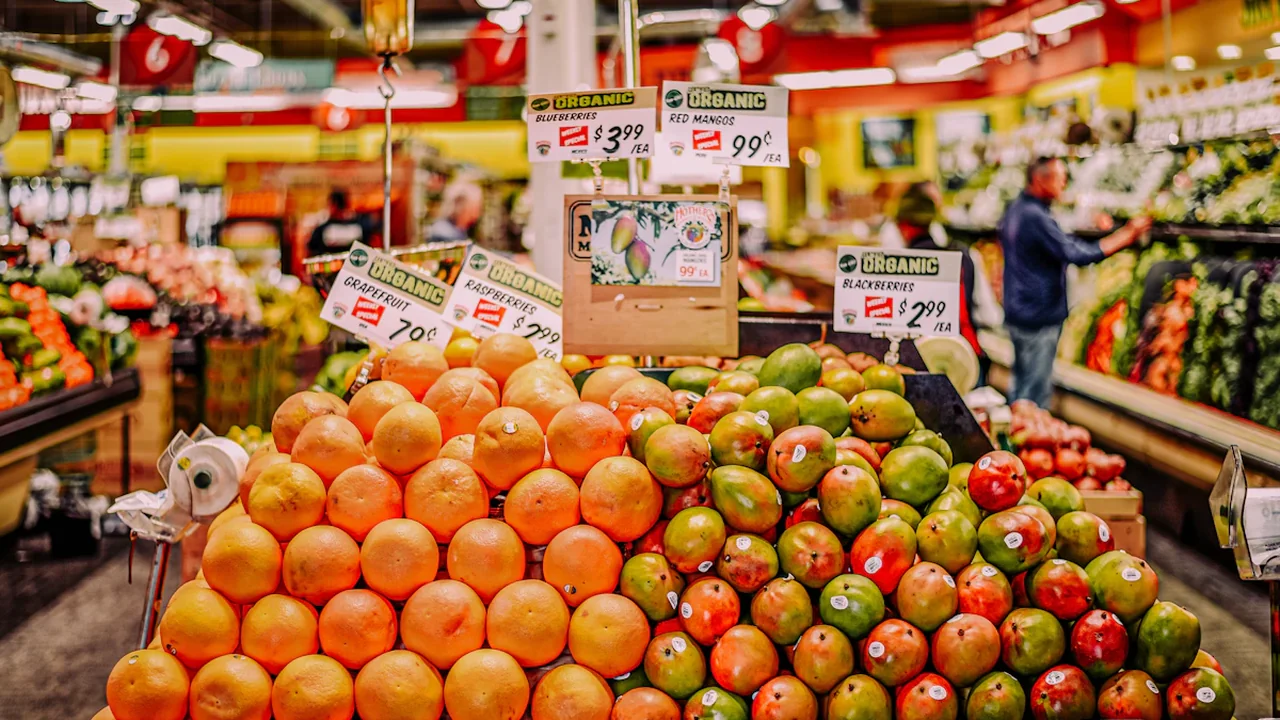
A lower shelf price does not always mean better value. To compare groceries across pack sizes, check the price per kilogram, litre or item, then ask how much your household will actually use. The best buy is the pack that meets your needs at the lowest total cost without leaving food to spoil.
Compare the same measure before choosing a pack
UK supermarket shelf labels often show a unit price alongside the pack price. A 500g pack priced at £1.50 costs £3 per kilogram. A 750g pack priced at £1.95 costs £2.60 per kilogram, so the larger pack has the lower unit price.
Check that both labels use the same measure. If one shows a price per 100g and the other shows a price per kilogram, multiply the first figure by ten. A price of 35p per 100g is £3.50 per kilogram. For drinks, compare prices per litre; for identical single-use goods, a price per item may be more useful.
Pack contents matter too. Compare like with like: fresh fruit with fresh fruit of a similar quality, or tins using their stated weight or drained weight where relevant. A cheaper price per kilogram may be less useful if part of the product is liquid you will discard. When shelf labels are missing or use different measures, divide the pack price by its weight or volume and scale the answer to one kilogram or litre.
Buy the quantity you will use, not just the lowest unit price
A bigger pack can have a lower unit price and still make your weekly shop more expensive. Suppose a 500g tub of yoghurt costs £1.40 (£2.80 per kilogram), while a 1kg tub costs £2.20 (£2.20 per kilogram). The large tub wins on the shelf label. But if your household expects to eat only 450g before the rest spoils, the smaller tub meets that need for 80p less.
The calculation changes if you will use the whole kilogram, share it, or have a suitable way to preserve it. Before paying for the larger pack, think about the use-by date, storage space and meals already planned. Food waste turns an apparent saving into an extra cost.
Shelf life makes a difference. A larger bag of rice may be sensible for a household that uses rice regularly and can store it properly. A large bag of salad needs a more immediate plan. For goods you buy every week, note how much is left before shopping again; that is a better guide to your usual quantity than the size of a promotion.
Work through one weekly shopping list
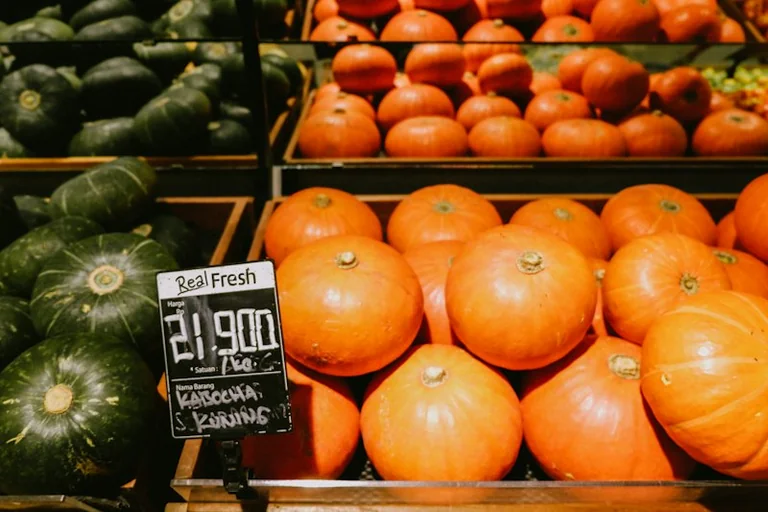
Imagine you need yoghurt for breakfasts, rice for two dinners, tomatoes for lunches and cooking, and milk for the week. The prices below are illustrative, so use the labels in your own shop for the final decision.
- Yoghurt: You expect to use about 450g. Choose the 500g tub at £1.40 over the 1kg tub at £2.20, despite its higher price per kilogram.
- Rice: A 500g bag costs £1.20 (£2.40 per kilogram); a 1kg bag costs £2 (£2 per kilogram). If you regularly use rice and can store the rest, the larger bag saves 40p per kilogram.
- Tomatoes: A 400g pack costs £1.60 (£4 per kilogram); a 600g pack costs £2.10 (£3.50 per kilogram). Choose the larger pack only if your planned meals will use the extra 200g while it is still good.
- Milk: Compare the price per litre, then check your usual consumption. Paying less per litre for a larger bottle will not help if you routinely pour some away.
For this list, the decision is different for each product. Unit price identifies the cheaper quantity; your meal plan tells you whether that quantity is worth buying. You can make the check quickly by writing approximate amounts beside the foods on your list before you enter the supermarket.
Check whether a multi-buy really lowers your bill
A multi-buy offer deserves the same two checks: price per unit and usable quantity. If one 500g pack is £1.30 and two cost £2.20, the offer makes each pack £1.10, or £2.20 per kilogram. That is cheaper per kilogram than buying one pack at £2.60 per kilogram.
But if you need only one pack, the offer raises today’s spend from £1.30 to £2.20. The second pack must be useful before it spoils for the deal to help. Also check whether a different brand or larger single pack has a lower ordinary unit price. An offer label alone does not prove it is the cheapest option.
If a loyalty price applies, compare the price you can actually pay. Read the offer conditions, including the required number of packs, qualifying sizes and end date shown in store. For a mixed offer, work out the total cost of the exact items you intend to put in your basket.
Use a short check at the shelf
- Start with the quantity your household needs for planned meals and regular use.
- Compare products using the same measure: per kilogram, litre or item.
- Check the total pack price as well as the unit price.
- For perishables, consider the date, storage space and whether you can use or preserve the extra food.
- Recalculate multi-buy and loyalty offers using the price you will pay and the quantity you will use.
On your next weekly shop, try this with the few products where pack sizes vary most. A quick comparison of unit price and realistic use can save more than automatically reaching for either the cheapest pack or the biggest one.
Source: Editorial research
Context & actions About this article
Source check How the comparisons work
The prices are examples; compare current shelf labels and the amount your household can use before buying.
- Convert pack prices to the same weight, volume or item count.
- Compare the total cost of the quantity you expect to use.
- Check offer conditions and the price available to you.
- Scope
- United Kingdom
- Updated
- 2026-10-06 10:11
Source check
Report a trust issue
Send a clear signal to community moderation if the source, facts or context need review.



Comments