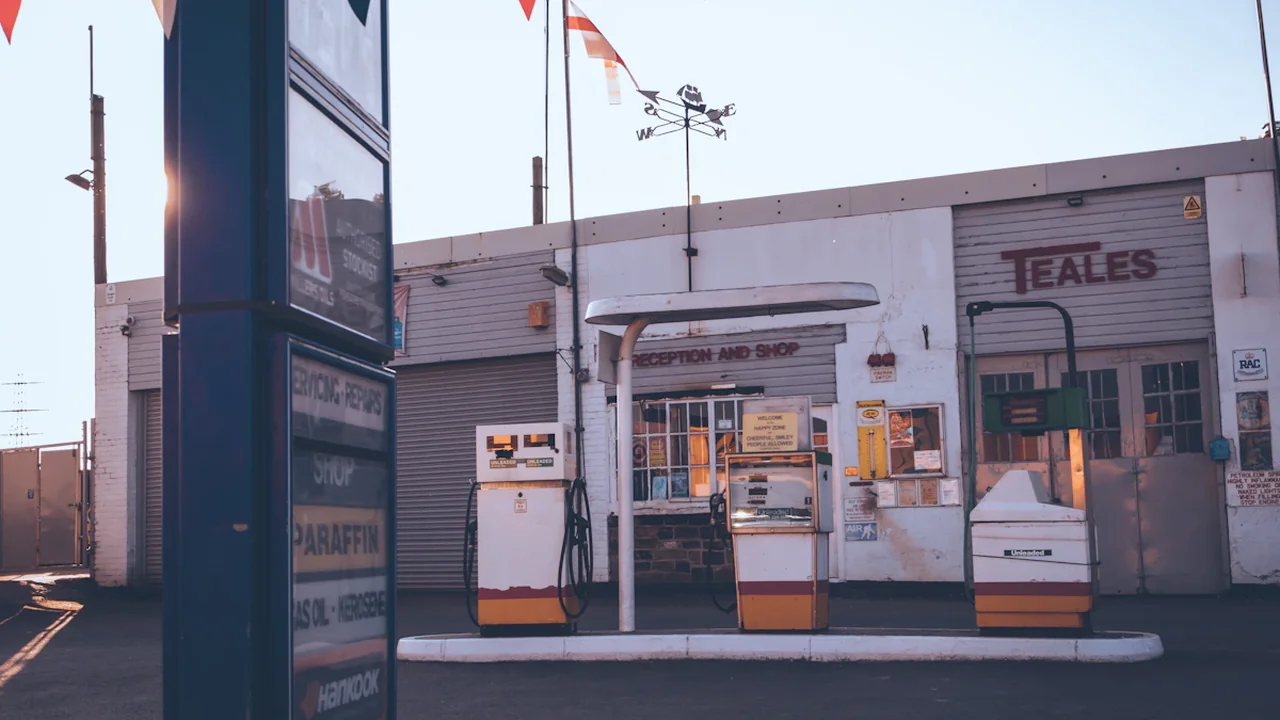
A fair fuel-price comparison starts with the same fuel type, prices checked at roughly the same time, and the amount your car actually needs. Pump prices vary by station, location and date, so a national average is context rather than a guaranteed price near you.
What a petrol or diesel price tells you
The figure on a forecourt sign is the price per litre at that station. It is the amount you pay for the fuel dispensed; it does not tell you how far your car will travel on that fuel or what a full tank will cost.
Compare petrol with petrol and diesel with diesel. Also check that the prices come from the same day, or as close to it as possible. A price collected earlier may no longer be displayed, and a difference between two locations may reflect timing as well as local pricing.
The Competition and Markets Authority (CMA) publishes official materials and updates about its road fuel market work. Those materials provide market context, but they do not make every station’s displayed price identical or guarantee a live price for a particular forecourt.
Calculate the cost of your fill-up
Use the number of litres you plan to buy, not just your tank’s advertised capacity. If your tank holds 50 litres and you need 30 litres to fill it, calculate the cost using 30 litres.
Cost in pounds = price per litre in pence × litres ÷ 100.
For example, at 150p per litre, buying 30 litres costs £45: 150 × 30 ÷ 100. Filling a 50-litre tank from empty at that same price would cost £75. These are examples, not current UK pump prices.
To compare two stations, keep the litres constant. If one displays 150p per litre and another 153p, a 30-litre purchase would cost £45 at the first and £45.90 at the second, a difference of 90p. The saving scales with the amount bought; it is not automatically the difference you would make on every visit.
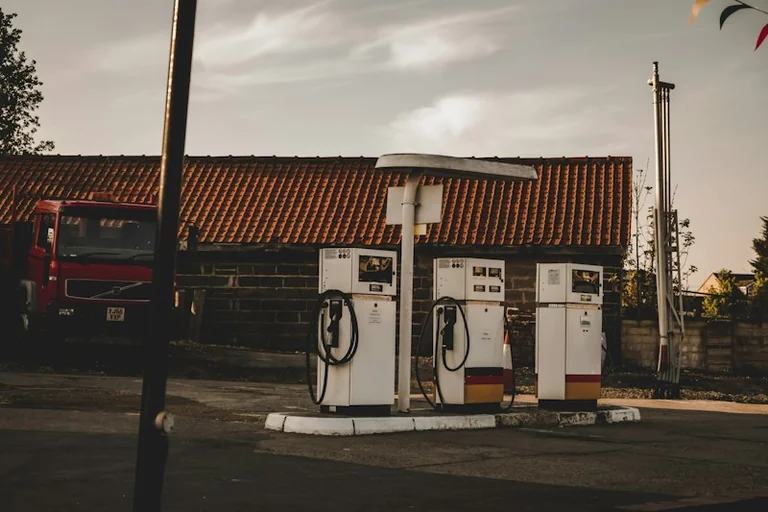
Compare nearby stations on equal terms
Before choosing a station, write down or note the displayed price and when you checked it. Then compare stations that are reasonably close to your normal route, rather than treating a distant cheaper price as a saving without counting the extra journey.
A quick comparison works best when you:
- Check the same fuel grade and type at each station.
- Record the price and date or time you saw it.
- Compare the cost for the same number of litres.
- Consider any extra distance, detour or time needed to reach a cheaper forecourt.
- Recheck the sign before filling, since prices can change.
If you use an online listing or app, treat it as a lead to check rather than a guarantee: its information may be reported at a different time from your visit. The pump or forecourt sign is the price to use for your actual calculation.
Keep pump-price savings separate from fuel economy
A lower price per litre and better fuel economy affect different parts of your budget. The price tells you what each litre costs; fuel economy affects how far the vehicle travels on the litres it uses.
For example, a station that is 3p per litre cheaper saves 90p on 30 litres. A vehicle that uses fewer litres over a journey may reduce fuel spending too, but that is a comparison between vehicle use over distance, not proof that one station’s pump price is better. To estimate your own fuel cost over a trip, use the vehicle’s typical consumption and the price you expect to pay, while allowing for driving conditions and load.
Use national figures as context, not a local quote
A national average can help show the broader market level, but it may not match a particular town, route or retailer. It also needs a publication date: an undated figure cannot tell you whether it reflects prices available today.
The CMA’s road fuel market collection is a place to find its official materials and updates. If you use a national figure from another publication, check the source, fuel type, geographic coverage and date before comparing it with a pump sign. Without a verified, dated figure, use the prices you can check locally for a household fill-up estimate.
Source: Competition and Markets Authority
Context & actions About this article
Source check How to compare
The calculations use example prices; pump prices vary by station, location and date.
- Compare the same fuel type and grade.
- Use prices checked at similar times.
- Calculate both costs using the same number of litres.
- Check the displayed price before filling.
- Source
- Competition and Markets Authority
- Scope
- United Kingdom
- Updated
- 2026-10-27 10:29
Source check
Report a trust issue
Send a clear signal to community moderation if the source, facts or context need review.



Comments