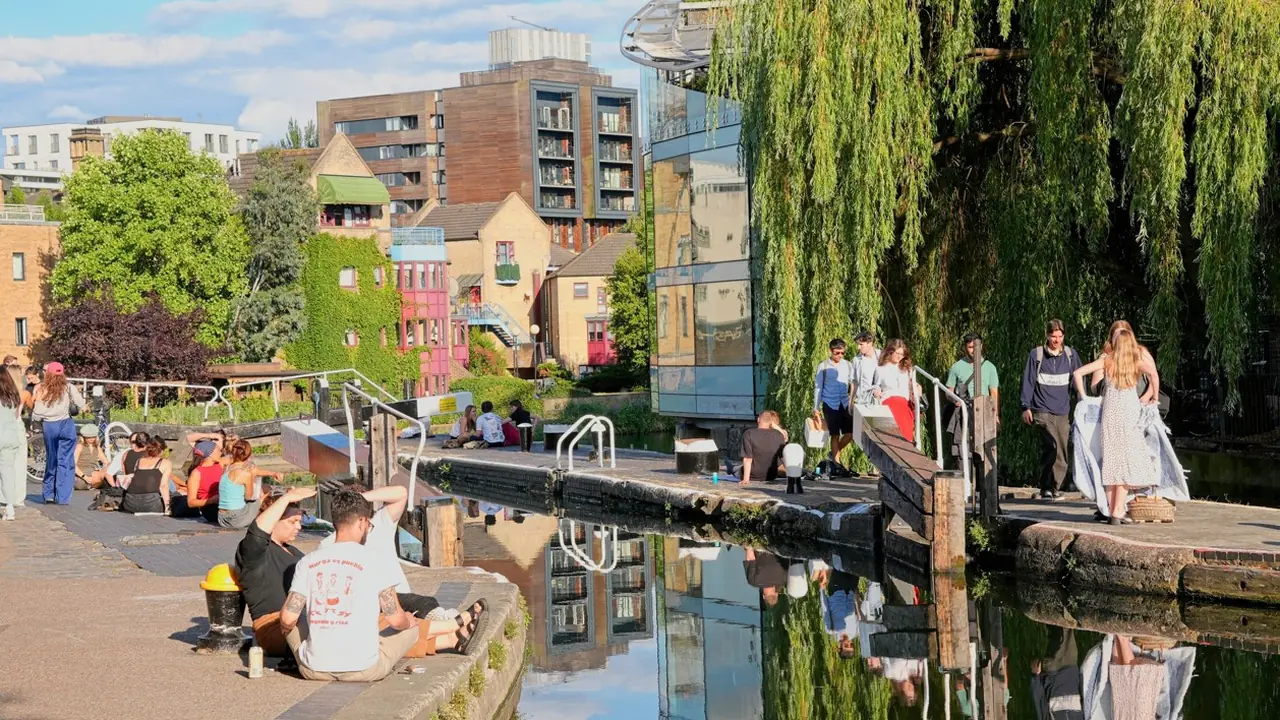
Urban canals lowered nearby daytime temperatures by as much as 2.3°C during heatwaves, according to research led by the University of Manchester. The finding suggests waterways built for the Industrial Revolution could become part of how modern cities protect residents from extreme heat.
Published on 10 August 2026 and reported by University of Manchester News, the study examined more than 2,300 canal sections across Great Britain and Ireland. GlobeBids Science Desk reviewed the reported results, methodology and stated limitations. It adds to related research on health risks during Manchester heatwaves.
Heatwave cooling reached between 1.5°C and 2.3°C
On an average day, the modelled cooling effect was about 0.8°C within the immediate surroundings of an urban canal, typically 20 to 50 metres from the water. The effect was strongest during spring and early summer, when the reduction reached approximately 1.2°C to 1.4°C.
The difference became greater in heatwave conditions, with nearby daytime temperatures falling by an estimated 1.5°C to 2.3°C. That range matters because even a modest temperature reduction can change the level of heat stress experienced by people walking, cycling, working or living beside a canal.

| Measure | Reported result |
|---|---|
| Average daytime cooling | Around 0.8°C |
| Cooling in spring and early summer | Around 1.2–1.4°C |
| Cooling during heatwaves | Around 1.5–2.3°C |
| Typical area of influence | 20–50 metres from the water |
| Canal sections modelled | More than 2,300 |
Around 6.2 million people live within one kilometre of Britain’s urban canal network. That does not mean every resident receives the full cooling benefit: the strongest effect identified by the study was much closer to the water.
Researchers modelled an entire year of canal conditions
Researchers from the university’s Geography, Planning and Engineering departments developed an energy-balance model to simulate how canal water and the surrounding urban environment behaved thermally. They applied it to more than 2,300 sections of the canal network over a full year.
The results are therefore modelled estimates across a large geographic area, rather than direct thermometer readings beside every canal. The national-scale approach allowed the researchers to compare locations and seasons consistently, but it cannot reproduce every street-level factor that may alter how heat is experienced at a particular site.

Lead author Dr Matt Tomkins said the average-day effect was modest but became substantially more pronounced during heatwaves. In some locations, nearby temperatures were reduced by more than two degrees.
Fewer hours reached moderate and high heat risk
The researchers also examined thermal comfort rather than temperature alone. After canal cooling was incorporated into the model, hours classified as posing moderate heat risk fell by about 58%, while high-risk hours declined by roughly 74%.
Periods of extreme heat risk disappeared entirely in many modelled locations. However, the study cautions that water can raise local humidity, which also affects how comfortable people feel during hot weather. A lower air temperature beside a canal does not automatically produce an equivalent improvement in perceived heat.

Water also retained warmth for longer than surrounding surfaces, creating a small warming effect overnight. Researchers described that effect as relatively minor compared with the daytime cooling benefit, but it prevents the findings from being read as evidence that canals cool their surroundings equally at all hours.
Canals could join parks and trees in heat planning
The findings place urban canals alongside parks, trees, sustainable drainage and other green and blue infrastructure that cities can use to manage rising temperatures. The researchers do not present waterways as a complete solution to urban heat.
Canal-side cooling could help people remain active during hot weather and make walking or cycling routes more tolerable. The research also points to possible reductions in demand for energy-intensive air conditioning and cites an estimated £14.41 million in annual economic benefits from the heat-regulating services of the canals studied, based on reduced labour-productivity losses during hot days.
Co-author Dr Joanne Tippett said access and connectivity will shape who benefits. She identified clearer signposting, stronger links with green infrastructure and wider awareness of canal routes as considerations for climate-responsive planning.
The study was published in Nature Communications, with funding, data and support provided by the Canal & River Trust and research support from funds raised by Postcode Lottery players. Its modelling method could now be applied to waterways in other cities and tested alongside field measurements and satellite observations.
Source: University of Manchester News
Context & actions About this article
Source check Source trail
The reported figures were checked against the University of Manchester release describing the study, its modelling method and stated caveats.
- Confirmed that more than 2,300 canal sections were modelled over a full year.
- Distinguished average daytime cooling from the larger heatwave estimates.
- Retained the reported humidity and overnight-warming limitations.
- Confirmed the study publication as Nature Communications.
- Source
- University of Manchester News
- Scope
- Great Britain and Ireland
- Updated
- 2026-08-11 18:32
Source check
Report a trust issue
Send a clear signal to community moderation if the source, facts or context need review.




Comments