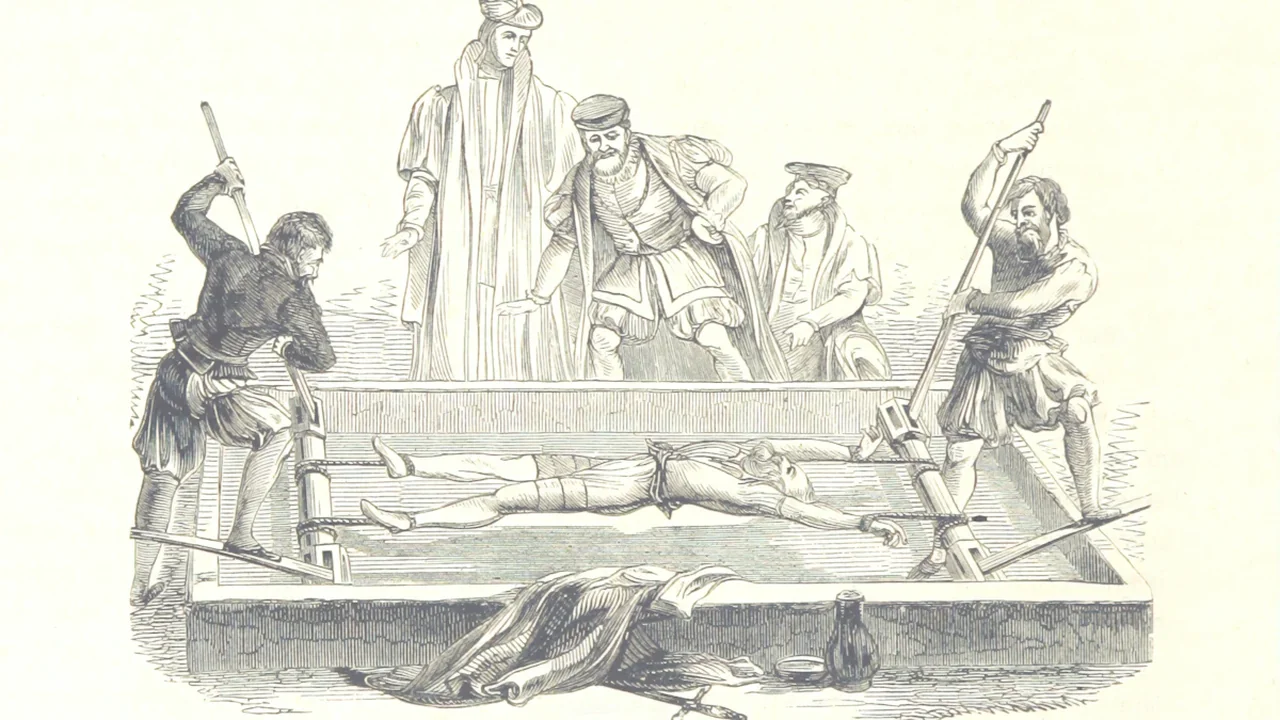
On 23 August 1305, the Scottish resistance leader William Wallace was executed at Smithfield in London. His death, ordered by the English Crown, brought a brutal end to a period of intense conflict during the Wars of Scottish Independence, marking a pivotal moment in the struggle between Scottish forces and the administration of Edward I.
The Political Context of 1305
The early 14th century was defined by the ongoing Wars of Scottish Independence, a series of military campaigns that sought to determine the sovereignty of Scotland. Wallace had emerged as a primary figure in the resistance, leading Scottish forces against English occupation with notable military successes. These victories posed a direct challenge to the authority of Edward I, who viewed the Scottish resistance as a fundamental threat to his territorial control. By the time of his capture, Wallace had become the most significant target for the English administration, which sought to reassert total control over the region and dismantle the leadership of the Scottish rebellion.
Capture and Trial in London
Following his capture in 1305, Wallace was transported to London to face the consequences of his actions. He was subjected to a public trial at Westminster Hall, a venue that underscored the gravity of the proceedings. Wallace was charged with treason and various atrocities allegedly committed during the conflict. The legal proceedings were swift, reflecting the Crown’s desire to frame the execution as a definitive political statement. The verdict was not merely a judicial outcome but a calculated display of power, intended to serve as a stark warning to other potential insurgents regarding the consequences of armed resistance against the English state.
The Execution at Smithfield
Smithfield, a site historically used for public executions in London, was chosen for Wallace’s final punishment. The execution was conducted in a manner intended to be public and deterrent. While popular culture and later folklore have added layers of myth to his final moments, the historical record confirms that his death was a state-sanctioned event intended to neutralize a major political threat. The brutality of the event was consistent with the medieval approach to high treason, where the physical destruction of the body was intended to mirror the perceived destruction of the political order.
Myth and Historical Evidence
It is essential to distinguish between the historical figure and the later romanticized depictions of Wallace. In the centuries following his death, William Wallace transitioned from a military leader into a central, often mythologized, symbol of Scottish identity. Much of the narrative surrounding his life—particularly the specific details of his final words or his personal motivations—has been heavily influenced by later literature and film. Historians emphasize that while the core facts of his leadership and execution are well-documented, the “Wallace” of national memory often reflects the needs of later generations rather than the precise reality of the 14th-century resistance leader. Separating these layers of myth from the verified historical record remains a primary objective for scholars studying the period.
Wallace in Modern Memory
Today, Smithfield exists as a busy urban center in London, bearing little physical resemblance to the site of the 1305 execution. The location serves as a reminder that while the physical geography of history changes, the interpretation of events like the death of Wallace continues to evolve in national memory. The site functions as a point of historical intersection, where the reality of a medieval execution meets the modern, ongoing process of commemoration. The evolution of Wallace’s legacy demonstrates that historical interpretation is not static; it is a continuous process of reassessment that reflects the changing priorities of the cultures that remember him.
Source: Encyclopaedia Britannica
Context & actions About this article
Source check Historical Context
This account is based on historical records regarding the 1305 execution of William Wallace.
- Verify the date of execution in historical archives
- Cross-reference trial details with Britannica records
- Source
- Encyclopaedia Britannica
- Scope
- London, England
- Updated
- 2026-08-23 11:59
Source check
Report a trust issue
Send a clear signal to community moderation if the source, facts or context need review.



Comments