By the GlobeBids Politics Desk
The possibility of a UK general election by 31 December 2027 is becoming a more immediate question as that deadline approaches, but no political rumour or campaign signal can settle it. The strongest established fact is that the Dissolution and Calling of Parliament Act 2022 allows an early dissolution to be requested, while the maximum parliamentary term provides a later backstop. For this forecast, only an official general-election polling day held by the deadline produces a YES outcome.
The election-timing question in one minute
- Question: Will a UK general-election polling day occur on or before 31 December 2027?
- Deadline: 23:59 on 31 December 2027.
- YES: An official UK general-election polling day takes place anywhere in the United Kingdom by the deadline.
- NO: No qualifying polling day has occurred when the deadline expires.
- Deciding record: The official election timetable, supported by government documents and Electoral Commission information.
An announcement before the deadline is not sufficient if polling is scheduled for 2028. By-elections, council contests, devolved elections and referendums are also outside the question.
A 2027 vote would be earlier than the normal parliamentary backstop
The previous UK general election was held on 4 July 2024. A contest completed by the end of 2027 would therefore arrive within roughly three and a half years of that polling day, making it an early election rather than one forced by the maximum length of the Parliament.
The House of Commons Library explains that the legal timetable combines rules about dissolution, the maximum parliamentary term and the election period that follows. The maximum term matters because it prevents a Parliament from continuing indefinitely, but it does not require a prime minister to wait until that final point.
This distinction is central to the forecast. The later statutory backstop makes another election inevitable eventually, but it does not by itself create a strong reason to expect polling by the end of 2027. A YES outcome would require a political decision to pursue an earlier contest, followed by the formal constitutional and electoral steps needed to hold it.
Nor should the 2024 polling date be treated as a simple five-year countdown to election day. Dissolution and the subsequent election timetable must occur before voters cast their ballots. The precise latest possible date is therefore a legal-timetable question, not merely the fifth anniversary of the last vote.
The 2022 Act reopened the route to an early dissolution
The Dissolution and Calling of Parliament Act 2022, enacted on 24 March 2022, repealed the fixed-term framework and restored the system under which the prime minister can request an early dissolution of Parliament.
That gives the government substantial flexibility over election timing, but it does not mean every report of an early election is a formal step. Several developments need to be kept separate:
- Political speeches, media reports and party preparations may indicate intent but do not call an election.
- A prime ministerial announcement can clarify the intended date but is not itself polling day.
- A formal dissolution ends the sitting Parliament and begins the election process.
- The proclamation and official timetable provide documentary confirmation of the constitutional and electoral schedule.
- The forecast resolves only when the qualifying polling day actually occurs.
The distinction protects the forecast from a late change of plan. If an election were announced for January 2028 during December 2027, the announcement would still produce a NO outcome at the deadline. Equally, preparations for an election would not count if Parliament had not been dissolved and no general-election polling day had taken place.
The House of Commons Library briefing is the principal public explanation of how dissolution, the maximum term and the next election timetable fit together. It supplies legal context rather than a prediction about what the government will choose to do.
What could move the forecast towards YES
The clearest YES signal would be a prime minister publicly requesting or announcing an early dissolution with a polling date no later than 31 December 2027. Formal dissolution, a proclamation and publication of the election timetable would make that path substantially more concrete.
Before those steps, political conditions can still affect the likelihood of an early contest. A government may consider going to the country when it believes the parliamentary, economic or electoral environment is favourable. A serious loss of governing authority, difficulty passing central legislation or an attempt to seek a renewed mandate for a major programme could also create pressure for an election.
None of those circumstances automatically triggers polling under the restored system. Poor opinion polling does not legally require an election. Neither does a difficult Budget, a ministerial resignation, a parliamentary defeat on an ordinary measure or speculation that parties have begun selecting candidates.
A confidence vote could become politically important, particularly if a government could no longer command the House of Commons. Even then, the forecast would remain unresolved until the process resulted in an official general-election polling day within the stated window.
The most reliable progression towards YES would therefore be visible in increasingly formal records: a clear government decision, dissolution, the official election timetable and finally polling day.
Why the deadline could still pass without an election
The NO path is straightforward: the government does not seek an election early enough for polling to occur by the end of 2027. Parliament continues, ordinary legislation and fiscal events proceed, and the eventual general election falls later in the parliamentary cycle.
Political incentives can support waiting. A government may want more time for policies to take effect, economic conditions to improve or public-service reforms to produce visible results. It may also judge that an early contest introduces unnecessary risk when it retains a workable Commons position.
Even a 2027 announcement would not guarantee YES. Timing is decisive. If the official polling day fell in 2028, the forecast would resolve NO regardless of how much campaigning, candidate selection or administrative preparation occurred during 2027.
This is why predictions based solely on party popularity or newspaper speculation can be misleading. Those indicators may help readers assess political incentives, but they cannot replace the legal and electoral documents that establish whether a qualifying vote has been called and held.
Election timing could shape tax and household decisions
An early election would not automatically change taxes, benefits, employment rules or public services. Those outcomes depend on party programmes, the election result, parliamentary approval and subsequent implementation. Timing could nevertheless influence when households and employers receive clarity about future policy.
Tax, benefits and personal finances
A contest before the end of 2027 could place income tax, National Insurance, pensions, welfare payments and housing costs at the centre of a compressed campaign. Manifesto commitments might signal different approaches, but they should not be treated as enacted policy.
Households making mortgage, retirement or major spending decisions would need to distinguish proposals from rules already in force. A campaign promise has no legal effect until the relevant government acts and, where required, Parliament approves legislation.
Public services and employment rules
Election timing can also affect the pace of decisions concerning NHS funding, schools, local government settlements, transport and departmental budgets. Some plans may continue through an election period, while politically sensitive announcements can be delayed or reconsidered.
Employers and workers may watch proposals concerning dismissal protections, workplace rights, pay rules and enforcement. An early election could accelerate, interrupt or redirect those debates, but existing employment law remains applicable unless and until it is formally changed.
The practical lesson is to use current legislation and official departmental guidance for immediate decisions. Manifestos and campaign statements are evidence of possible future direction, not substitutes for enacted rules.
The official polling day is the decisive test
The forecast has a deliberately narrow test. It resolves YES only if an official UK general-election polling day occurs by 23:59 on 31 December 2027. It resolves NO if that moment passes without one.
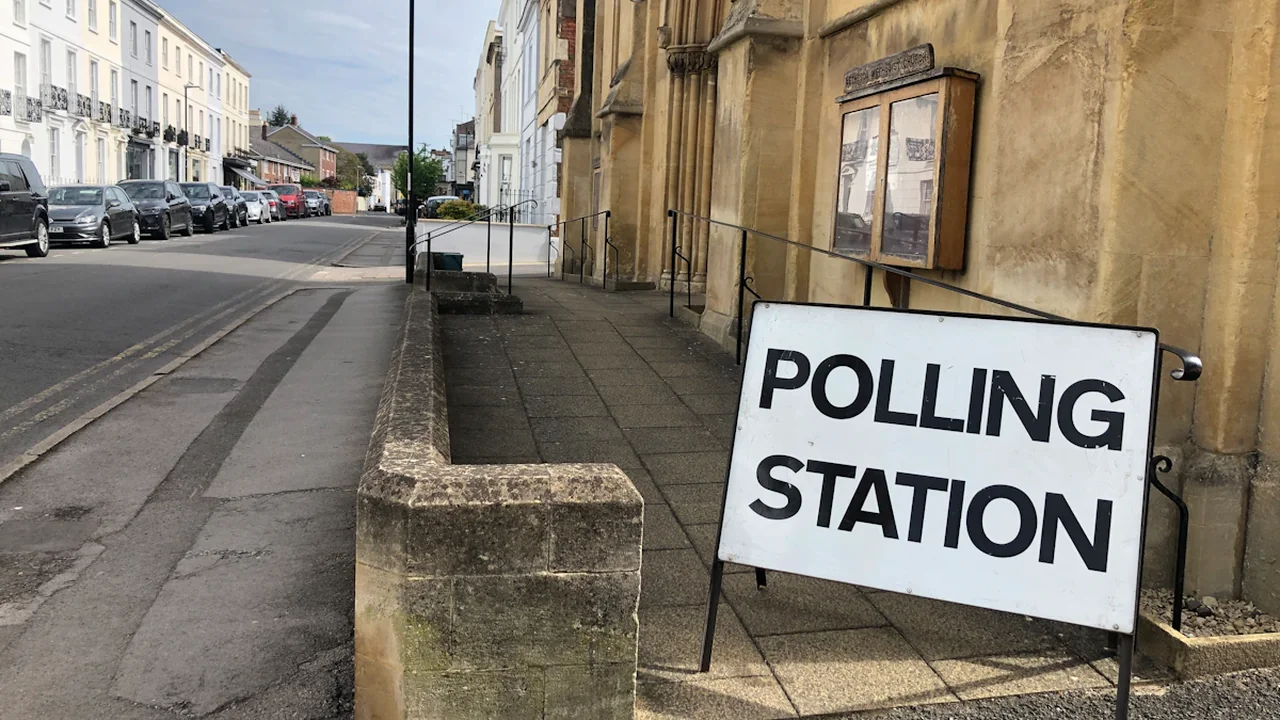
A nationwide general election qualifies even if voting arrangements vary locally. Separate by-elections, Scottish Parliament elections, Senedd elections, Northern Ireland Assembly elections, local elections, mayoral contests and referendums do not qualify.
The Electoral Commission’s voting and elections pages provide public information about UK electoral events and voting. Readers should pair that information with the formal dissolution documents, proclamation and government election timetable when assessing whether the process has moved beyond speculation.
The next meaningful check is therefore not another anonymous report about possible timing. It is an official document establishing a general-election polling date within the forecast window, followed by confirmation that polling day actually occurred.
Source: House of Commons Library
Context & actions About this article
Source check How this forecast is decided
The outcome depends on whether an official UK general-election polling day occurs by the end of 31 December 2027.
- Check whether Parliament has been formally dissolved.
- Confirm the polling date in the proclamation and official election timetable.
- Exclude by-elections, devolved elections, local elections and referendums.
- Treat a 2028 polling date as NO even if announced during 2027.
- Source
- House of Commons Library
- Scope
- United Kingdom
- Updated
- 2026-09-09 16:36
Source check
Report a trust issue
Send a clear signal to community moderation if the source, facts or context need review.



Comments