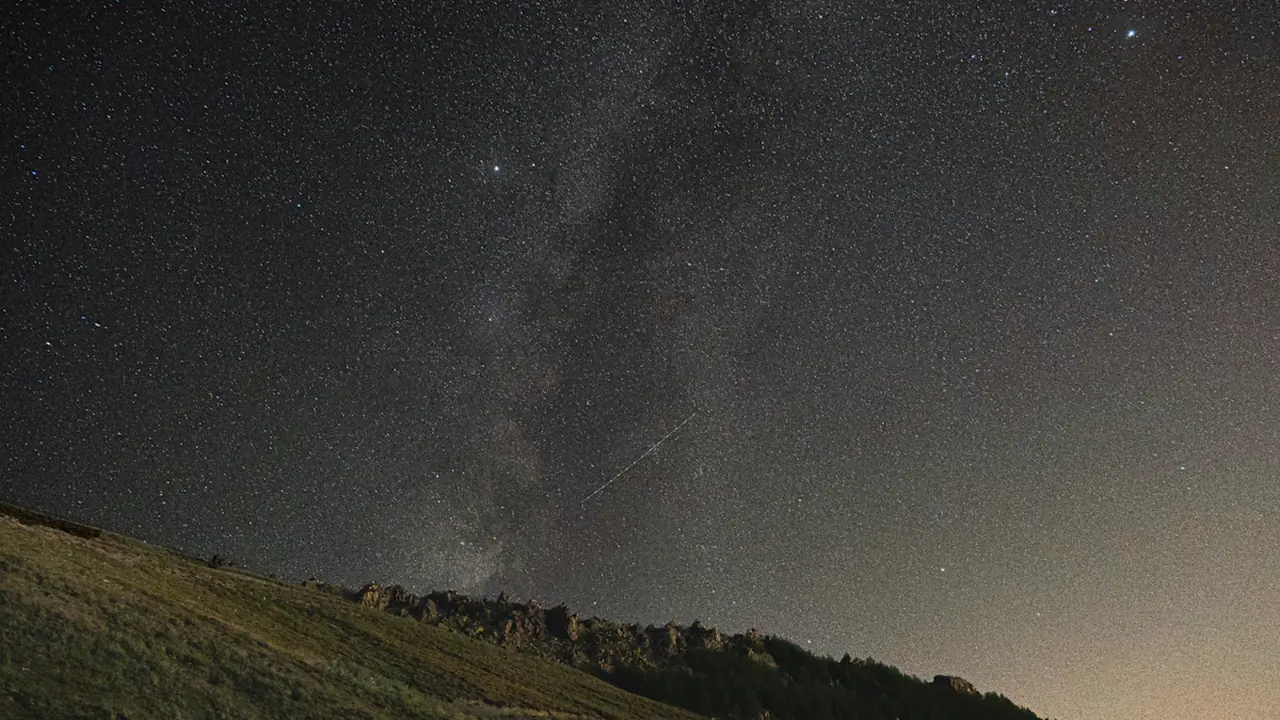
The Perseid meteor shower is still active over the UK on Friday 14 August 2026, shortly after its annual peak. A clear, dark sky could reveal some meteors tonight, but local cloud and light pollution matter more than the peak date—and no meteor count is guaranteed.
By the GlobeBids Editorial Desk | 14 August 2026
Decide whether tonight is worth the trip
The post-peak timing does not mean the shower has abruptly ended. The Royal Museums Greenwich Perseid guide explains the shower’s wider activity period as well as its expected peak, so observers may still see meteors after the busiest night.
Tonight’s practical details are simple:
- Where: Any safe, permitted UK location with an open view and limited direct lighting.
- When: After the sky becomes properly dark, provided local cloud allows.
- Equipment: No telescope or binoculars are necessary.
- Cost: Watching the sky is free; avoid travelling far unless conditions justify it.
- Expectation: Meteors are possible, but gaps between sightings can be long.
A darker location may improve the chance of noticing faint streaks, although it cannot guarantee a display. Cloud, nearby lighting, the visible portion of the sky and the time spent watching will all affect what an individual observer sees.
Check local cloud before leaving home
Use the Met Office UK forecast to search for the intended viewing location rather than relying on a broad national summary. Conditions can differ considerably between nearby towns, coasts and higher ground.
Check the hourly forecast for the period when you expect to be outside. Cloud is the main decision point, but rain, wind and temperature also matter for comfort and safety. Look again immediately before departure because an earlier forecast may not reflect the conditions you encounter later.
If thick cloud is expected throughout the evening, travelling farther does not automatically improve the odds. Compare forecasts for any alternative location before setting out and consider whether the extra journey, unfamiliar roads or isolated parking would be worthwhile for an uncertain break in the cloud.
Watch a broad area of sky without a telescope
Choose a place with a wide view, then move away from direct lamps only where access is safe and permitted. You do not need to stare at one constellation: meteors can cross different parts of the sky, so a broad naked-eye view is more useful than the narrow field provided by a telescope.
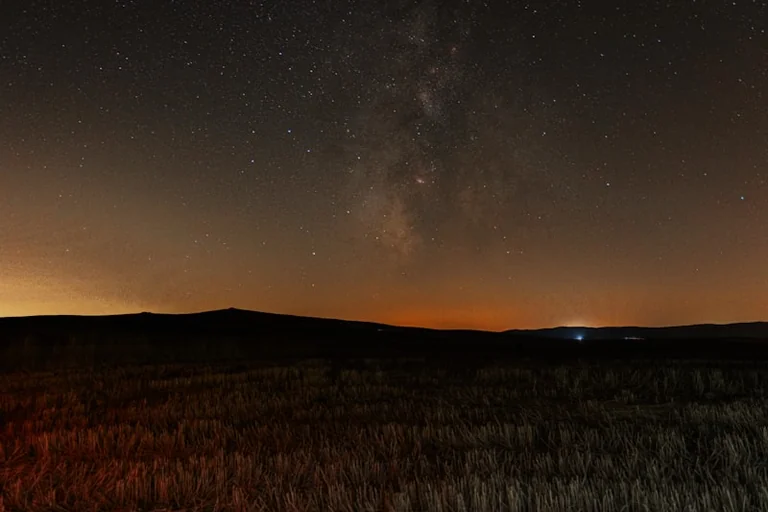
For a comfortable observing session:
- Settle somewhere with firm, level footing and a clear view overhead.
- Dim or put away bright phone screens and torches.
- Allow roughly 20 minutes for dark adaptation before judging the conditions.
- Scan a large, relatively dark area of sky instead of fixing your eyes on one point.
- Stay patient, but treat every sighting as a possibility rather than an assured result.
A reclining chair can reduce neck strain, provided it can be placed securely without blocking a path. Warm layers are useful even after a mild day, as remaining still outdoors can feel cold surprisingly quickly.
Make safety the deciding factor
Do not enter fields, tracks or other private land without permission. A dark-looking location on a map may be farmland, protected ground or a site that closes overnight.
Avoid stopping on road verges, gateways or bends. Use a legitimate parking area and ensure both the vehicle and walking route remain visible to other road users. Never sacrifice safe access for a slightly darker horizon.
At coastal viewpoints, keep well back from cliff edges, unstable ground and water. Darkness can conceal sudden drops and changes in the path. Isolated parking areas also deserve caution: tell someone where you are going, keep a charged phone available and leave if the location feels unsafe.
Use a cloudy evening to plan the next attempt
If cloud closes the sky, a no-cost fallback is to check a nearby planetarium’s programme online and verify its opening details, admission arrangements and availability before making a visit. No venue schedule or price should be assumed without checking directly.
Another option is to plan for a later clear night while the Perseid shower remains active. Identify a permitted site in daylight, confirm safe parking and compare the local Met Office forecast again on the chosen day. Tonight’s final go-or-stay-home decision should rest on the latest forecast for the exact location, not on the shower’s peak date alone.
Source: Royal Museums Greenwich
Context & actions About this article
Source check Viewing guidance
This guide combines Royal Museums Greenwich observing advice with location-based Met Office forecasts and practical outdoor safety checks.
- Confirmed that the Perseid shower remains active beyond its annual peak.
- Directed readers to location-based Met Office forecasts for local cloud conditions.
- Avoided promising a meteor count or a spectacular display.
- Included access, roadside, coastal and isolated-location cautions.
- Source
- Royal Museums Greenwich
- Scope
- United Kingdom
- Updated
- 2026-08-14 18:04
Source check
Report a trust issue
Send a clear signal to community moderation if the source, facts or context need review.

Comments