
Across the United Kingdom, daylight and darkness are close to equal around the autumn equinox, but the balance is not exact. The event marks a precise point in Earth’s orbit, while local sunrise and sunset times are also shaped by latitude, the atmosphere, Earth’s tilted axis and the apparent size of the Sun.
In 2026, the autumn equinox falls on 23 September. It is the astronomical marker associated with the start of autumn in the Northern Hemisphere, although the familiar experience of shorter evenings continues to change for weeks afterwards.
What the autumn equinox means astronomically
An equinox occurs when the Sun crosses the celestial equator, the imaginary extension of Earth’s equator into space. At that moment, neither hemisphere is tilted more directly towards the Sun than the other. Royal Museums Greenwich describes the equinox as an astronomical event connected with the changing seasons and the Sun’s position relative to Earth’s equator.
The word equinox comes from Latin roots meaning “equal night”. That description is useful, but it is not a promise that every place will receive exactly 12 hours of daylight and 12 hours of darkness. The equinox is defined by the Sun’s position in the sky, not by the precise times at which the upper edge of the Sun appears and disappears at every location.
Earth’s axis remains tilted as the planet travels around the Sun. The tilt is what produces the changing angle and length of sunlight through the year. Around the autumn equinox, the Northern Hemisphere is moving from its summer orientation towards winter, so the Sun’s daily path across the sky becomes lower and shorter.
Why day and night are not exactly equal in the UK
There are several reasons the measured day is usually a little longer than 12 hours around the equinox.
First, sunrise and sunset are generally defined by the appearance or disappearance of the Sun’s upper edge, rather than the moment when the centre of the Sun reaches the horizon. The Sun’s disc has a visible width, so daylight begins slightly before the centre reaches the horizon and ends slightly after it has passed below.
Second, Earth’s atmosphere bends sunlight. This refraction can make the Sun appear above the geometric horizon when it is physically just below it. The effect is especially relevant near the horizon, where the light travels through more atmosphere.
Third, the equinox happens at one precise instant, but “day and night are equal” is a local observation. The result depends on the observer’s latitude, elevation and horizon. A coastal town, a hillside and a city surrounded by buildings can all have slightly different observed sunrise and sunset conditions.
For a specific UK location, timeanddate’s seasonal and daylight calculations are more useful than a single national rule. They allow readers to enter a place and compare local sunrise, sunset and day-length figures around the equinox. This matters because London, Edinburgh, Cardiff, Belfast and smaller communities do not share identical daylight timings.
Why UK daylight keeps changing after the equinox
The autumn equinox is not the point at which evenings suddenly become dark. It is a turning point in the Sun’s apparent position, and the daily shift continues afterwards.
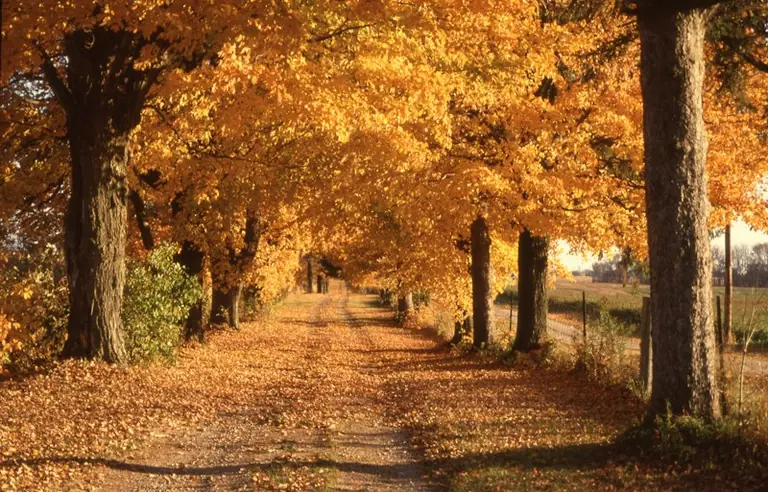
After the September equinox, the Northern Hemisphere gradually tilts farther away from the Sun. The Sun follows a lower path across the southern sky, reducing the length of daylight. In general, sunset becomes earlier and sunrise becomes later as autumn progresses, although the two changes do not occur at exactly the same rate.
This difference explains a familiar pattern: the earliest sunset of the year usually happens before the winter solstice, while the latest sunrise usually occurs after it. The exact dates depend on latitude and location. The changing times are linked not only to Earth’s axial tilt but also to the way Earth’s orbit affects the apparent movement of the Sun across the sky, often described through solar time.
The practical effect is that a person may notice darker evenings well before the shortest day, while mornings continue to grow darker after the December solstice. The winter solstice marks the year’s shortest period of daylight in the Northern Hemisphere; it does not mark the earliest sunset or latest sunrise.
How location changes the experience of autumn light
Latitude makes a clear difference across the United Kingdom. Northern locations generally experience larger seasonal changes in daylight than southern locations. As autumn advances, daylight contracts more noticeably in Scotland than in southern England, although local weather and the surrounding landscape can affect what people actually see.
Longitude also influences clock times. Two places at similar latitudes can have different sunrise and sunset times because they sit at different positions east or west within the time zone. Clock changes add another layer: the UK moves from British Summer Time to Greenwich Mean Time in late October, so displayed sunrise and sunset times shift by an hour even though the underlying seasonal pattern continues.
Hills, tall buildings and trees can make local darkness appear earlier than the official sunset time. Official calculations normally use a mathematical horizon and standard atmospheric assumptions, so a real-world observation from a particular street or valley may not match the published figure exactly.
For a useful comparison, check the same location on timeanddate for the days around 23 September, then compare it with a second UK location. Look at both the total length of daylight and the separate sunrise and sunset times. That shows why “equal day and night” is an approximation rather than a nationwide timetable.
What to watch in the weeks ahead
The most noticeable change after the autumn equinox is the steady loss of evening light. The exact pace varies by location, but the direction is consistent across the UK: the Sun’s daily path moves lower, daylight shortens and darkness arrives earlier overall.
Royal Museums Greenwich provides the astronomical explanation for why the seasons change, while timeanddate provides location-specific calculations for readers who want practical times. Together, they show how one global event produces different everyday experiences across the United Kingdom.
To check the effect where you live, use your town or city rather than a national average, and compare the figures around the equinox with those near the winter solstice. That local comparison reveals the seasonal change more clearly than the phrase “equal night” alone.
Source: Royal Museums Greenwich
Context & actions About this article
Source check Astronomy context
The explanation uses Royal Museums Greenwich for the astronomical meaning of the equinox and timeanddate for location-specific seasonal daylight calculations.
- Equinox definition and seasonal context
- Sunrise and sunset differences by location
- Atmospheric refraction and the apparent solar disc
- Post-equinox daylight changes
- Source
- Royal Museums Greenwich
- Scope
- United Kingdom
- Updated
- 2026-09-21 08:42
Source check
Report a trust issue
Send a clear signal to community moderation if the source, facts or context need review.


Comments