
Battle of Britain Day is observed on 15 September, marking a pivotal day in the air campaign fought over Britain in 1940. It remains a national remembrance date, but its meaning is also deeply local: the battle was experienced through airfields, factory work, civilian communities, service families and the landscapes still shaped by wartime aviation.
For readers exploring the commemoration, the most reliable starting points are the historical resources of Imperial War Museums and the Royal Air Force Museum. Their material places the date within the wider Second World War and connects major events to aircraft, documents and personal stories preserved in collections.
The battle that shaped Britain’s wartime survival
The Battle of Britain was an air campaign between the Royal Air Force and the German Luftwaffe during the summer and autumn of 1940. It followed the fall of France, when Britain faced the prospect of invasion and sustained air attack.
Read also: Battle of Britain: Why September 20 Matters in UK Memory
RAF Fighter Command had the central task of defending British airspace. Its pilots, ground crews, controllers and support staff worked within a system of radar, reporting centres, operations rooms and fighter stations. That system enabled aircraft to be directed against incoming raids rather than searching blindly across a wide sky.
The battle was not fought by pilots alone. Aircraft had to be repaired and rearmed quickly; airfields needed to remain operational after attack; and civilian workers produced equipment and kept essential services moving. Families across the country lived with air-raid warnings, damaged homes and news of relatives serving in the forces.
Imperial War Museums describes the Battle of Britain as a defining phase of the Second World War. Its importance lies not simply in individual aerial engagements, but in the failure of Germany to win the air superiority needed for an invasion of Britain.
Why 15 September became Battle of Britain Day
15 September 1940 is remembered because it saw heavy Luftwaffe raids over south-east England and London, met by a substantial RAF response. The date became associated with the wider turning point in the battle, even though the campaign continued beyond that day.
It is useful to remember the distinction between a commemorative date and the full historical timeline. Battle of Britain Day does not mean the entire conflict was decided in a single afternoon. Rather, it provides a shared point for remembering a campaign that unfolded over months and involved many locations.
The date also helps explain why national commemoration has a local character. RAF stations and satellite airfields were spread across England and beyond. Communities near them saw aircraft overhead, heard the effects of raids and supported the people working there. Some sites remain active military locations; others have become museums, memorial landscapes, industrial estates or open countryside.
A remembrance date with many stories
Battle of Britain Day can be a prompt to look beyond the familiar image of fighter pilots. The history includes:
- RAF Fighter Command pilots and their international backgrounds.
- Ground crews, plotters, radar operators and station personnel.
- Civilians living near airfields, factories and bombing targets.
- Families who kept letters, photographs, service records and memories.
- The aircraft and objects that now help museums interpret the campaign.
This broader view does not lessen the role of the airmen often called “the Few.” It gives a fuller account of how air defence depended on trained people, technology, organisation and communities under pressure.
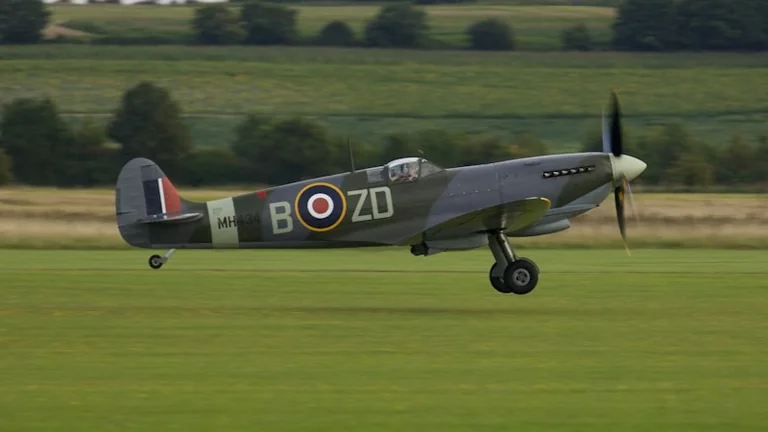
RAF Fighter Command and the importance of the air-defence system
RAF Fighter Command was responsible for Britain’s fighter defences during the campaign. Its effectiveness rested on coordination. Radar stations could identify approaching aircraft, while the reporting and control network assembled information and passed instructions to fighter squadrons.
That structure mattered because aircraft, fuel and trained pilots were limited resources. Commanders had to decide when and where to deploy squadrons. The battle therefore involved strategy, communications and logistics as well as aerial combat.
The experience was demanding and dangerous for all involved. Pilots flew repeated sorties in fast-changing conditions, while personnel on the ground faced the pressure of maintaining aircraft, managing intelligence and keeping airfields functioning. Understanding these roles makes the history more accurate than a simple account of individual heroism.
The Royal Air Force Museum’s Battle of Britain collections and research resources offer a practical route into this wider story. Museum objects can show how aircraft were built and equipped, while archival records can bring readers closer to the people whose work made operations possible.
How local airfields connect family history to national history
A local airfield can be a powerful starting point for learning about the Battle of Britain. Even where no original buildings remain, local archives, memorials, parish records and historical societies may preserve evidence of wartime service and civilian life.
Start with the place name, then check whether it operated as an RAF station, fighter airfield, training site, repair depot or related facility. Avoid assuming that every airfield played the same part in the 1940 campaign; its role should be confirmed through museum, archive or local-history sources.
Useful ways to research a local connection
- Search the Royal Air Force Museum and Imperial War Museums resources for station names, squadrons and objects.
- Check local museum websites, libraries and county archives for wartime photographs, newspapers and oral histories.
- Review family documents carefully, including service records, correspondence and photograph captions.
- Visit memorials respectfully and note inscriptions, dates and unit names for further research.
- Compare family recollections with documented records, particularly where memories were passed down over generations.
A family connection may involve more than military service. Relatives may have worked in aircraft production, civil defence, transport, communications or other roles that sustained daily life during the war.
Where to learn more before Battle of Britain Day
Imperial War Museums provides an accessible historical introduction to the Battle of Britain, including its place in the Second World War. The Royal Air Force Museum offers collection and research material that can help readers investigate aircraft, personnel and the institutions behind RAF operations.
For a local commemoration, check the websites of nearby museums, local authorities, heritage groups and RAF associations closer to 15 September. Events vary from place to place and may include memorial services, talks, exhibitions, flypasts or archive displays. Confirm times, access arrangements and any booking requirements directly with organisers.
The most meaningful way to mark Battle of Britain Day is often to connect the national story to a particular place or record: an airfield on a local map, a name on a memorial, an object in a museum case or a family document that invites careful research.
Source: Imperial War Museums
Context & actions About this article
Source check Historical sources
This explainer draws on historical material from Imperial War Museums and the Royal Air Force Museum.
- Read Imperial War Museums' Battle of Britain history
- Explore the Royal Air Force Museum's Battle of Britain collections
- Confirm local event details with the organiser
- Check local archives for airfield and family records
- Source
- Imperial War Museums
- Scope
- United Kingdom
- Updated
- 2026-09-20 07:34
Source check
Report a trust issue
Send a clear signal to community moderation if the source, facts or context need review.



Comments