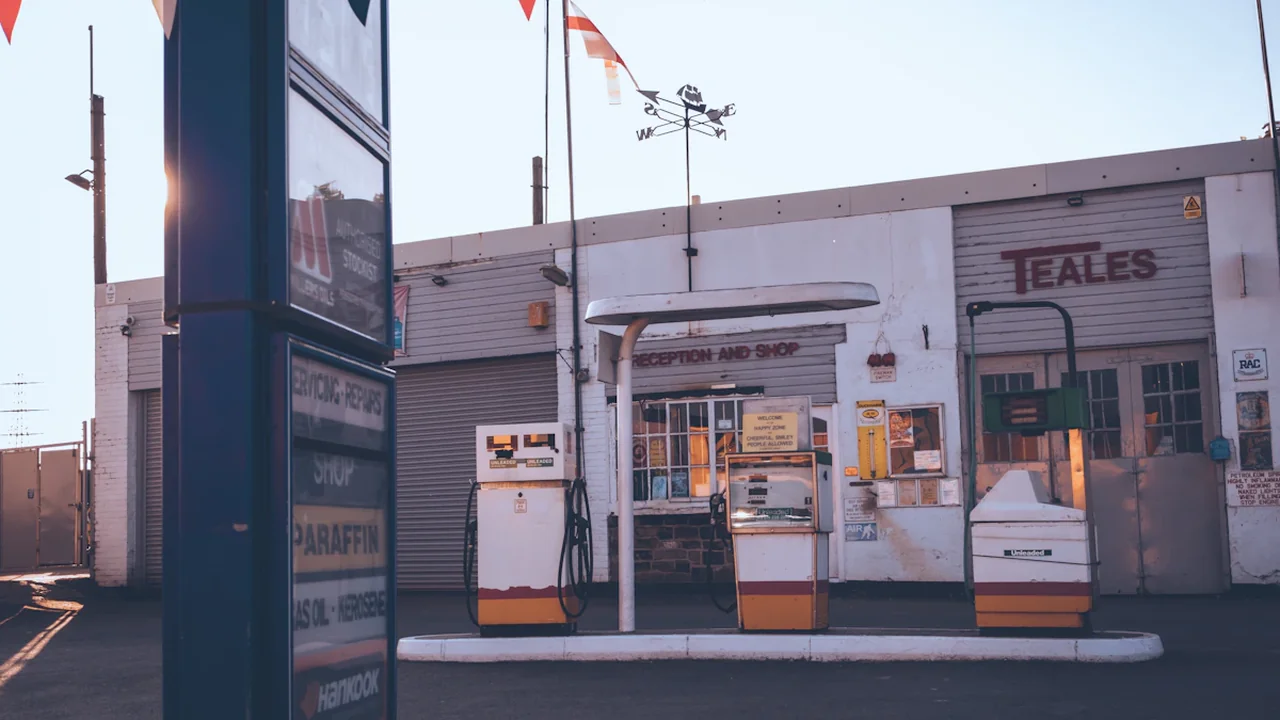
A bank-holiday journey can cost noticeably more if you fill up at the first convenient forecourt. Petrol and diesel prices can differ between nearby areas and retailers, while motorway service stations often carry a convenience premium. The useful saving is usually made before you leave: compare local prices on the day, choose a sensible stop and drive smoothly once you are on the road.
Why the same tank can cost more on one route
A fuel price on its own does not tell you whether it is good value. The important comparison is the price per litre at stations you can reach without making a long detour, multiplied by the litres you expect to buy.
Local competition, delivery costs, retailer pricing and the type of site can all affect pump prices. A supermarket or independent station in a busy town may price fuel differently from a small rural forecourt. That does not mean one retailer is always cheapest; prices can change quickly and vary by location.
Read also: UK fuel prices: Is your local pump charging fairly?
Motorway service stations can be more expensive because they serve drivers with fewer convenient alternatives and have different operating costs. If your journey allows it, filling up before joining the motorway, or shortly after leaving it, may be cheaper than waiting until the fuel warning light makes the decision for you.
RAC Fuel Watch publishes fuel-price information and commentary for UK motorists. The Department for Energy Security and Net Zero also publishes road-fuel price guidance and data. Use those sources for broad context, but check a current local comparison on the day you travel: national or regional figures cannot guarantee the price at a particular pump.
Compare nearby forecourts without wasting fuel
Start with the fuel you actually need. A driver who only needs enough for a return journey may not benefit from crossing town to save a small amount per litre. A family filling a larger tank before a long trip may find that a short, planned stop is worthwhile.
Use a map or fuel-price comparison service to check stations near home, near your destination and just off the route. Record the displayed prices and the time checked, because a comparison is only as current as the data behind it.
A quick decision method
- Check two or three realistic stations, not every station in the county.
- Compare the correct fuel grade: petrol and diesel are not interchangeable price comparisons.
- Factor in any detour, parking delay and extra miles needed to reach a cheaper pump.
- Fill before a long motorway stretch if the route leaves few alternatives.
- Keep enough fuel in reserve for traffic diversions, queues or an unexpected closure.
The cheapest advertised price does not automatically produce the lowest trip cost. A lengthy diversion can use fuel and time that outweigh a small saving at the pump. The goal is a convenient, current price rather than a perfect bargain.
Driving choices that lower consumption safely
Fuel economy is affected by how the vehicle is prepared and driven. Small changes are most useful when they are consistent across a long journey.
Set tyre pressures according to the vehicle handbook or the pressure label supplied by the manufacturer, taking account of passengers and luggage where the instructions require it. Do not use a generic pressure recommendation. Correct pressures support safe handling and can help avoid unnecessary rolling resistance; over-inflating tyres simply to chase economy is not a safe shortcut.
Remove unnecessary weight before loading for the trip. Old sports equipment, heavy tools and unused roof accessories can add drag or mass. Keep essential safety equipment, emergency supplies and items needed for children or accessibility in the car.
Smooth acceleration and earlier anticipation of traffic can reduce repeated hard braking and rapid acceleration. Leave space, use a steady legal speed, and avoid idling longer than necessary. These habits should never take priority over road conditions, speed limits or keeping a safe distance.
Plan fuel and charging stops before departure
Build fuel stops into the route rather than treating them as a last-minute problem. Choose a point with more than one nearby option when practical, especially before a busy motorway section. If traffic is likely, allow time for a short break rather than trying to stretch a tank too far.
Electric-car drivers can apply the same planning principle. Check charger availability, connector compatibility, pricing and any parking or idle fees before setting off. A planned charging stop may be easier on the budget than using the first rapid charger available during a peak travel period.
Before leaving, check current local pump prices, your handbook’s tyre-pressure guidance and the route’s likely service-station options. Those three checks make it easier to spend less without compromising safety.
Source: RAC
Context & actions About this article
Source check Price-check note
This guide uses RAC and UK government fuel-price resources for context; compare nearby forecourts on your travel day before choosing where to fill up.
- Check the time and date shown with any local pump-price comparison.
- Compare stations that are genuinely close to your planned route.
- Use the tyre pressure specified in your vehicle handbook.
- Allow enough fuel for queues, diversions and safe stops.
- Source
- RAC Fuel Watch
- Scope
- United Kingdom
- Updated
- 2026-08-14 17:17
Source check
Report a trust issue
Send a clear signal to community moderation if the source, facts or context need review.




Comments