
Friday 13 August 2026 gives a familiar superstition another moment in public life. In Britain, the date survives not because one origin story has been proved, but because older ideas about the number 13 and Friday have been repeatedly carried into travel, design, entertainment and private ritual.
For some people it is a joke, for others a date to approach cautiously. Either response shows how folklore can remain socially powerful long after its historical beginnings become difficult to pin down.
Why there is no single origin story
The fear of the number 13 is known as triskaidekaphobia, a term recorded by Encyclopaedia Britannica. Friday the 13th adds a second layer: Friday has acquired unlucky associations in parts of Christian and European tradition, while 13 has long been treated as an awkward number in stories and customs.
Read also: Billy Wilder season opens in London on 19 October
Popular accounts often connect the belief to the Last Supper, where Judas is traditionally counted as the thirteenth guest, and to the Crucifixion on a Friday. Those associations help explain why the idea feels familiar in Christian cultures, but they do not prove that people in medieval Britain treated Friday the 13th as one settled, universal taboo.
History’s overview of the date makes the same broader point: the modern superstition is widely recognised, but its origins are a mixture of traditions rather than a documented event with one clear starting point. Folklore does not need a single birthplace to become durable; it can grow as people retell the parts that feel memorable.
Folklore is not the same as evidence
It is reasonable to say that Friday the 13th is a powerful cultural symbol. It is less reliable to claim that a particular historical disaster “created” the superstition, or that the date reliably produces more accidents.
That distinction matters because a compelling anecdote can travel much further than an ordinary day in which nothing unusual occurs. Historical caution does not remove the pleasure or meaning people find in a tradition; it simply separates what can be documented from what has been added over time.
London’s numbered capsule shows superstition in plain sight
One of the clearest British examples is the London Eye. The attraction has 32 passenger capsules, yet they are numbered from 1 to 33 because number 13 is omitted. The London Eye’s own visitor information has described the skipped number as a nod to superstition.
It is a small operational decision, but it turns an abstract fear into something visitors can notice. A person may not believe the date changes their luck, yet still recognise why an attraction serving millions of guests avoids a number that some find uncomfortable.
This is how superstition often works in modern Britain: not as a rule imposed on everyone, but as a practical accommodation, a joke shared with customers or a detail that becomes part of a place’s story.
Travel habits can preserve old anxieties
Travel is another setting where number 13 remains visible. Airlines and accommodation providers in several countries sometimes omit a row, floor or room number 13, especially where they expect guests to notice it. British Airways seating plans for some aircraft configurations, for example, can show how cabin numbering is shaped by layout and passenger expectations rather than by a universal numerical rule.
The important caveat is that there is no single British standard. Many hotels, streets, train services and aircraft use 13 without hesitation. The persistence of the custom is therefore more revealing than its consistency: businesses know the number still carries a cultural charge for enough people to make its omission understandable.
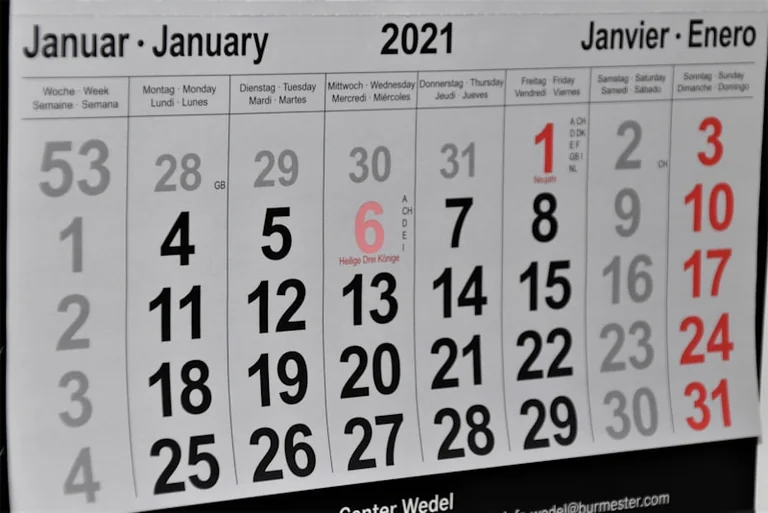
For travellers, the date is usually more about personal habits than an objective warning. A nervous flyer may choose another departure day, while another passenger might deliberately book Friday the 13th to prove the superstition wrong. Both choices show the same thing: the old symbol is still available for people to use.
From British screens to everyday phrases
Friday the 13th has also been strengthened by entertainment. Horror films, television plots, newspaper headlines and Halloween-season programming repeatedly use the date as shorthand for unease. The association is instantly legible, which makes it useful to writers even when a story has no connection to historical belief.
British culture has its own long tradition of treating luck as both serious and playful: touching wood, avoiding a broken mirror, crossing fingers or wishing someone luck before an exam. Friday the 13th fits easily into that language of everyday uncertainty.
A person who says, “I’m not superstitious, but I won’t tempt fate,” is not necessarily making a factual claim about luck. They may be signalling caution, humour or a wish to share a familiar social script.
Why unlucky examples can feel more convincing
Psychologists use the term confirmation bias for the tendency to notice and remember information that supports an expectation more readily than information that does not. If someone expects Friday the 13th to go badly, a delayed train, spilled coffee or missed call can feel unusually meaningful.
Ordinary outcomes are easier to overlook. Thousands of uneventful journeys, meetings and errands do not make a memorable story, while one mishap on a famous date does.
That does not require anyone to be mocked for a ritual or a feeling. It is simply a useful way to understand why a belief can remain vivid: human memory is drawn to patterns, especially when the pattern already has a name and a date.
A superstition that still changes the atmosphere
Friday the 13th endures because it is flexible. It can be religiously resonant, historically curious, commercially useful, theatrically frightening or personally comforting. It can influence a London Eye capsule number without dictating how anyone must live.
This August, the most useful way to read the date is as a living piece of culture. Notice the skipped numbers, the travel jokes and the rituals people choose for themselves—but treat dramatic claims about inevitable bad luck as folklore, not a forecast.
For readers curious about the tradition’s history, compare the broad accounts from Encyclopaedia Britannica and History with the visible British examples in transport and visitor design. The gap between them is part of the story: belief lasts by being adapted.
Source: Encyclopaedia Britannica
Context & actions About this article
Source check How the tradition is documented
The belief is widely documented, while its exact origins remain a blend of older traditions and later popular culture.
- Encyclopaedia Britannica defines triskaidekaphobia as fear of the number 13.
- History describes Friday the 13th as a widespread popular superstition.
- London Eye numbering provides a visible British example of number 13 being omitted.
- Travel numbering practices vary by operator and are not a national rule.
- Source
- Encyclopaedia Britannica: triskaidekaphobia
- Scope
- United Kingdom
- Updated
- 2026-09-09 13:11
Source check
Report a trust issue
Send a clear signal to community moderation if the source, facts or context need review.




Comments