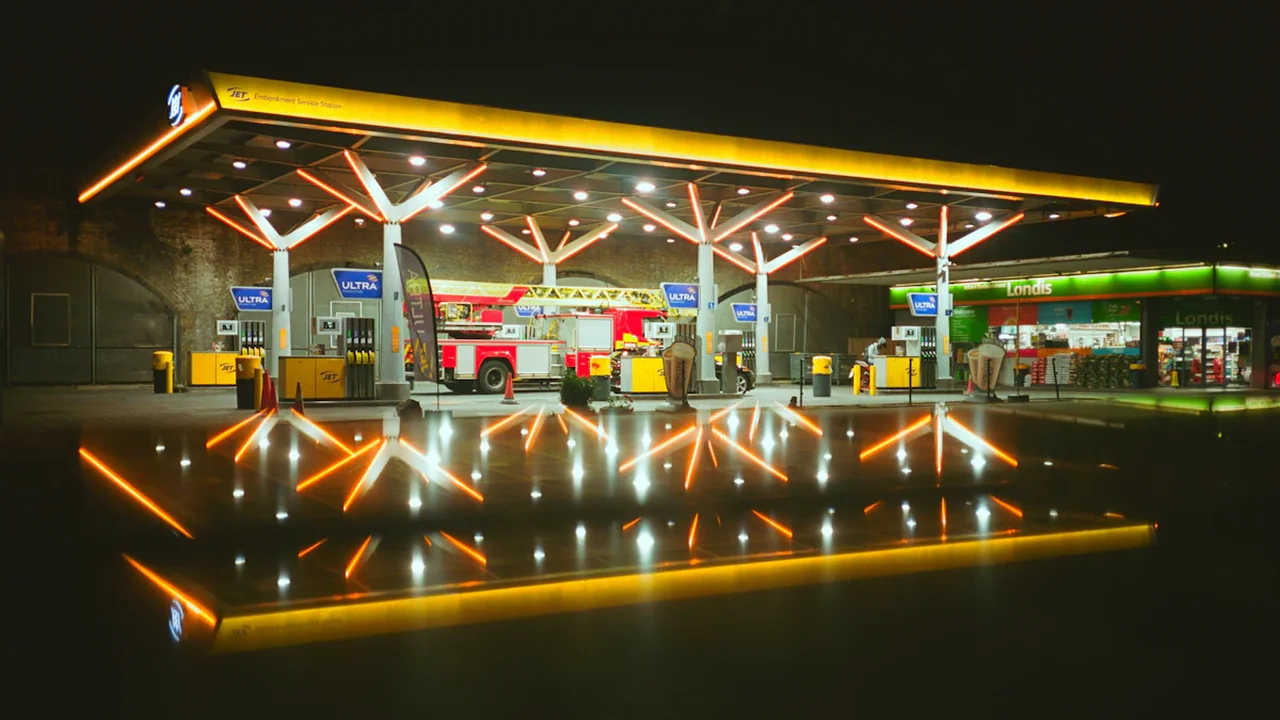
Before a longer autumn drive, estimate what your own route and vehicle are likely to use, then compare current petrol or diesel prices at nearby forecourts. A low price per litre can help, but the cheapest stop may add distance or time to your journey.
Calculate how much fuel your journey may use
Start with the planned driving distance and your vehicle’s fuel economy. If your car’s display or handbook gives miles per gallon (mpg), convert the distance into gallons, then convert gallons to litres before multiplying by the price per litre.
For UK imperial mpg, use this formula:
Fuel needed in litres = distance in miles ÷ mpg × 4.546
Then calculate the estimated fuel spend:
Estimated cost = litres needed × price per litre
Use the same units throughout. If your car reports fuel economy in litres per 100 kilometres (L/100 km), convert the route distance to kilometres and multiply by the vehicle’s L/100 km figure, then divide by 100 to estimate litres used.
The result is an estimate for the distance you enter. For a return trip, include the return distance; if the outward and return routes differ, estimate each leg separately and add the fuel amounts.
Compare nearby forecourt prices against your route
Check prices close to your starting point, destination and planned route shortly before you leave. Prices can vary between stations and change over time, so a national average or an old listing may not describe what you will pay at a particular pump.
The Competition and Markets Authority (CMA) publishes road fuel price transparency information and monitoring material for the UK petrol and diesel markets. Its collection provides market context; check the individual forecourt price and its freshness before relying on a listing.
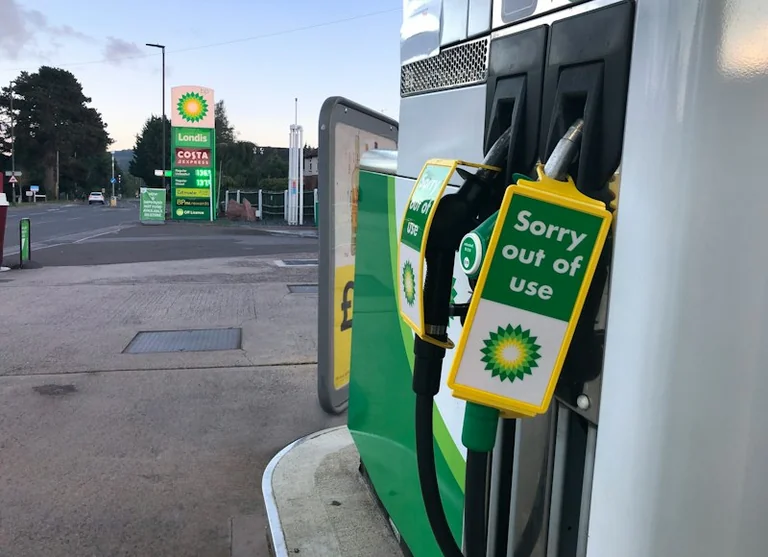
When comparing a possible stop, consider:
- The listed price per litre and when it was last checked.
- How far the station is from your route, including any detour and return distance.
- Whether the station sells the fuel your vehicle needs.
- Whether you can refuel at a convenient point without making a separate trip.
A station with a slightly higher price may be the better choice if reaching a cheaper one adds enough driving to use more fuel. Compare the total journey, not just the number shown on a price board or app.
Put the fuel estimate into a trip budget
Once you have an estimated number of litres, multiply it by the price you expect to pay. If you plan to buy fuel at more than one station, split the estimate between those purchases and use each station’s price for the relevant litres.
For example, if a route is shown in miles and your vehicle’s economy in mpg, first calculate litres from the formula above. Then multiply by the local price per litre you have checked. This method gives a personalised estimate without assuming that every UK driver faces the same price or uses the same amount of fuel.
Treat the result as a planning figure, not a guaranteed bill. Your actual fuel use depends on how the vehicle is driven and the conditions on the day. Leave room in your budget if you are unsure of the route, your vehicle’s real-world economy or the price you will find when you stop.
Check local prices close to departure
Before setting off, compare more than one nearby station where practical. Look for a recent price for the right fuel type, and check the station’s location against your route. If a price listing does not show when it was updated, confirm it directly before making a detour.
Recheck if you change your route, make an extra journey or need to refuel later than planned. A price that was useful when you planned the trip may have changed by the time you reach the forecourt.
Keep the estimate in perspective
Fuel economy figures are useful for comparing options, but your own consumption may differ from the vehicle’s stated or displayed figure. Traffic, speed, weather, passengers, luggage and driving conditions can affect fuel use. Autumn journeys may also involve changing conditions, so avoid treating one estimate as exact.
Forecourt prices are local and time-sensitive. The CMA’s monitoring material can help explain the wider market, but it does not make an old or distant station listing current for your journey. Use the local price you can verify, allow for any detour, and compare the likely total cost of each practical option.
Source: Competition and Markets Authority
Context & actions About this article
Source check How the estimate works
The trip estimate uses your route distance, vehicle fuel economy and a local price per litre you check before travelling.
- Confirm the route distance and whether it includes the return journey.
- Use the fuel economy units shown for your vehicle.
- Check the station's fuel type, location and latest available price.
- Source
- Competition and Markets Authority
- Scope
- United Kingdom
- Updated
- 2026-10-28 10:37
Source check
Report a trust issue
Send a clear signal to community moderation if the source, facts or context need review.


Comments