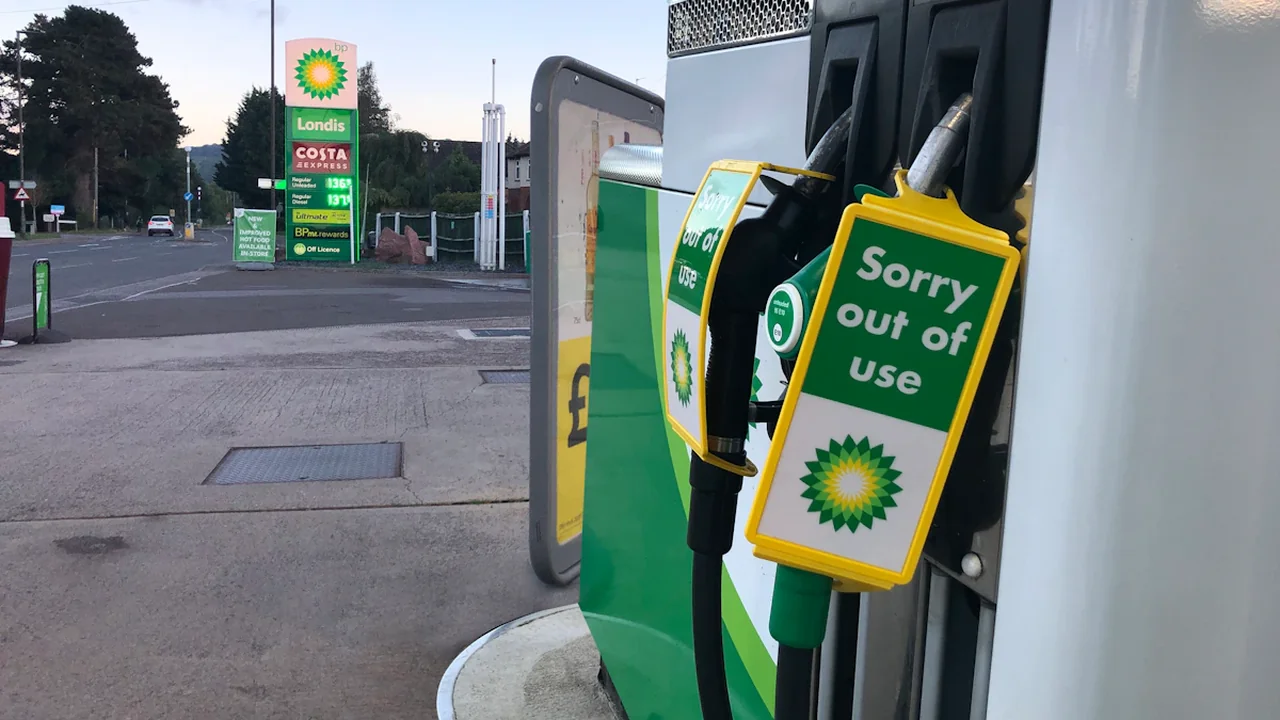
Fuel cost depends on both the price at the pump and how much fuel your journey uses. To compare petrol or diesel costs, check current local prices, estimate the litres your route may need, then compare that total with alternatives such as public transport, car-sharing or combining trips.
Check local petrol and diesel prices
The Competition and Markets Authority (CMA) provides fuel-finder resources to help drivers compare petrol and diesel prices. Use them to find listed prices near your route or destination, then check when and where each price was recorded. Prices can change, and a listing may not reflect the price at the pump when you arrive.
For UK-wide context, the Department for Energy Security and Net Zero publishes road fuel price statistics. These statistics describe prices across the UK; they are useful for understanding broader trends, but they do not replace checking a specific station’s current listing.
Before choosing a station, compare a few options that make sense for your route. A cheaper pump price may not reduce the journey’s overall cost if reaching it adds distance or time.
Estimate how many litres your journey needs
Start with your expected journey distance in miles and your vehicle’s fuel economy in miles per gallon (mpg). The calculation uses the UK imperial gallon, which is 4.546 litres:
Litres needed = journey miles ÷ miles per gallon × 4.546
For example, a 120-mile journey in a car averaging 40 mpg is estimated to use about 13.64 litres: 120 ÷ 40 × 4.546. This is a planning estimate, not a guarantee of the fuel used on the day.
Use a realistic mpg figure for your vehicle and driving. The number shown in a handbook or achieved on an open road may differ from your usual mixed journeys. If you are unsure, use a recent trip computer reading or calculate a typical figure from your own fuel use.
Turn the estimate into a journey cost
Multiply the estimated litres by the displayed price per litre in pounds:
Estimated fuel cost = litres needed × price per litre
If the 120-mile example uses 13.64 litres and a nearby station lists fuel at £1.50 per litre, the estimated cost is about £20.46. Check the station’s location and price time before relying on that figure, and remember that both consumption and pump prices can vary.
To compare stations fairly, apply the same distance and mpg estimate to each price. If one option requires a detour, include the extra miles in the journey calculation. That helps show whether a lower price per litre makes a meaningful difference to the whole trip.
Account for traffic, route and vehicle condition
Real fuel use can differ from the estimate. Congestion, stop-start driving, speed, acceleration, weather and the route all affect consumption. A car may use more fuel on a short urban trip than its headline mpg suggests, while a clear, steady route can produce a different result.
Vehicle condition matters too. Tyre pressure, maintenance, vehicle load and how the car is driven can influence fuel economy. Treat the calculation as a comparison tool, and allow some margin if you need to refuel before reaching your destination.
For a more useful estimate, use the route you actually expect to drive rather than a straight-line distance. Recalculate if you add a stop, change destination or expect substantial delays.
Compare the full cost with other ways to travel
Fuel is only one part of a journey’s cost. Depending on the trip, you might also compare parking, tolls, public transport fares or the cost of sharing a ride. These options are not always cheaper: prices, availability, timing, number of passengers and access to stations or stops can change the comparison.
Consider whether you can combine errands into one outing, share the drive with someone travelling the same way or use public transport for part of the route. Compare the complete door-to-door plan, including time and convenience, rather than assuming one mode will always cost less.
A practical check before setting off is to confirm the listed fuel price and its location, estimate litres using your likely mpg, and compare the total journey cost with realistic alternatives. Recheck the price listing if your plans or route change.
Source: Department for Energy Security and Net Zero, GOV.UK
Context & actions About this article
Source check How the estimate works
The journey estimate uses distance, miles per gallon and the UK gallon conversion; listed pump prices can change and should be checked for time and location.
- Check the listed price’s station location and time.
- Use a realistic mpg figure for your vehicle and route.
- Allow for traffic, driving style and vehicle condition.
- Source
- Department for Energy Security and Net Zero: Road fuel price statistic...
- Scope
- United Kingdom
- Updated
- 2026-10-10 07:47
Source check
Report a trust issue
Send a clear signal to community moderation if the source, facts or context need review.

Comments