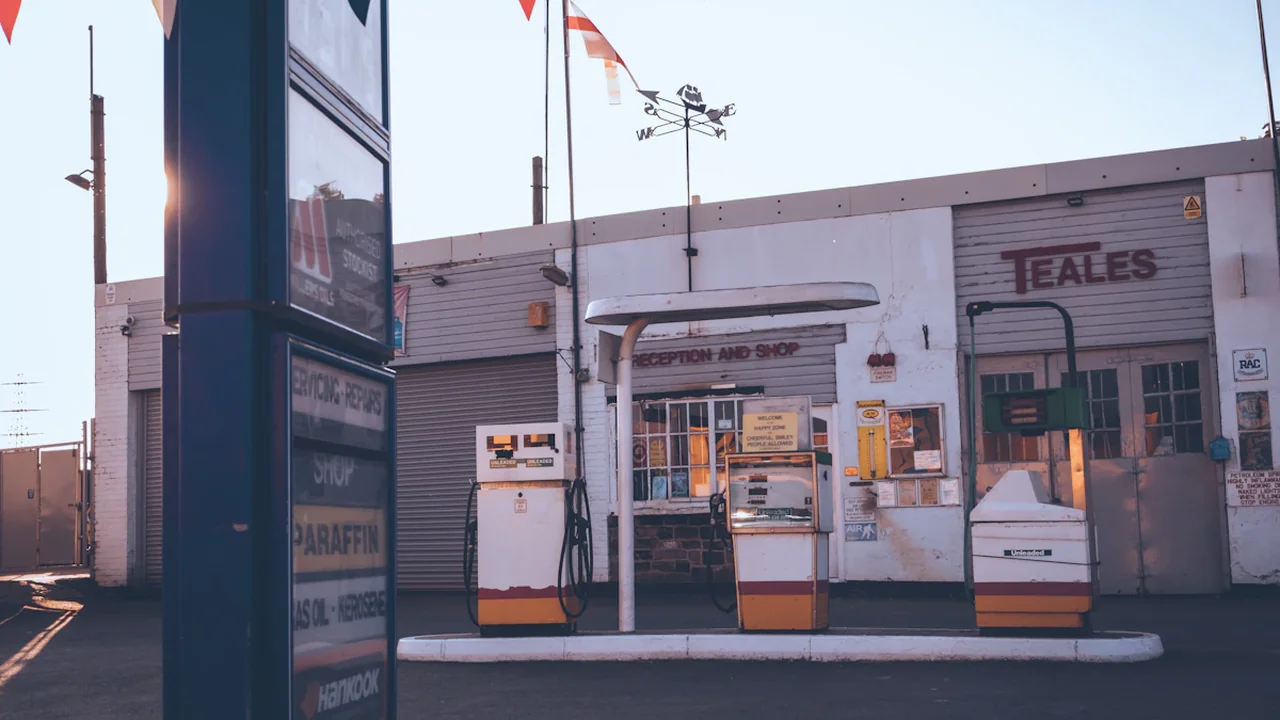
A 5p-per-litre price difference saves £2.50 when a driver buys 50 litres of fuel. A 10p gap saves £5. For a bank holiday journey, the useful question is whether that saving exceeds the fuel cost, time and inconvenience of driving to a cheaper forecourt.
By GlobeBids Consumer Desk
Published: 29 August 2026
What each price gap saves on 50 litres
The calculation uses the number of litres actually purchased, not the vehicle’s stated tank capacity. A driver adding 30 litres will save less than someone buying 50 litres at the same price difference.
| Price gap per litre | Saving on 50 litres |
|---|---|
| 2p | £1.00 |
| 5p | £2.50 |
| 10p | £5.00 |
These figures show the effect of a price gap; they do not identify the cheapest current station or predict where prices are heading. The displayed price at the chosen pump is the operative figure.
The saving formula is:
Saving (£) = (price gap in pence ÷ 100) × litres purchased
For a 5p gap and a 50-litre purchase:
5 ÷ 100 × 50 = £2.50
For a 10p gap:
10 ÷ 100 × 50 = £5.00
If the cheaper price requires membership, an app or a voucher, only use it in the comparison when the driver is eligible and the discount will apply to that purchase.
Calculate whether the cheaper station is worth the detour
A lower pump price does not automatically produce a lower overall journey cost. Compare the fill-up saving with the fuel consumed over the entire extra round trip—not merely the one-way distance to the alternative station.
Use these steps:
- Find the additional round-trip distance caused by the detour.
- Estimate the fuel used over those miles.
- Multiply those litres by the applicable pump price.
- Subtract the detour cost from the fill-up saving.
For a car measured in imperial miles per gallon:
Detour litres = extra miles ÷ mpg × 4.546
Then:
Net saving = fill-up saving − detour litres × price per litre
A worked detour example
Suppose the alternative forecourt adds six miles to the round trip, the car returns 40mpg and fuel costs an illustrative £1.50 per litre. The detour consumes about 0.68 litres:
6 ÷ 40 × 4.546 = 0.68 litres
That fuel costs approximately £1.02. Against a £2.50 fill-up saving, the remaining benefit is about £1.48 before allowing for time, congestion or vehicle wear.
Under those same illustrative assumptions, a £2.50 saving reaches fuel-only break-even at roughly 14.7 additional miles. Real fuel economy may be worse in queues, during cold starts or on stop-start urban roads, so a shorter practical limit may be sensible.
Where the latest UK national averages fit in
The UK Government’s weekly petroleum statistics publish UK road-fuel price series for petrol and diesel. Values from that series are national averages, not guaranteed prices at an individual forecourt.
Because those averages change weekly, any quoted figure needs its observation or publication date. No dated weekly price observation was available for citation in this explainer, so it does not present an undated number as the latest average. Drivers can open the government series and select the newest dated release for current national context.
RAC Fuel Watch provides consumer-facing information and commentary about UK petrol and diesel prices. It can help interpret the wider market, but it does not replace checking the price board at the station a driver intends to use.
Why the local pump price still decides the calculation
Motorway service stations, supermarkets, independent local forecourts and membership offers can display different prices. National averages describe the wider market; they do not prove that one nearby station is cheaper than another.
Before diverting, record both displayed prices, estimate how many litres will actually be purchased and check the additional round-trip mileage. If the saving is only £1 or £2, even a modest detour can absorb much of it. A station already on the route may therefore offer better overall value than a lower-priced pump several miles away.
Source: UK Government
Context & actions About this article
Source check How the figures were calculated
The examples convert pump-price differences into purchase savings and deduct the estimated fuel cost of any extra round trip.
- Savings use the price gap multiplied by the litres purchased.
- The detour calculation covers the complete additional round trip.
- No undated national average is presented as a current price.
- Illustrative prices and fuel economy are clearly identified.
- Source
- UK Government weekly petroleum statistics
- Scope
- United Kingdom
- Updated
- 2026-08-29 08:32
Source check
Report a trust issue
Send a clear signal to community moderation if the source, facts or context need review.


Comments