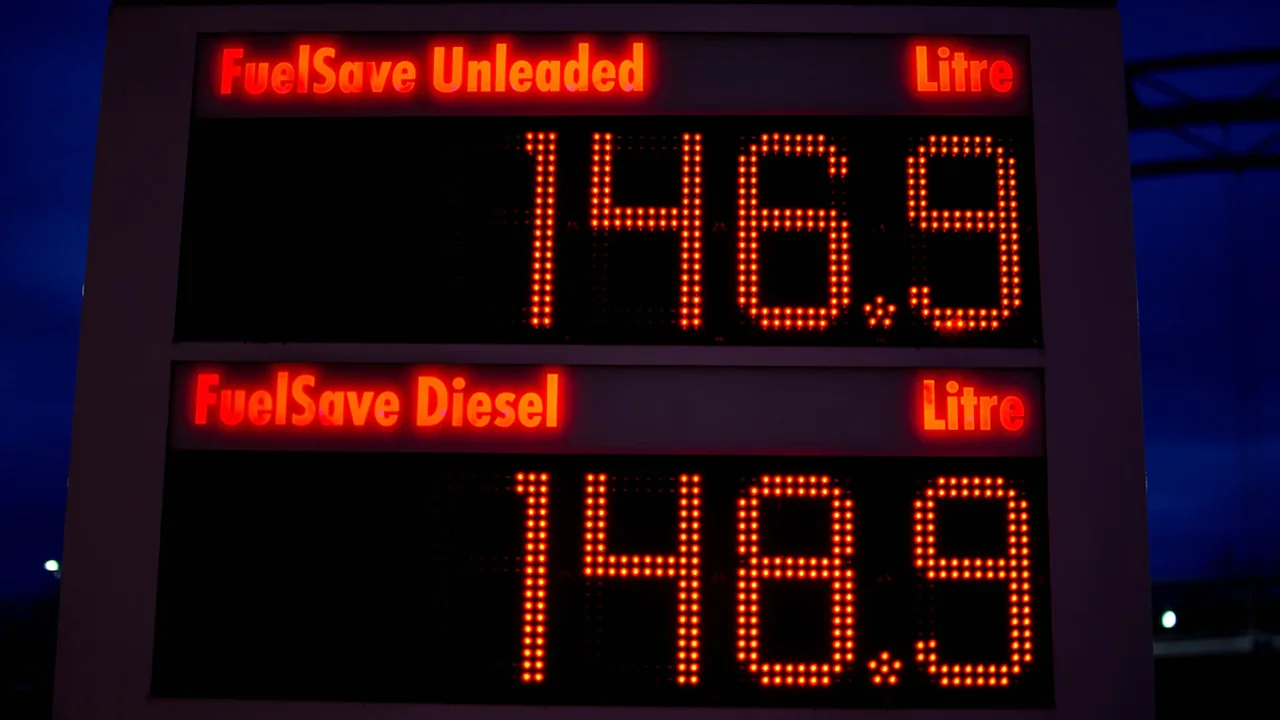
A six-mile round trip to a cheaper filling station costs about £0.99 in fuel for a car returning 40 mpg when petrol is £1.45 a litre. On a 40-litre fill, the destination must therefore be roughly 2.5p per litre cheaper merely to recover the journey cost.
That calculation matters to drivers considering a special trip rather than a station already on their route. Compare current local prices before leaving: £1.45 is an illustrative input, not a current UK average or a live pump-price claim.
By the GlobeBids Money Desk · Published 25 August 2026
The calculation at a glance
- Count only the additional miles if part of the journey was already planned.
- Multiply the price difference by the number of litres you expect to buy.
- Treat time and vehicle wear separately from the immediate fuel calculation.
Calculate the fuel cost of reaching the cheaper station
For a vehicle whose economy is measured in miles per imperial gallon, first calculate the fuel consumed on the extra round trip:
Round-trip fuel used in litres = round-trip miles × 4.54609 ÷ mpg
The figure 4.54609 converts one imperial gallon into litres. Next, calculate the cost of that fuel:
Journey cost = litres used × pump price per litre
Then find the gross saving offered by the cheaper station:
Gross saving = price difference per litre × litres purchased
Convert a difference quoted in pence into pounds before multiplying. A 3p difference is £0.03, so buying 40 litres would produce a gross saving of £1.20.
The fuel-only break-even difference can be calculated directly:
Break-even saving in pence per litre = journey cost in pounds × 100 ÷ litres purchased
The detour reduces the fuel bill only when the gross saving exceeds the journey cost. If the cheaper station lies along a journey that would happen anyway, use the additional detour mileage rather than the entire trip.
Why a 40-litre fill needs about a 2.5p saving
This is a clearly illustrative example, not a statement of current petrol prices.
For a car returning 40 mpg over a six-mile round trip:
6 × 4.54609 ÷ 40 = 0.6819 litres0.6819 × £1.45 = £0.9888£0.9888 × 100 ÷ 40 = 2.47p per litre
Rounded for household budgeting, the drive uses about 0.68 litres and costs approximately £0.99. The cheaper station must save roughly 2.5p per litre on a 40-litre purchase before the driver begins to save anything on fuel alone.
At a 2p difference, 40 litres saves only 80p at the pump, leaving the driver about 19p worse off after the trip. At a 4p difference, the pump saving is £1.60, leaving a fuel-only margin of approximately 61p.
Buying more or less fuel changes the break-even point
The same £0.99 journey requires a saving of about 4.9p per litre when buying 20 litres. A 60-litre purchase lowers the threshold to about 1.7p per litre.
Buying more fuel spreads the journey cost across more litres, but drivers should use the amount they genuinely expect to purchase. Tank capacity, the existing fuel level and cash available can all make a theoretical large-fill saving irrelevant.
Congestion and cold starts can erase a narrow advantage
The calculation is only as reliable as its inputs. Stop-start traffic, queues at the forecourt, cold starts, steep roads, poor weather and short urban journeys can reduce real fuel economy below the advertised or usual mpg figure. Using a cautious mpg estimate gives a safer comparison.
Tyre wear, servicing, depreciation and the value of the driver’s time are not included in the £0.99 example. A station that narrowly passes the fuel-only threshold may still cost more overall once those factors are considered.
Membership discounts, supermarket vouchers, loyalty points and cashback can change the effective price. Count only benefits the household will actually use, and check whether minimum-spend rules, fuel grades or payment conditions apply. The same method works for diesel by substituting the relevant local pump price and the vehicle’s diesel economy.
Check current local prices before making the trip
RAC Fuel Watch provides current UK fuel-price monitoring and broader consumer context for petrol and diesel. The Competition and Markets Authority’s road-fuel market study explains its examination of competition and pricing in the UK market.
Neither source turns this worked example into a live local quote. Check recently updated prices for the specific nearby forecourts, confirm them where possible through retailer information or forecourt signs, and recalculate using the litres you will buy, the additional mileage and your realistic mpg.
Source: RAC
Context & actions About this article
Source check How the calculation works
The example applies an imperial-gallon conversion and shows the fuel-only break-even point using clearly stated assumptions.
- The six-mile distance is treated as a complete additional round trip.
- One imperial gallon is converted using 4.54609 litres.
- Journey fuel is costed at the illustrative price of £1.45 per litre.
- Vehicle wear, time and unused loyalty benefits are excluded from the numerical example.
- Source
- RAC Fuel Watch
- Scope
- United Kingdom
- Updated
- 2026-08-25 19:28
Source check
Report a trust issue
Send a clear signal to community moderation if the source, facts or context need review.



Comments